

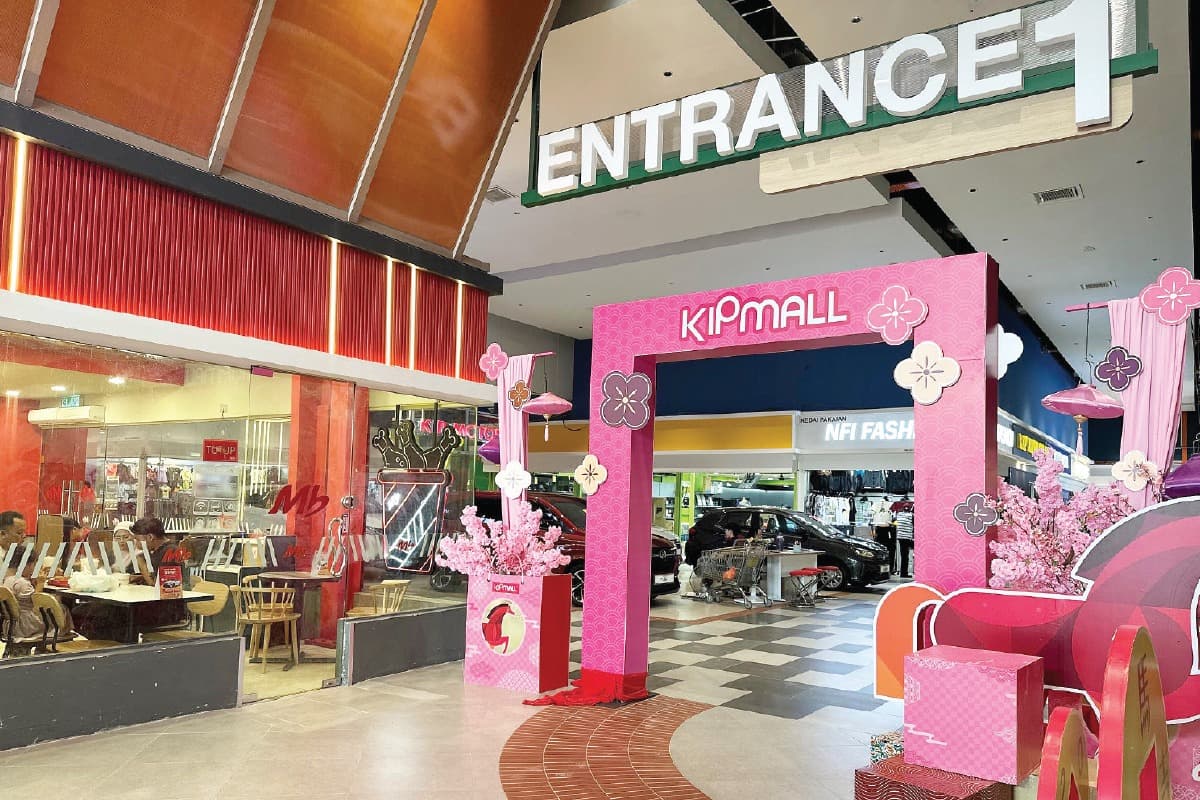
This article first appeared in The Edge Malaysia Weekly on February 2, 2026 - February 8, 2026
KIP Real Estate Investment Trust (KL:KIPREIT) has been on the lookout for more community-centric retail properties to boost its assets under management (AUM) to RM2 billion by 2027. The REIT’s manager says its pipeline of prospective properties remains “healthy” despite asset prices inching higher.
“We are aggressively reviewing the potential of the proposed properties. We remain laser-focused on acquiring assets in the retail space, where our resources lie,” KIP REIT Management Sdn Bhd CEO Valerie Ong Pui Shan tells The Edge.
“From a strategic perspective, we are attracted to regions with growth potential, especially those with a strong residential catchment, including new suburban areas, which we are very keen to explore.”
New acquisitions need to deliver targeted yields of between 6.5% and 7%, according to Ong. Apart from location and catchment strength, other key considerations include income stability, tenant resilience, yield accretion, funding structure and impact on gearing levels.
“We are optimistic about reaching the RM2 billion AUM milestone within the targeted time frame,” she says, noting that the group could potentially exceed its target, subject to market conditions.

KIP REIT’s AUM currently stands at RM1.7 billion. Its portfolio comprises 12 retail malls and six industrial properties across Perak, Selangor, Pahang, Negeri Sembilan, Melaka, Johor and Sarawak.
The REIT has headroom of RM200 million for acquisitions without diluting shareholder value, based on its internal gearing cap of 45% and gearing ratio of about 39% as at end-December last year.
“The regulatory threshold is 50%, but we don’t want to exceed 45% to ensure that there is some financial flexibility for us. Funding will be a mix of bank borrowings and equity,” says Ong.
“Any acquisition will be assessed strictly on a yield-accretive and earnings-enhancement basis. It must translate into tangible value creation. We will not pursue transactions that compromise our balance sheet strength or unitholder returns.”
Once its RM2 billion AUM target is achieved, the REIT manager will focus on asset optimisation, says Ong. “With scale secured, the focus will shift from buying assets to optimising them, and allowing the assets to deliver their full upside. This will position us well to compound returns and create long-term value for our unitholders.”
Strong momentum financially
KIP REIT’s financial performance has been robust. In the first half of its financial year 2026 (1HFY2026) ended Dec 31, 2025, its net property income (NPI) surged 50.5% year on year to RM62.13 million from RM41.29 million, driven by higher contribution from the DPulze Shopping Centre in Cyberjaya and KIPMall Desa Coalfields in Sungai Buloh, Selangor. Revenue increased 48.6% to RM84.24 million from RM56.71 million.
Analysts say the results were in line with market expectations. CIMB Securities expects the REIT’s earnings to improve quarter on quarter in 3QFY2026 on higher footfall resulting from the Sumbangan Asas Rahmah (Sara) cash aid, the reopening of KIPMall Tampoi in Johor following asset enhancement works and the festive season.
Meanwhile, TA Securities expects the reduction in the sales and service tax (SST) on rents, from 8% to 6%, to be broadly positive for KIP REIT. Small and medium enterprises (SMEs) with annual sales not exceeding RM1.5 million are exempted from service tax on rental services. SMEs account for about 31% of the REIT’s tenant base.

As at end-December 2025, KIP REIT had RM662.2 million in borrowings and RM55.94 million in cash and cash equivalents. It raised just over RM130 million by placing out 160 million units in August and October last year, with proceeds bolstering its deal headroom and supporting its acquisitions of KIPMall Desa Coalfields and KIP Kuantan that were completed in August and September last year respectively.
KIP REIT’s distribution per unit was 3.5 sen for 1HFY2026, higher than the 3.18 sen in 1HFY2025. It made a distribution per unit of 6.8 sen in FY2025, which translates into a distribution yield of more than 7%. Note that REITs are required to distribute at least 90% of their income to be tax-exempt.
KIP REIT’s unit price had risen 13.7% over the past year to close at 93.5 sen last Tuesday, giving the REIT a market value of RM896.3 million.
Its retail segment contributed 94% to its revenue in 1HFY2026. Ong says the REIT’s community-centric neighbourhood malls, which cater to the mass market, are expected to continue delivering resilient growth.
“Our 12 shopping malls are very similar in nature in terms of geography and demographics. That’s why they are able to be sustainable in our space,” she adds.
Ong says the retail operations — such as supermarkets, pharmacies, and food and beverage outlets — that cater to people’s daily needs remain structurally defensive, supported by stable population growth and recurring consumption of essential categories. “As consumer behaviour evolves, the role of neighbourhood malls as convenient and accessible community hubs has become increasingly important.”
Replicating Dpulze Cyberjaya’s success
On future acquisitions, Ong hopes to replicate its success story at DPulze Shopping Centre in Cyberjaya, which achieved a yield of 10% in just nine months post-acquisition, up from 7.1% when the deal was announced in May 2024.
Notably, DPulze, which has full occupancy, contributed more than 24% to KIP REIT’s revenue in 1HFY2026. The occupancy rate across its entire portfolio stood at 98.2% at end-December 2025.
Ong stresses the importance of asset enhancement initiatives (AEIs) in keeping its retail assets relevant. KIP Mall Tampoi in Johor is scheduled for reopening on Feb 8 after undertaking a transformation exercise, while KIP Mall Masai has been identified as the next AEI candidate. Meanwhile, the REIT is expanding its footprint with AEON Kinta City in Ipoh, Perak, through the construction of a new annex building.
On its assets in the industrial segment, Ong acknowledges that the growing supply in recent years warrants caution, particularly in certain locations and subsegments. Nevertheless, she notes that long-term demand continues to be supported by structural trends such as e-commerce growth, supply chain diversification and manufacturing relocation.
Having said that, she notes that rising land prices have made it increasingly challenging to secure high-yielding industrial properties.
“Moving forward, I think it will not be as easy [to acquire industrial properties], because land prices have gone up significantly. It’s difficult to find assets with yields of 6.5% to 7%,” says Ong, adding that preferred industrial assets are those located in industrial parks and close to ports.
KIP REIT has adopted a “2+2” rental model to balance income visibility and flexibility in a volatile environment, allowing for more frequent rental repricing while maintaining continuity through renewal options.
Across its portfolio, recent rental reversions have been encouraging, at 5% to 10% for retail assets. Rental reversions can reach 15% to 20%, with gross turnover (GTO) increasingly embedded into renewal of leases to better align with the upside of tenant performance and capture an additional lift in earnings. On the other hand, rental reversions for industrial assets average about 10% to 12% per term, typically 12 to 15 years.
“I have instructed the team to incorporate GTO into all renewal cases, so there will be more upside for the REIT,” says Ong.
As at end-December 2025, KIP REIT was managing about 3.2 million sq ft of net lettable area, with a diversified tenant base of 1,300, including nine supermarket operators. “All the tenants have been asking for additional space and more locations,” she says.
KIP REIT was among the big winners at The Edge Malaysia Centurion Club Corporate Awards 2025, clinching a hat-trick in the REIT category for Highest Growth In Profit After Tax Over Three Years, Highest Returns To Shareholders Over Three Years and Highest Return On Equity Over Three Years.
Hextar Group CEO Datuk Eddie Ong Choo Meng is the largest holder of KIP REIT units at 8.76%. KIP REIT co-founder and managing director Datuk Ong Kook Liong — Valerie’s father — has the second-largest holding at 7.47%.
Eddie’s sister, Michelle Ong Tzu Chuen, sits on the board as an executive director. Other major holders of KIP REIT units include AIA Bhd (4.38%) and the Employees Provident Fund (4.02%).
Save by subscribing to us for your print and/or digital copy.
P/S: The Edge is also available on Apple's App Store and Android's Google Play.