

This article first appeared in Wealth, The Edge Malaysia Weekly on January 26, 2026 - February 1, 2026
At least three Malaysian banks are exploring tokenisation, including Standard Chartered Bank Malaysia Bhd and CIMB Group Holdings Bhd (KL:CIMB).
On Nov 25 last year, Capital A Bhd (KL:CAPITALA) and Standard Chartered announced the signing of a letter of intent to jointly explore the development and testing of a ringgit-denominated stablecoin through the Digital Asset Innovation Hub.
Then, on Dec 18, CIMB announced its commitment to develop tokenised financial services spanning tokenised assets, tokenised settlement and next-generation payment rails.
In an email response to Wealth, Malayan Banking Bhd (KL:MAYBANK) confirmed industry chatter that it has been actively looking into the digital assets and tokenisation space.
What local banks intend to achieve through the technology include democratising investment asset classes, enhancing the efficiency of payments and settlements, and offering digital asset custodian and trading services.
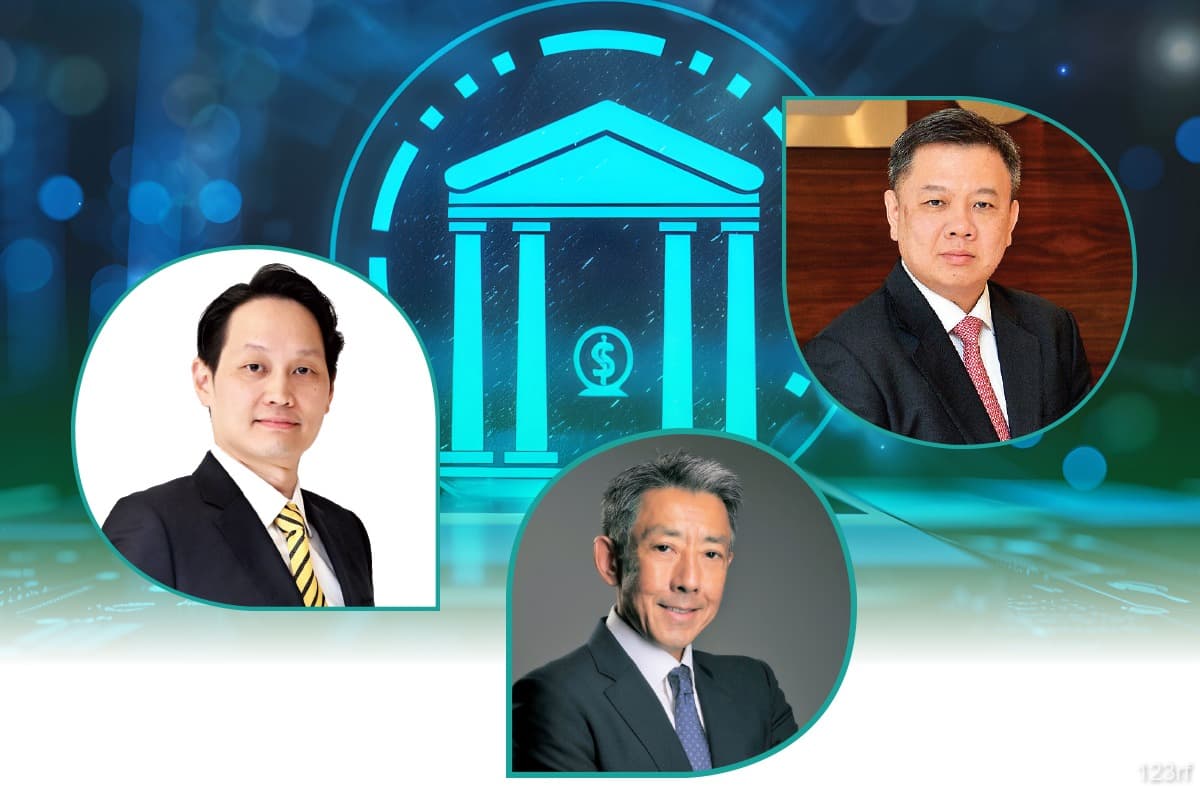
Below, the three banks share their plans moving forward.

Maybank explores tokenisation to democratise investing
Its head of wealth management Malaysia, Lim Eng Ping, says the bank has been actively exploring digital assets and tokenisation to democratise investing and help clients further diversify their portfolio.
“Our approach is anchored on responsible innovation, market and infrastructure readiness and compliance with Bank Negara Malaysia and Securities Commission Malaysia’s frameworks,” he says.
He adds that Maybank was one of the first local banks to consistently offer structured products with underlying exposure to digital assets, such as autocallables on the Bitcoin and Ethereum exchange-traded funds (ETFs). Autocallables is a type of structured investment product.
In Singapore, Maybank Asset Management has launched its first on-chain tokenised money market fund together with Marketnode and another banking player, Lim says. Marketnode is a digital market infrastructure operator with shareholders including Euroclear Group, HSBC, Singapore Exchange and Temasek Holdings.
At its core, tokenisation is key to Maybank’s ensuring that its clients achieve better efficiency, transparency and liquidity when operating within the country or across borders.
“Tokenisation is not an end in itself. Its value lies in the potential to improve efficiency, transparency and cost structures.
“There is no single global model today, with approaches continuing to evolve across jurisdiction. Most institutions remain in pilot or experimentation phases. This highlights the importance of public-private collaboration to align regulatory frameworks with operational realities and global standards,” Lim says.

Standard Chartered looking to introduce digital asset custody and trading locally
Standard Chartered was the first local bank to announce its tokenisation initiative last November. But globally, the bank had moved into the digital asset space much earlier.
Its CEO Mak Joon Nien says the bank began to provide digital asset custody and digital asset trading services in September 2024 and July 2025 respectively in a few locations.
“We are looking at expanding the offering in Malaysia, which will be driven by demand and commercial viability,” he adds.
As for its initiative in exploring the development and testing of a ringgit-denominated stablecoin together with Capital A, Mak says its viability will be tested through Bank Negara Malaysia’s Digital Asset Innovation Hub based on both conventional and Islamic finance principles.
The goal of the stablecoin is to provide users with faster and more efficient payment methods, as well as its possible application in cross-border transactions with proper controls in place as required by the central bank.
“We look to support the stablecoin use in Malaysia as part of our efforts to build the digital asset ecosystem locally, in line with the call by Prime Minister Datuk Seri Anwar Ibrahim for the nation to embark on digital transformation within its economic and financial sectors, and to stay at the forefront of the digital age,” says Mak.
He says the bank is excited about expanding its capabilities to help clients leverage the digital infrastructure as an alternative for more cost-effective and instant borderless payments, especially with Malaysia being a trading nation and having a significant small and medium enterprise (SME) network.
Malaysia and Asean have vast potential that can be unlocked through technologies, such as blockchain, that can make capital flows more efficiently in the region, which has an about 700 million population, says Mak.
“With stablecoin sitting at the intersection of tokenisation and payments, a fully functionable stablecoin ecosystem will facilitate the growth of real-world asset tokenisation, create liquidity and greater cross-border demand.”

CIMB exploring broad set of tokenisation use cases
Its group wholesale banking CEO Chu Kok Wei says the bank is exploring a broad set of tokenisation use cases across tokenised instruments, end-to-end settlement workflows and next-generation rails that can support more seamless movements of value in the financial system.
“The intention is to explore how these components can work together, so that issuance, transfer and settlement can be executed in a more integrated way across the ecosystem, while remaining aligned with the expectations of regulated markets,” he continues.
Its key goal is to improve market efficiency. Done well, tokenisation can simplify processes, reduce friction and manual touchpoints and enhance transparency across the lifecycle of a financial instrument, Chu says.
“Importantly, our focus is on practical applications that can coexist with today’s financial infrastructure, so clients experience continuity rather than disruption. This also aligns closely with our goal of building capability that is simpler, better and faster for the clients, which is part of CIMB’s Forward30 strategy,” he adds.
The near-term roadmap of CIMB’s tokenisation initiative is centred on progressing the initial pilots, says Chu. The pilots refer to its tokenisation initiatives that will be rolled out in phases through the Securities Commission Malaysia’s industry pilot programme on securities tokenisation, as announced last December.
The roadmap also includes building the foundational capabilities needed to support tokenised issuances and end-to-end settlement within a controlled environment. “We see this as a measured, phased journey — validating what works, strengthening operational readiness and aligning closely with regulatory parameters.
“In parallel, we are looking at additional exploratory and feasibility work across other tokenisation opportunities. As these mature, we will share more details at the appropriate time, in consultation with the regulators and relevant ecosystem stakeholders,” he says.
Save by subscribing to us for your print and/or digital copy.
P/S: The Edge is also available on Apple's App Store and Android's Google Play.