

KUALA LUMPUR (Jan 29): A proposed pilot plant for processing rare earth elements (REE), to be jointly developed by Malaysian and French companies, is planning to source raw feedstock from local deposits, according to a French government adviser.
Malaysian mining company Malaco Mining Sdn Bhd is currently developing the facility with French REE refining and recycling specialist Carester. Malaco will be responsible for the feedstock supply.
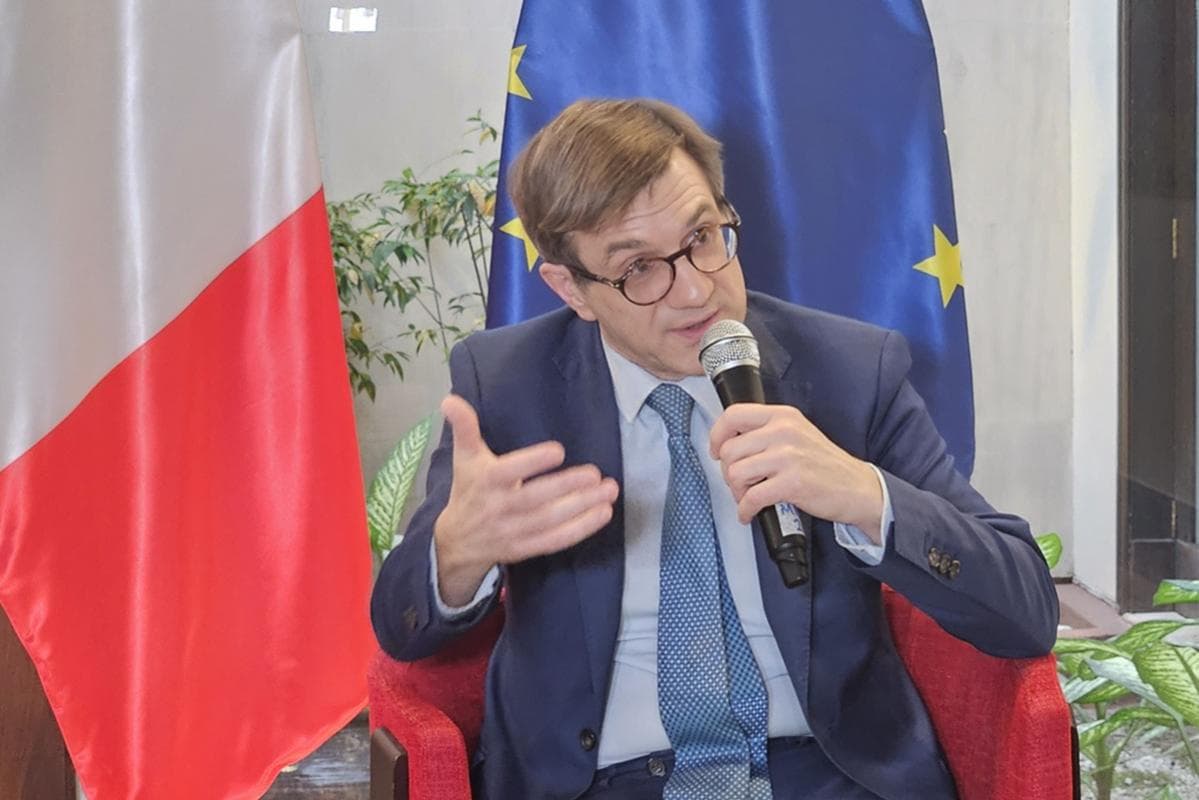
"It is their [Malaco's] responsibility" to secure the feedstock, while the French partner's role is to ensure the project meets all the environmental criteria," Benjamin Gallezot, the French Inter-Ministerial Delegate for Strategic Minerals and Metals Supply, told a press conference on Wednesday.
"Access to the resource is in the hands, at the same time, of the state and federal governments," he added.
The pilot project follows the signing of a memorandum of understanding (MOU) signed in July last year between between Malaco and Carester.
The Malaysian government, together with local companies, have been exploring ways to tap into the country's estimated RM810 billion worth of REE deposits. REE is used in everything from consumer electronics to the defence industry.
However, Malaysia has imposed a ban on the export of raw REE from 2025 to 2027 to force companies to process the minerals here in order to develop the higher-value refining and downstream segment domestically.
This gave rise to another stumbling block — the need to secure adequate raw feedstock in order to justify the huge investments required to develop the mid-stream and downstream plants.
Adding to the challenge is that most REE deposits are reported to be located in forest reserve areas, which weighs on the environmental assessment by end-customers globally on REE products.
Gallezot did not disclose the pilot plant's exact capacity, but highlighted that the project utilises modular extraction technology, which allows it to scale up once a stable local supply chain is established.
"It is always difficult" to coordinate the timing of the mining segment capacity growth with downstream plant investment, Gallezot admitted, but noted that a "second decision" on expansion would be made once the pilot demonstrates operational efficiency.
The plan is to allow technology transfer into Malaysia, while helping France secure the critical mineral, he said. "It is not to cut corners," Gallezot said. "Validating everything is very important."
Among companies involved in Malaysia's REE sector include MCRE Resources Sdn Bhd, a 40%-owned company of Singapore-listed Southern Alliance Mining Ltd, which mines REE in Perak. It is the only firm with the licence to export the commodity in its raw form, as it is exempted from the moratorium.
Last October, Australia's Lynas Rare Earth Ltd announced a RM500 million investment to develop a new REE separation facility in Malaysia, capable of processing "heavy REE" — a high-value segment currently dominated by China.
The world's largest REE processor outside of China, Lynas also signed a pact with the Kelantan state government last year to source REE from the state, on the heels of a successful pilot to separate heavy REE from clay deposits, which is the type of deposits found in Malaysia. Its existing processing plant in Pahang, which processes minerals from Australia, supplies about 5% of global demand.