

This article first appeared in Wealth, The Edge Malaysia Weekly on January 26, 2026 - February 1, 2026
Real estate is one of Malaysia’s favoured investment asset classes, which explains the popularity of real estate investment trusts (REITs) among retail investors seeking exposure to malls, offices, hospitals, industrial warehouses and other income-generating properties.
Driven by market innovation and technological advancement, new ways of investing in real estate — particularly residential properties — have emerged, following the entry of Urban NX Sdn Bhd (Urby) and Wahed X Sdn Bhd (Wahed) into the Securities Commission Malaysia’s inaugural regulatory sandbox, announced late last year.
Urby and Wahed allow investors to gain fractional exposure to residential properties with small sums of capital. Urby’s minimum investment starts at just RM10 and Wahed’s begins at RM500.
The key differentiator lies in the degree of investor control. Unlike REITs, where capital is pooled into a professionally managed trust that owns income-generating commercial properties, these platforms allow investors to directly select individual residential properties in which they wish to take fractional exposure.
In industry parlance, Urby’s and Wahed’s offerings fall under fractionalised real estate investment. As these products have been newly introduced to the Malaysian capital market, Wealth speaks to Urby and Wahed to better understand their operations, risks and opportunities.

Urby offers investment opportunities in refurbished vacant homes
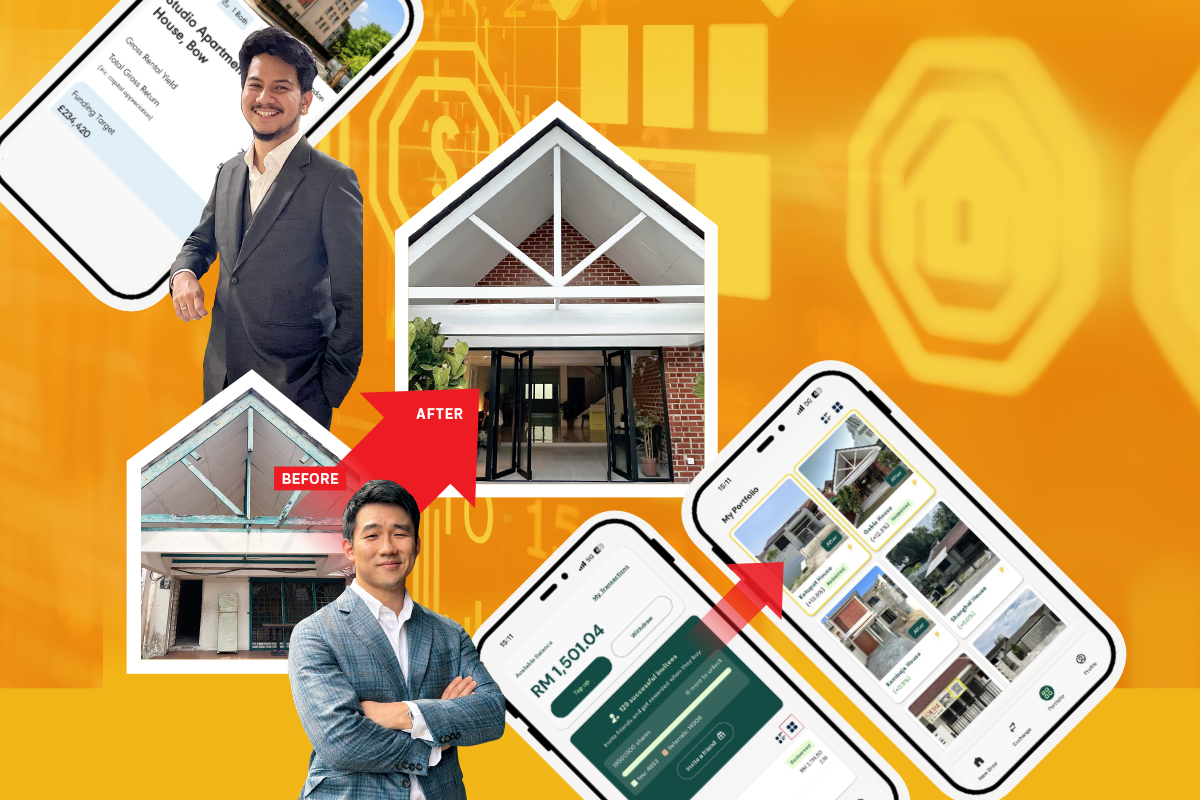
Urban NX Sdn Bhd (Urby) aims to kill two birds with one stone — channelling capital into upcycled vacant homes while giving investors a way to invest in these properties without having to buy or manage them.
These properties are usually older, landed homes in mature Klang Valley neighbourhoods that were previously vacant or dilapidated, and have since been refurbished and modernised before being offered to investors.
Urby operates as an investment platform that allows investors to browse individual properties put forward by property owners or developers and select which ones to invest in. Investors can get started with as little as RM10 and invest up to RM25,000 per property.
Returns are realised when the house is sold or repurchased by the homeowner, with proceeds credited to the investor’s bank account for withdrawal.
The investment time horizon and potential returns vary depending on the model chosen. As at Jan 11, 19 properties were listed on the platform, split into two categories — FastTrack and co-owned. Of these, 11 properties fall under FastTrack and the remainder are co-owned homes.

For FastTrack homes, estimated net returns currently range from 6% to 12% per property, with an expected sale within six to 12 months, says Ang Shu Yi, product manager of Urby.
FastTrack homes are properties purchased outright by a property owner, who then lists the home on Urby. The property owner retains full control over the refurbishment process, sale timeline and pricing, while investors earn a share of the profits when the house is sold.
So far, two FastTrack properties have been sold, delivering realised returns. The first was Ketupat House in SS5, Kelana Jaya. Initially listed at a share price of RM9.50, it was redeemed at RM11.17 per share about six months later, translating into a return of about 17%.
The other was Gable House in Gasing Indah, Petaling Jaya, which sold for RM1.21 million. First listed at RM9.78 in April 2025, it was redeemed at RM11.11 last November, resulting in a return of 13.5% over seven months, according to data from the platform.
Meanwhile, co-owned homes are properties jointly acquired by UrbanWave — the sole lister on Urby at the time of writing — and a resident buyer under a home co-ownership model.

UrbanWave provides upfront cash for renovations in exchange for a minority equity stake, while the resident buyer continues to live in the home and retains control over the upcycling process.
Over time, the resident buyer may repurchase UrbanWave’s stake at prices set upfront under an agreed schedule, or both parties may realise gains based on their equity stakes if the property is sold to a third party.
These co-owned investments are structured as long-term holdings, with a time horizon of five to 10 years and targeted annualised returns of around 8%, says Ang.
UrbanWave is a property company that acquires, renovates and sells vacant or underutilised landed homes. Both Urby and UrbanWave are subsidiaries of UrbanMetry, a property data and analytics firm.
Urby plans to open its platform to additional listers over time. At the time of writing, it had about 800 users, with roughly RM1.5 million invested across its listed properties.
The platform aims to reach around 5,000 users by end-2026, with a target of deploying RM10 million into properties in that period, says Stirling Yiin, head of Urby.
“Urby’s current operations and investment models are not the finalised version that will be overseen within the SC sandbox. While we anticipate the core concept of the model to remain consistent, we will be guided by SC in the next few months to improve on the mechanics of listings and security specifics to enhance protections for our investors," he says.

How to invest on Urby
Urby is now focusing on FastTrack properties, with all upcoming listings falling under this category, as the model is simpler to execute, easier for investors to understand and offers a shorter, clearer exit timeline.
Yiin says a property appears on the Urby platform only after it has been fully acquired. Investor funds are not used to purchase homes upfront, as Urby is not a crowdfunding platform.
Instead, UrbanWave, currently the sole lister, acquires properties first, using its own capital as well as funding from institutional investors. Investor money is then used to fund the overall acquisition and redevelopment costs.
“The lister has to use its own working capital to execute the property purchase first because of the speed and cost involved in making these residential property transactions viable,” explains Yiin.
“Capital formation using a typical crowdfunding model would result in lost opportunities and incur significant overheads for the eventual investor.”
Once a property has been acquired, the lister or property owner issues profit-sharing contracts (PSCs) linked to the property, which are then offered to investors via the Urby app.
He adds that investors who enter PSCs do not own equity in the house itself, but are entitled to a share of the profit when the property is sold.
“The PSC represents a monetary interest backed by the property and its sale proceeds. You don’t own legal equity in the house itself — your rights are to a share of the profit via the PSC when the property is sold,” says Ang.
PSCs typically represent 20% to 40% of a property’s value, with the remainder retained by the lister. The app discloses the number of shares issued and the estimated value per share after factoring in relevant costs.
Shares are offered at an initial price of RM10 each. The total number of shares issued per project is calculated by multiplying the lister’s percentage of ownership by the total project cost and dividing that amount by RM10, says Ang.
Total project costs include property acquisition, renovation, legal, tax and other related expenses.
Why are not all the shares listed on Urby? “Previously, we capped listings around 40% because of inventory and risk considerations. As our user base and AUM have grown significantly over the past few months, we now adjust listing percentages dynamically to ensure there is sufficient stock for investors, especially when new property launches may take time. In some cases, this means listing a higher portion of a house to match demand,” says Ang.
Investors hold the PSCs until the property is sold, at which point net proceeds are distributed proportionately among PSC holders based on the number of shares they hold (see chart below).

Secondary market for early exits but liquidity still thin
Urby also operates an exchange, or secondary market, that allows investors to sell their shares to other users before the underlying property is sold, providing an optional early exit for those with liquidity needs.
“The exchange functions like a typical stock exchange, with a centralised order book and matching done by our system. In addition, the functions of a broker, custodian, clearing house and depository are integrated into the platform. One aspect not currently implemented, however, is that of market makers and liquidity providers,” says Yiin.
Investors are charged a flat 2.5% transaction fee when purchasing shares in the primary market. The platform does not charge additional fees when investors sell shares on the secondary market when a property is sold or repurchased or when funds are withdrawn.
Price movements on Urby are determined by the most recently completed transaction for a property, whether the trade takes place in the primary or secondary market.
PSCs are initially issued at a fixed price of RM10 per share, but prices can change over time based on appreciation and subsequent trades on the platform.
For FastTrack properties, primary-market prices are also adjusted periodically in line with Malaysia’s historical average house price appreciation of 5% per year.
For co-owned homes — now being phased out — prices appreciate at 8% annually under a schedule agreed to by UrbanWave and the resident buyer.
For instance, Rumah Santosha in Seksyen 17, Petaling Jaya, was acquired in May 2024 under the co-owned model and listed at RM10 per share. Under its buyback schedule, the price was set to rise about 8% per year, translating into RM10.80 by May 2025, with a monthly increase of roughly 7.2 sen thereafter.
Investors can also trade PSCs on Urby’s secondary market, where shares are exchanged between users. When a trade occurs, the price of the most recent transaction becomes the reference price displayed across the platform.
The exchange is still at an early stage, though. Prices are not volume-weighted and detailed market data — such as trading volumes, order depth or historical price charts — is not yet fully visible to investors.
“As this is a new asset class and platform, the exchange is not as liquid as existing public markets, and we don’t want to pretend otherwise,” says Yiin.
“Looking ahead, we intend to provide more historical data as the exchange becomes more active and as we gain a better understanding of what data our users want access to.”
Investing with Urby does carry risks, as property values can fluctuate and returns may vary depending on market conditions and the specific properties involved.
Key risks include market demand, price volatility, liquidity, exit uncertainty, interest rates and homeowner default, according to Urby’s website.
Can investors lose their entire investment? “Yes, in theory, it is possible, but it is extremely unlikely. Urby investments are backed by real, physical properties that it owns and holds title to. Because of this, there is always an underlying asset with recoverable value.
“Unlike unsecured or purely financial instruments, Urby’s investments do not go to zero unless the property itself becomes worthless, which is highly improbable in practice,” says Ang.
Wahed set to offer rental and capital appreciation
Wahed X Sdn Bhd (Wahed) is preparing to introduce a property investment product designed to deliver not only capital appreciation but also rental income for investors.
Wahed Malaysia director and CEO Zayan Yassin says the process begins with sourcing residential properties capable of generating above-average rental yields.
Once identified, funds are pooled from investors through Wahed’s platform to acquire the properties, which are then managed by the company through tenant management, rent collection and ongoing oversight.
Each property and acquisition is vetted and approved by an internal investment committee before being offered to investors.
Zayan adds that Wahed will proceed with an acquisition only after successfully crowdfunding the full investment amount.
Upon a successful fundraise, the company signs the sale and purchase agreement and completes the transaction. Campaigns that fail to meet their funding target are cancelled, with investors receiving full refunds.

Each fundraising campaign is expected to run for 20 to 30 days.
The holding period for each property is five to six years, after which the asset is liquidated. During the holding period, rental income is distributed to investors on a quarterly basis, and capital appreciation is realised when the property is sold.
This provides investors with a combination of income-generating and growth-oriented returns, says Zayan.
The minimum investment starts at RM500. Wahed is targeting a net rental yield of 4% to 6% a year, while capital appreciation upon sale is expected to be 4% to 5%.
For example, a RM1 million property generating RM5,000 in monthly rent produces RM60,000 annually, translating into a gross rental yield of 6%. After factoring in operating expenses such as property management fees, maintenance and other costs, the net yield may come down to around 5%, says Zayan. This net rental yield represents the portion of returns distributed to investors as regular cash income.
“In the property market, it’s always about location. One property can appreciate 10% to 12%, and another can appreciate 3% to 5% … We need to select properties in the right locations,” he explains.

“More importantly, we will focus on yield. Rental yield is what we want to make sure at least meets the benchmark.”
Wahed, which operates similar products in the UK and the US, does not currently have live property offerings in Malaysia but plans to launch its first fundraising campaign shortly after going live under the Securities Commission Malaysia’s (SC) sandbox.
In the UK, Wahed has completed 19 property deals with a total value of about £6.8 million; and in the US it has closed four deals worth roughly US$1.7 million, according to Zayan.
Locally, the company is targeting eight successfully raised campaigns during the SC sandbox period of 12 months to test its solution.
Wahed will focus on residential properties priced between RM300,000 and RM600,000 at the lower end, and between RM1.2 million and RM3 million for higher-end assets, says Zayan.
Investors are charged a 6% transaction and due-diligence placement fee upon entry, as well as a 3% fee on returns upon exit when the asset is liquidated.
No fees are charged on rental income distributions.
If a property fails to generate rental income after purchase, rents will be reduced to keep the house attractive and competitive, says Zayan. While this may affect the target yield, the financial model already accounts for such risks. “Our target yield is based on a conservative model, using lower-than-market rent assumptions,” he explains.
Zayan adds that Wahed builds a cash buffer into its financial model to cover periods in which a property may not generate rental income.
“The buffer is meant to accommodate delays in rent and tenancy. Yes, it covers periods of no rental income as well. We also assume an occupancy rate that is not 100%. When we calculate expected rental income, we assume a 90% annual occupancy rate — effectively allowing for one month without rental income,” he says.
Wahed is building a structured panel of property managers and renovators to scale operations efficiently as it acquires properties. The panel includes property valuer IM Global and property manager Speedhome.
Save by subscribing to us for your print and/or digital copy.
P/S: The Edge is also available on Apple's App Store and Android's Google Play.