

This article first appeared in Forum, The Edge Malaysia Weekly on January 26, 2026 - February 1, 2026
In the last nine months or so, there have been numerous efforts to get the Malays to unite against what is perceived to be threats to the community. These calls are short on specifics, but the gist is that if such threats are not overcome, in the long term, they will cause the Malays to lose their political clout and eventually power, notably to the Chinese.
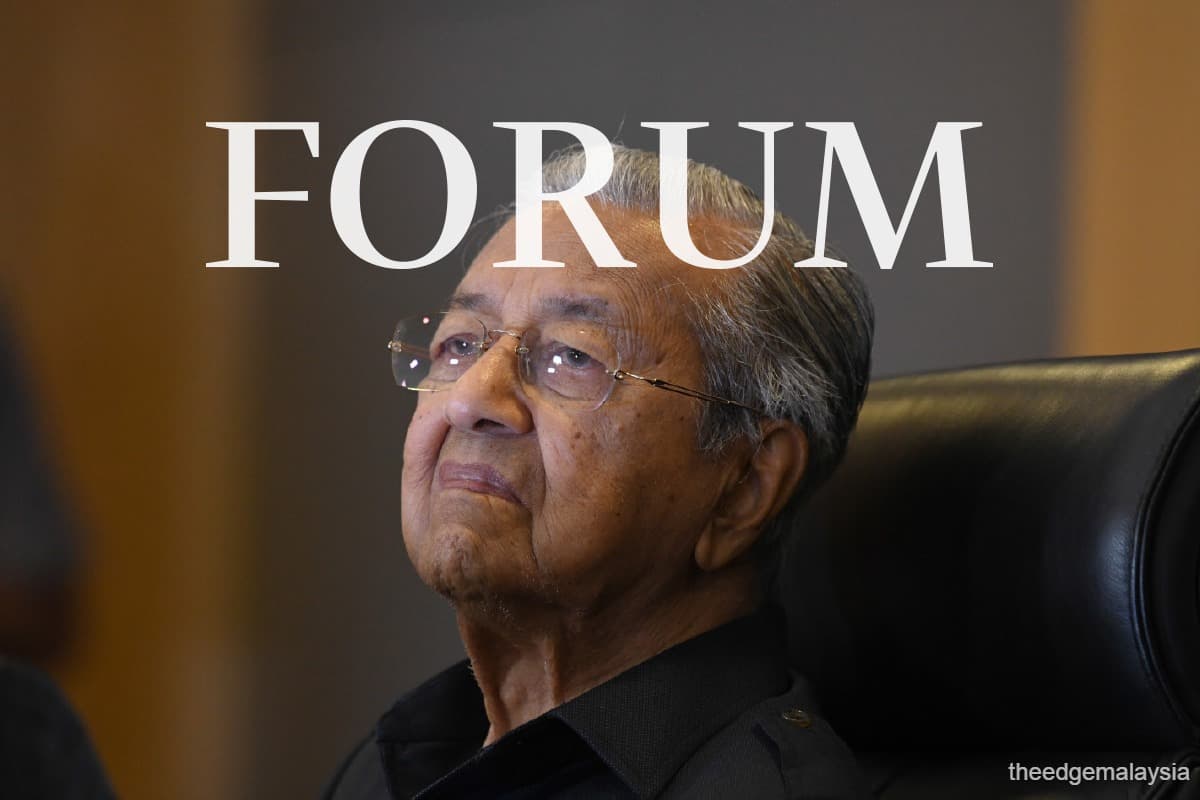
In the middle of last year, former prime minister Tun Dr Mahathir Mohamad launched the “big umbrella secretariat” initiative to “save the Malays” by addressing issues affecting the community that they claimed the current unity government (UG) had failed to resolve.
This Malay unity alliance is supposed to be non-partisan and open to all Malays. However, it is still dominated by Malay-based opposition parties led by PAS and Bersatu. The movement has lost its momentum, and with Mahathir now undergoing the long process of recovery from a hip injury, progress will remain slow.
In the meantime, PAS wants the protection of Malay and Muslim interests to be expedited via a political alliance by reviving Muafakat Nasional (MN) with Umno. This is to consolidate Malay-Muslim votes ahead of the 16th general election (GE16), which it believes it can win.
PAS, along with Bersatu, see what they call MN 2.0 as crucial to strengthening Malay unity and their political base. But Umno, which is now part of the UG, is not having any of it.
Its president and deputy prime minister Datuk Seri Ahmad Zahid Hamidi said PAS cannot be trusted to lead Malay unity efforts. On PAS-Umno cooperation, he said Umno would not be “bitten by the same snake twice”.
Countering MN 2.0, which is gaining traction among some senior Umno members, particularly its youth chief Datuk Dr Muhamad Akmal Saleh, Ahmad Zahid proposed a “grand collaboration” (GC) plan to unite all Malay-Muslim parties under a single informal umbrella, at the party’s recent general assembly.
He said while the groups will all be under one roof, the initiative must not destabilise or topple the current UG led by Prime Minister Datuk Seri Anwar Ibrahim — a proposal that does not make sense to Umno’s Malay-Muslim political arch-rivals.
PAS president Tan Sri Abdul Hadi Awang rejected the GC offer and said the UG, which was formed after the last general election, involves “silent devils” and other groups that are not aligned with PAS and its Islamic goals.
The party expressed concern that Umno’s proposal might “confuse the people” if it remained part of the UG led by Anwar and Pakatan Harapan (PH).
From a simple concept of trying to achieve Malay-Muslim unity, these initiatives have become confusing, deemed to be merely for political expediency on the part of their promoters. They certainly do not prioritise Malay-Muslim interests.
Many Malay-Muslim voters still remember the chaotic power struggle among PAS, Bersatu and Umno when they led what was basically a Malay-Muslim-dominant government for 33 months after the collapse of the PH government, following the Sheraton Move of February 2020 that saw members of parliament (MPs) of the ruling party jump ship.
For PAS, which is now in a stronger political position with the highest number of MPs, MN 2.0 or any new Malay-Muslim political alliance that it leads is the best route to seizing power in GE16. Although GE16 must be held before February 2028, many are of the opinion it will be held in 2027.
Some political observers believe that for Umno, which is at its weakest political point but is still part of the government, the GC is a mechanism to manage the Malay-Muslim pressures within a looser, conditional and accommodative framework that does not threaten the UG.
Rather than reviving the MN, a political pundit says, the GC serves as an “identity management tool in a coalition context” prior to the formation of a strategic electoral alliance.
“The recently concluded Umno general assembly confirms that the party has entered a post-hegemonic phase, where survival is no longer defined by dominance but by its ability to manage tensions between grassroots emotions, notably the Youth wing, and the realities of being in a coalition that could persist beyond GE16,” the pundit says.
So, what then is this call for Malay-Muslim unity all about?
Perhaps it is best described in a Facebook posting by prolific writer Hisham Badrul Hashim aka Spice, who calls it “power struggles in a costume called unity”.
“What we (the Malays and Muslims) were promised was unity of the ummah. What we got was a stage. On this stage, every party competed to see who could shout ‘I care about the Malays’ the loudest, while quietly checking who held the microphone. The unity that was supposed to feel like a solid bridge began to resemble a temporary plank — useful only until you have crossed to the other side.”
Political rhetoric and manoeuvrings aside, 69 years after independence, there is no need for a new umbrella for the Malay-Muslim community because it has been and always will be there, as the government will continue to be led by a Malay-Muslim prime minister and government.
The permutations might be different, ranging from an Umno-led Alliance (Perikatan) to an Umno-led Barisan Nasional (BN) or a PH alliance led by Mahathir and Anwar alongside their partners in Sarawak and Sabah, but the prime minister, who can execute programmes that will benefit the bumiputera community, remains a Malay Muslim.
Above all this, the powers of the Malay-Muslim rulers are enshrined in the constitution, which itself is the ultimate “umbrella” that protects the special position of the Malays and the bumiputera of Sabah and Sarawak. It covers affirmative action, Islam and Bahasa Malaysia as the official religion and language, while protecting the legitimate interests of the other communities.
Also important is the fact that His Majesty Sultan Ibrahim, King of Malaysia, when opening the first meeting of the fifth session of the 15th parliament on Jan 19, reminded Malaysians of all races that national interests must take precedence and that the government should safeguard the people’s well-being too.
The King’s message is a reminder that unity among all races — and not only the Malays and Muslims — is the backbone that supports the longevity of this nation.
In past articles, I have said that the development formula for Malaysia to be a peaceful, thriving nation is not that complicated, as unity among the different races and religions will result in political stability, which will lead to prosperity for all.
This is what I hope will be more firmly embedded in the hearts of the majority of Malaysians, notably politicians. Political leaders owe this to the rakyat, to help nurture unity. There will be grievances and resentments among the different races, and it is the politicians’ task to help manage this. Douse the fire; do not let it engulf us in a flame of divisiveness.
Almost always, this simple formula becomes complicated when it is mixed with racial and religious sentiments, pitting one race against another, fuelling a sense of insecurity among the Malays and Muslims. This makes unity and the Malaysian spirit of give and take among the different races elusive.
The bleak bigger picture that the Malay-Muslim umbrellas promote is that multiculturalism will lead to the erosion of Malay rights in Malaysia. This will make them poorer, as the non-Malays’ domination of the economy will be stronger and they will become less accommodating. This, in the long run, will result in Malays losing political power as well.
This is a narrative that I, and many other Malays, do not believe in.
Malays need to be confident that they can compete. In many socioeconomic activities, many have “quietly” proven that they can compete and stand on their own, without needing to shout about their success.
If the political promoters of these “umbrellas”, who are outside and inside the government, really want to help the Malay Muslim community, they can start by not dividing them along political lines and raising religious sentiments, making them less confident by telling them they need crutches all the time and scaring them with the fear of losing political power to the non-Malays.
Malay politicians and non-governmental organisations must continue to assist and improve the socioeconomic well-being of the community, help raise the standard of education, especially in the Malay heartland, and fight the corruption scourge.
Do positive things. Talk less and work more. Close the umbrellas; the rainy season is over.
Azam Aris is an editor emeritus at The Edge
Save by subscribing to us for your print and/or digital copy.
P/S: The Edge is also available on Apple's App Store and Android's Google Play.