

This article first appeared in Forum, The Edge Malaysia Weekly on January 26, 2026 - February 1, 2026
In 2025, floods, cyclones and landslides across South and Southeast Asia were the second most expensive climate disasters, costing around US$25 billion, according to Christian Aid, with the most expensive being the Palisades and Eaton fires in the US. This amount will rise as the full cost of recovery becomes clear. From Indonesia to Vietnam, from Sri Lanka to India, as well as here in Malaysia, communities are grappling with destroyed homes, disrupted power supply, paralysed transport networks and damaged livelihoods. Perversely, governments continue to describe these events as “natural disasters”. But this framing is woefully inaccurate, and it obscures the real economic problem.
What we are witnessing today are predictable economic shocks, intensified by equally predictable climate-change-related events, compounded by policy choices that continue to prioritise short-term growth and extraction over long-term resilience. The key message here is that climate change is expensive, and our region is suffering, first hand, the substantial associated costs.
In Indonesia, November’s floods and landslides damaged more than 150,000 homes, with reconstruction costs expected to exceed US$3 billion. In Vietnam, torrential rains inundated hundreds of thousands of homes, knocked out power to more than a million households and disrupted agricultural output, including delays to the coffee harvest with significant export implications. In Sri Lanka, a single cyclone caused damage equivalent to roughly 4% of GDP — a devastating blow for an economy still recovering from crisis. And for all of these countries, both domestic and international tourism was affected.
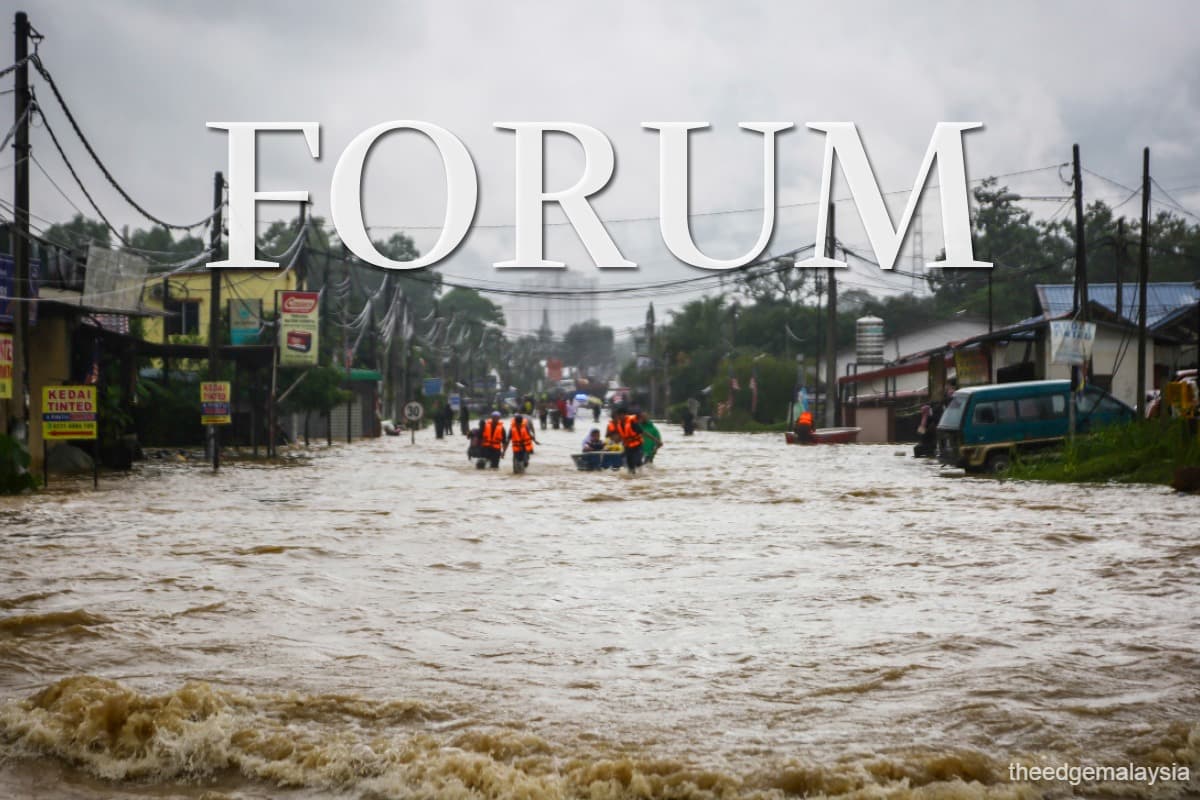
Malaysia is not insulated from these trends. The devastating floods in December 2021 cost about RM6.1 billion from damage to public infrastructure, vehicles and businesses, and many other unforeseen expenses. In 2023, floods cost the country RM755 million, in addition to displacing thousands. Each episode triggers emergency spending, repair work and compensation which accumulate across federal, state and local budgets. The important point here is that these are no longer one-off or once-in-a-century shocks; these disasters are recurring fiscal liabilities, aggravated by climate change.
Yet, the most concerning pattern is the paucity of government response in these countries. Billions are mobilised after disasters strike for relief, rebuilding and recovery while scant resources are available for prevention. Roads are repaired without upgrading drainage. Homes are rebuilt in flood-prone areas. Wetlands are reclaimed, forests cleared and hillsides developed, removing the natural systems that once absorbed excess water and reduced damage.
Across the region, our governments are spending far, far more on recovery than they are investing in resilience. The result is clear to see: a cycle of destruction and rebuilding that locks governments into ever higher costs. Prevention, by contrast, remains underfunded because it is politically invisible. While strengthening flood defences, restoring wetlands and protecting forests do not deliver immediate political rewards, the economic returns are clear and enduring.
Nature itself remains one of the most cost-effective forms of resilient infrastructure available. Forests stabilise soil and regulate water flows. Wetlands absorb floodwaters. Mangroves reduce storm surge impacts. When these systems are degraded, governments inherit permanent liabilities in the form of higher infrastructure costs, greater disaster damage and rising insurance and recovery bills.
Indonesia’s experience is instructive. Environmental groups and communities have long warned that upstream deforestation and extractive concessions were increasing flood risks. When Cyclone Senyar dumped extreme rain on Sumatra, debris and logs were swept downstream, destroying everything in their path. This was not simply a climate event, it was the consequence of poorly-thought-through land-use decisions made years earlier. Similar dynamics are playing out in Malaysia, where development pressures continue to encroach on flood plains and forested catchments.
At the same time, governments face a deeper and more dangerous contradiction. As climate-driven disasters rack up mounting economic damage, states are doubling down on fossil fuels that sit at the heart of today’s geopolitical conflicts, from Ukraine to Venezuela. These are not isolated crises but symptoms of a wider breakdown of the international rules-based order, where energy and resource control once again trump cooperation. All this is happening even as the economics of energy shift decisively away from fossil fuels. Thus it seems clear that accelerating the move away from fossil fuels towards sources of energy which are less reliant on international cooperation and trade would be both wise and timely.
New analysis shows that battery storage costs have fallen dramatically over the past decade, declining by around 20% per year on average, with further reductions expected. This has transformed the economics of solar power. Solar energy is already the cheapest form of electricity globally, and with affordable storage, it can now provide reliable, dispatchable power through the night at costs that are increasingly lower than new fossil fuel alternatives.
For countries like Malaysia, this matters. New gas infrastructure, particularly when reliant on imported liquefied natural gas, exposes the economy to price volatility, currency risks and medium-term stranded assets. By contrast, solar paired with storage can be deployed faster, at lower cost and with far less exposure to global fuel shocks.
Meanwhile coal, which was long treated as a cornerstone of regional energy systems, is no longer the growth engine it once was. Global coal demand growth has slowed sharply over the past decade, with power-sector demand flattening in key markets as renewables expand. Even metallurgical coal demand is showing signs of plateauing. Persisting with large-scale coal investments today risks locking in infrastructure that is increasingly misaligned with market trends.
The economic signal is clear: the cost of clean energy is falling, while the cost of climate damage and the increasing risk exposure to volatile fossil fuel markets is rising. However, in general, policy choices have not kept pace with this reality.
This is not a problem of missing data or unclear science. Despite misinformation and disinformation efforts by those with fossil fuel interests, the risks are well understood. Climate change is intensifying rainfall and storms, and warmer seas are fuelling stronger cyclones. What is lacking is a consistent willingness and courage to align fiscal policy, energy planning and land-use decisions with long-term economic resilience.
For Malaysia, the implications are immediate. Continued underinvestment in flood prevention, forest protection and climate-resilient infrastructure will mean higher recovery costs year after year. Delaying the energy transition will increase exposure to fuel price volatility while missing the opportunity to build a more secure, affordable power system.
The alternative is neither radical nor unrealistic. Ramping up investment in resilient public infrastructure, restoring natural buffers, enforcing land-use planning and accelerating the deployment of renewables and storage delivers multiple economic dividends. It reduces future disaster costs, strengthens energy security, creates jobs and improves investor confidence.
Malaysia is particularly well positioned to finance this transition. As a global leader in Islamic finance, it has a ready-made framework for mobilising capital into assets that are long term, asset-backed and aligned with social and environmental objectives. Instruments such as green sukuk can channel institutional and retail capital into flood-resilient infrastructure, renewable energy, grid upgrades and nature-based solutions, while meeting growing investor demand for sustainable and shariah-compliant products. For instance, Bank Negara Malaysia’s Value-Based Intermediation (VBI) pushes banks to link Islamic finance to sustainability outcomes, including forests, watersheds and coastal resilience. Supported by VBI frameworks, Islamic financial institutions have mobilised over US$11 billion in green and transition financing, while newer initiatives such as risk-sharing facilities and takaful solutions are helping to address climate-related risks that conventional financing often struggles to manage. Properly structured, these investments can lower financing costs, crowd in private capital and reduce the long-term fiscal burden on the state.
Climate disasters will not disappear. But their economic impact is not inevitable. It is shaped by choices about where we build, what we protect and which energy systems we commit public capital to.
In an era of intensifying climate shocks, resilience and clean energy are no longer environmental ideals. They are the most fiscally responsible investments governments can make — and the cost of postponing them is one the Malaysian economy, and the region, can increasingly ill afford.
Prof Tan Sri Dr Jemilah Mahmood, a physician and experienced crisis leader, is executive director of the Sunway Centre for Planetary Health at Sunway University. She is the founder of Mercy Malaysia and has served in leadership roles internationally with the UN and Red Cross in the last decade. She also sits on several corporate and non-profit boards globally and nationally. In 2019, she was the first Malaysian recipient of the Asean Prize.
Save by subscribing to us for your print and/or digital copy.
P/S: The Edge is also available on Apple's App Store and Android's Google Play.