

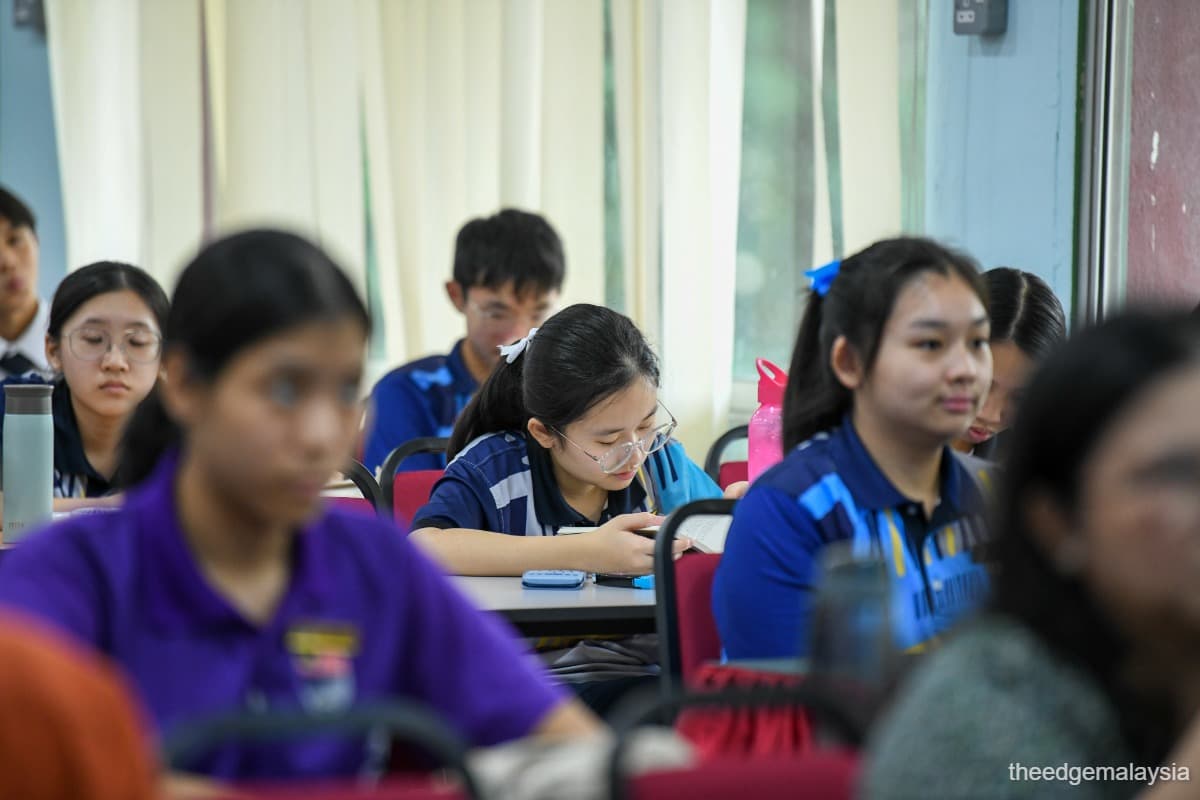
The National Education Plan 2026–2035 unveiled on Jan 20 by Prime Minister Datuk Seri Anwar Ibrahim marks yet another policy with disruptive ambitions during his tenure. From primary schools and secondary schools to pre-university programmes and universities, every level of Malaysia’s education system faces major policy adjustments under this new blueprint.
Primary education: The most radical shift
The most significant policy change appears at the primary level. In his announcement, it was mentioned that beginning in 2027, parents will be allowed to enrol their children in Year One at the age of six. This policy is a double-edged sword, and its eventual outcome depends entirely on the underlying education philosophy intended.
Internationally, there are many countries where formal schooling (Grade 1) begins before the age of seven, such as the UK, the Netherlands, and the US. In these systems, children typically start primary school between the ages of five and six, mainly to provide a longer transition period to adapt to formal classroom learning. The teaching and learning content for Grade 1 mainly focuses on adaptation learning, rather than academic. In addition, starting primary school earlier can ease the financial burden on low-income families, since public education is free while preschool education is fee-based mostly. Earlier entry into public schooling effectively encourages children from lower-income families to access education sooner, increasing the education affordability while reducing household costs, ultimately advancing the broader goal of social equality.
However, Anwar did not explicitly articulate the policy rationale behind this change. At the launch, he remarked that “children today are more mature” (lebih matang mengikut peredaran masa dan tuntutan zaman), and therefore, if parents feel their child is ready, six-year-olds may enter Year One. This framing reveals serious conceptual flaws.
First, such optional flexibility will disproportionately benefit families with greater economic resources, thereby exacerbating social stratification over time. Second, without a unified standard to assess a child’s “maturity”, leaving the decision solely to parents risks encouraging premature academic pressure, ultimately dampening children’s interest in learning. More importantly, this educational logic contradicts the original purpose of early entry into primary school, which is to provide children with a smoother transition and a more enjoyable learning experience. Instead, it risks devolving into a purely utilitarian system, one that is harmful rather than beneficial to children.
For these reasons alone, we should be cautionary about this flexible early-entry policy. It appears to be superficial in form and lacking substantive educational depth.
The return of standardised assessments
Anwar also announced the reintroduction of national assessments at the primary and lower secondary levels, to be conducted in Year Four and Form Three respectively. This move effectively ends the Ministry of Education’s five-year attempt to move away from examinations as the primary measure of academic ability.
In reality, both national examinations and classroom-based assessments have their respective strengths and weaknesses. The issue is not the choice of assessment mechanism itself, but whether the necessary groundwork is in place. If the system is to transition from national examinations to classroom-based assessments, the supporting educational ecosystem must first be built. This includes comprehensive reforms to teacher training systems and a thorough overhaul of curricula and pedagogical frameworks.
Only after these reforms are completed should pilot programmes be conducted on a limited scale to test feasibility and identify weaknesses, before any nationwide rollout. Such preparation can easily take a decade. Malaysia’s current predicament stems from the hasty abolition of the Ujian Pencapaian Sekolah Rendah (UPSR) and the Pentaksiran Tingkatan Tiga (PT3) without due consideration of the broader educational ecosystem, resulting in a half-finished reform. Anwar’s decision to reinstate these assessments can therefore be seen as a painful but necessary damage-control measure.
As for moving the primary assessment forward from Year Six to Year Four, this is not inherently problematic. After four years of schooling, students undergo a comprehensive evaluation (UPSR 2.0), followed by another major assessment five years later in Form Three (PT3 2.0). The time interval between these assessments is reasonable. If learning gaps are identified at the Year Four stage, there remain at least two years for remedial intervention before students transition to secondary school. The key concern, however, is how to prevent these assessments from once again evolving into extreme exam-oriented practices that exhaust schools, teachers, and students alike.
SPM as a national education standard
We must also address Anwar’s announcement that all school streams in Malaysia, including religious schools, international schools, and Chinese independent schools, will be required to teach Malay language and History at standards equivalent to the Sijil Pelajaran Malaysia (SPM) for Malaysian citizens, and to mandate their sitting for these two SPM subjects.
Under current Examination Board regulations, students must take at least six core subjects to obtain the SPM certificate: Malay language, History, Mathematics, Moral Education, Science, and English. This policy therefore implies that Malaysian students in all non-government school systems will need to undertake a dual-track examination pathway.
At first glance, this policy appears to impose a heavy burden on private-school students. However, a closer examination suggests that the positive effects may outweigh the negative ones. Students in private religious schools have long been sitting for the SPM almost universally, and thus will be minimally affected. For international school and Chinese independent school students, who have already planned their futures around international qualifications, such as the IGCSE, International Baccalaureate (IB), or the Unified Examination Certificate (UEC), SPM can simply be approached as a compliance exercise. For them, whether they ultimately obtain the SPM certificate is largely irrelevant; the primary cost incurred may simply be SPM examination fees.
Certainly, for private schools, this policy will introduce additional pressures in terms of staffing and finances. At the same time, however, it opens up a broader market, particularly among parents and students who desire dual-track options. For this group, the mandatory SPM requirement expands future pathways, including access to public universities.
This is especially significant in light of Anwar’s statement at the launch that if all Malaysian students sit for the SPM, then the admission of students from religious schools, international schools, and Chinese independent schools into public universities should no longer be controversial. This implies that UEC holders who sit for the SPM may become eligible for entry into public universities. Such an approach would be a win-win outcome: students gain wider choices, public universities gain access to a larger and more diverse talent pool, and the cumulative effect would strengthen the overall quality of Malaysia’s higher education system.
Ooi Tze Howe works in a US-based electronic tech company. He covers the corporate, governance and non-profit sectors. He founded and manages a non-profit think tank HEYA Inc on a pro bono basis.