

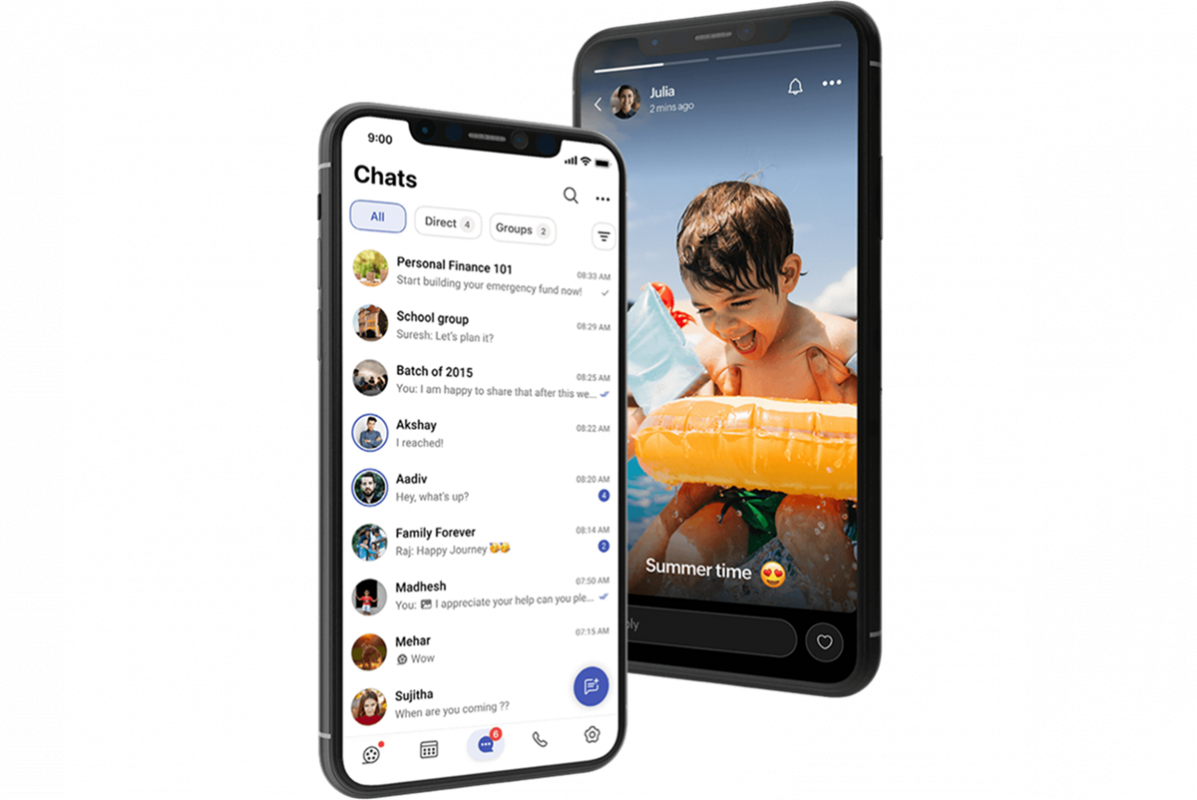
CHENNAI (Jan 21): Zoho Corporation’s homegrown messaging app, Arattai, which is touted as an alternative to Meta’s WhatsApp in India, aims to penetrate the market this year by introducing end-to-end encryption for one-to-one and group conversations, and roll-out superapp features such as payment systems similar to WeChat, said Zoho’s CEO and co-founder Shailesh Kumar Davey.
Zoho Corporation is an Indian multinational technology company that provides an integrated suite of cloud-based business software with over 55 apps for sales, marketing, finance, human resources and IT management. The company has offices in more than 80 countries, such as the US, the UK, Saudi Arabia, United Arab Emirates, Singapore and Indonesia.
“Arattai”, which means banter or casual chat in Tamil, had a soft launch in 2021 but initially gained little traction. Davey told DigitalEdge during Zoho’s annual ManageEngine Day 2026 at its Chennai headquarters that the app’s surge in popularity last year was driven largely by endorsements from several well-known personalities on X.
“Suddenly, it took off last year. We were actually waiting and currently getting the infrastructure ready. There were some very important features that we had to do on the end-to-end encryption and group encryption. And then there was a good spike where the number of users and downloads increased by some 10 to 20 times and then fluctuated and now it has stabilised,” he added.
However, the app’s popularity faced a sharp reversal in October last year, when it fell out of India’s top 100 apps on both the Google Play Store and Apple App Store, according to news reports.
After peaking in mid-October amid a wave of national support for Indian-made digital platforms, Arattai’s downloads and active user base declined rapidly.
Local media reported that downloads surged from around 2.6 million in September to nearly 13.8 million in October, before plunging to under 200,000 in early November. Monthly active users also slipped to nearly four million, pointing to weak retention despite strong initial interest.
To this, Davey said that fluctuations in downloads are expected, noting that usage typically rises sharply before falling but each decline tends to stabilise at a level higher than before. This pattern, he said, reflects the long-term nature of the business to consumer (B2C)
market.
“If you are a first mover [like Whatsapp], you have the virality advantage. Otherwise, you need to have a longer staying power and you will have to enhance the differentiation a lot more. For example, for Arattai, there will be a lot more features like booking and payments systems to be soon integrated into the app similar to [a super-app model] like WeChat,” he said.
Currently, the app has close to 25 million downloads across the country with features that supports text messaging, voice calls, video calls and media sharing.
“This is not new to us. We already have a business-to-business product called Zoho Cliq. It is a team communication software which organises conversations, workflows and meetings in one place similar to Slack. What we did was, we had taken that technology and repurposed it for a B2C environment,” said Davey.
The company’s goal is to rollout new features in Arattai and gain traction in India, where WhatsApp remains the undisputed leader. Once it reaches this goal, Davey said it would give the company the confidence to expand into other markets.
“Right now, we want to get one [Indian] market done. The initial focus is on India. Here, we want to ensure that there is enough differentiation compared to WhatsApp so that it is meaningful to the customers and then there should be stickiness [longevity of the app]. Hopefully we get to crack the market and then we will look into other markets.”