

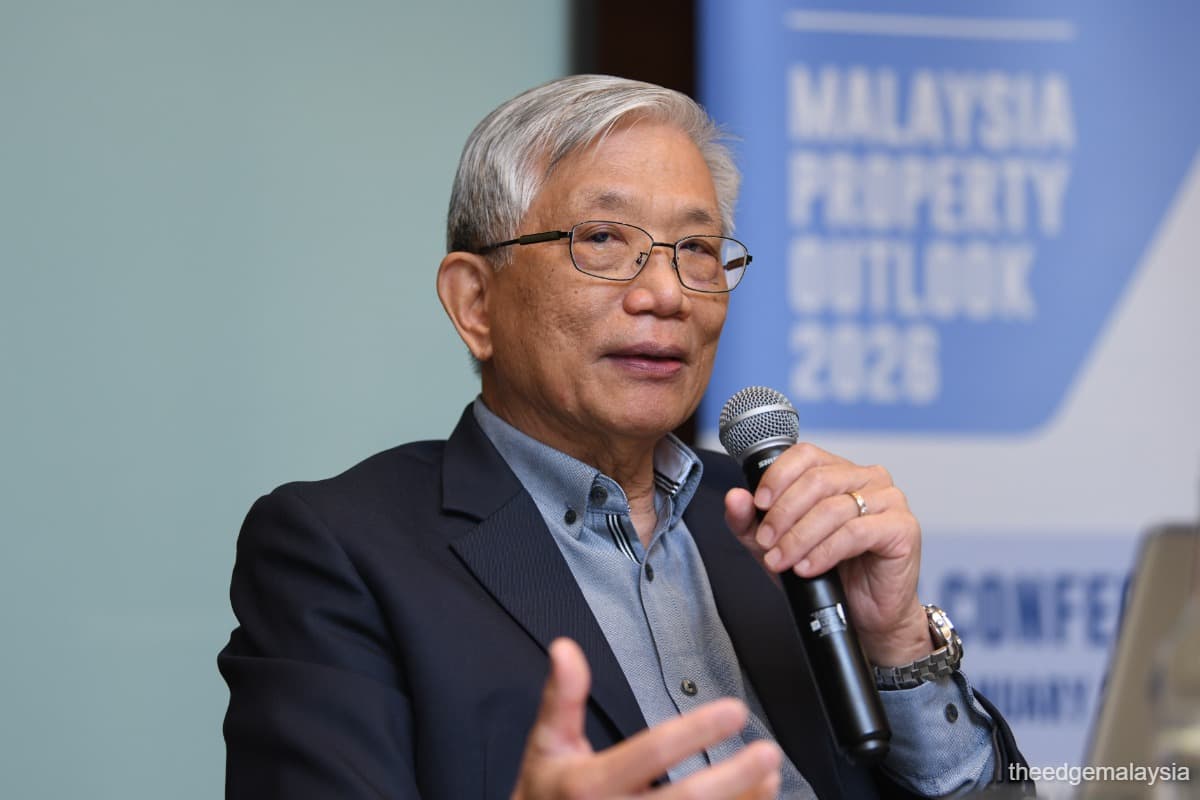
KUALA LUMPUR (Jan 21): Incentives are needed to support a transition to the build-then-sell (BTS) housing scheme, as the shift places major upfront costs and financing risks on developers and could disrupt the nation's housing supply, according to asset and property consultant Henry Butcher Real Estate Sdn Bhd.
The BTS scheme, announced by the government under the 13th Malaysia Plan, aims to eliminate the risk of abandoned residential projects. Under this model, buyers pay a 10% deposit upfront, with the remaining 90% to be settled only upon completion and handover.
Henry Butcher Real Estate Sdn Bhd chief operating officer Tang Chee Meng suggested that the government introduce incentives — such as reduced building-related fees — to alleviate the heavy upfront financing burden on developers.
He noted that the scheme has raised concerns that the absence of a progressive billing structure would place significant cash flow strain even on financially robust developers. He warned that this could result in higher financing costs that might ultimately be passed on to buyers, potentially dampening housing demand.
“If we want to implement the scheme, it should be done gradually," he told reporters during the company's 2026 Property Market Outlook presentation on Wednesday.
"Developers have long depended on sales proceeds from buyers to fund construction. If this changes, they will have to find alternative financing. Getting money from banks is not easy, especially in recent years. I have heard many cases where developers find it difficult to secure end financing, as banks impose numerous conditions, such as meeting certain sales targets, before allowing loan drawdowns,” Tang added.
Without government intervention, Tang warned that developers might scale back their projects.
“Landed projects are more feasible because construction can be phased. For high-rise projects, however, the foundation and carpark works support the entire building and cannot be phased, and developers do not collect progress payments until these major works are completed. This would definitely impact the supply of housing units in the country,” he said.
2025 market performance at a glance
Meanwhile, the latest market statistics show a slight cooling trend in actual property transactions and sales activity.
Citing data from the National Property Information Centre (Napic), Tang said the residential sector recorded a marginal 2.75% decline in the volume of national transactions in the first nine months of 2025 (9M2025), compared with a 5% increase in 9M2024.
The value of transactions also inched down 0.3%, compared to a rise of 7% in the same period a year earlier, he said. Six states recorded increases in both transaction volume and value — Johor, Negeri Sembilan, Kedah, Melaka, Kelantan and Sabah — while another six states registered declines in both measures, namely Selangor, Penang, Perak, Pahang, Terengganu and Sarawak.
Kuala Lumpur recorded a drop of just under 0.4% in transaction volume, although transaction value rose 6.9%, indicating a higher average residential transaction value in 2025.
Selangor, meanwhile, recorded a larger decline of 5.7% in transaction volume (compared with a 4.3% increase in 9M2024) and a 3.8% fall in transaction value, versus a 7.2% rise in the same period a year earlier, Tang said.