

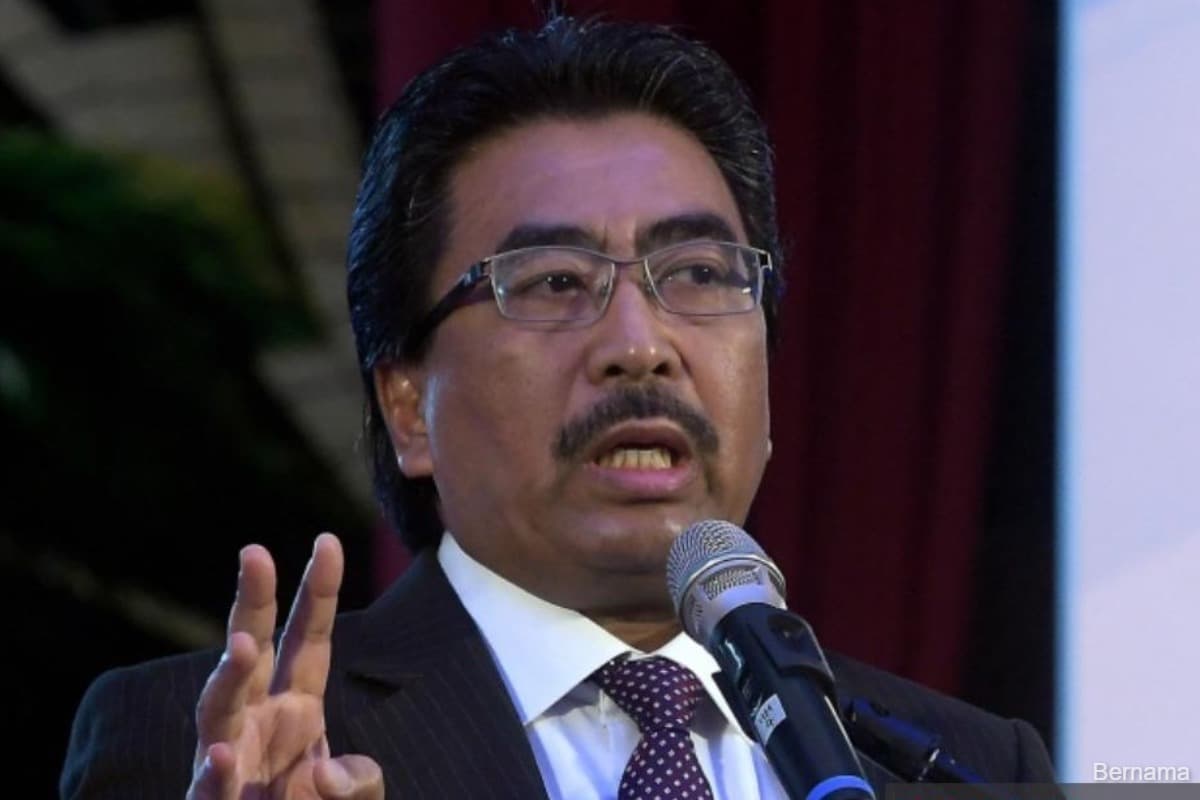
KUALA LUMPUR (Jan 21): Malaysia will clarify and redefine key terms before finalising the ratification of the Agreement on Reciprocal Trade (ART) with the United States, amid concerns over sovereignty and national interests.
Investment, Trade and Industry Minister Datuk Seri Johari Abdul Ghani said earlier discussions on the deal focused mainly on economic aspects but lacked clear definitions, particularly regarding sovereignty and national interests.
Citing investment treatment as an example, he said the agreement does not require Malaysia to follow US preferences over other countries, but seeks to prevent discrimination against existing investors.
“If an investor has already invested here and we later bring in another country with better incentives, the earlier investor may feel disadvantaged. These are the issues we need to define clearly,” Johari told the Dewan Rakyat during oral questions on Wednesday.
He was responding to Datuk Seri Hamzah Zainuddin (PN-Larut) on Malaysia's position and commitments under ART, compared with Southeast Asian countries that have yet to sign or ratify the agreement.
The ART, signed on Oct 26 last year on the sidelines of the 47th Asean Summit in Kuala Lumpur during an official visit by US President Donald Trump, aims to reduce US tariffs on Malaysian goods from 25% to 19% and ease non-tariff barriers for US exporters.
However, the agreement has faced criticism, particularly from right-wing groups, who argued it could undermine Malaysia’s economic sovereignty.
On Wednesday, Johari noted that the government’s decision to proceed with ART was aimed at safeguarding Malaysia's market access to the United States.
He warned that Malaysia risks losing export competitiveness and investment if it does not engage in trade negotiations and faces tariffs as high as 40%.
Malaysia’s exports to the US for the full year of 2025 are estimated at about RM233 billion, with manufactured goods accounting for RM228 billion. Of this, electrical and electronics (E&E) products made up RM145.7 billion, while optical and scientific equipment contributed RM12.8 billion, alongside rubber products and machinery.
“If these industries are suddenly subjected to a 40% tariff, it is only a matter of time before investors gradually relocate,” he said.
Johari stressed that the issue is economic rather than political, but added that any trade discussions would not come at the expense of Malaysia’s sovereignty.
For more Parliament stories, click here.