

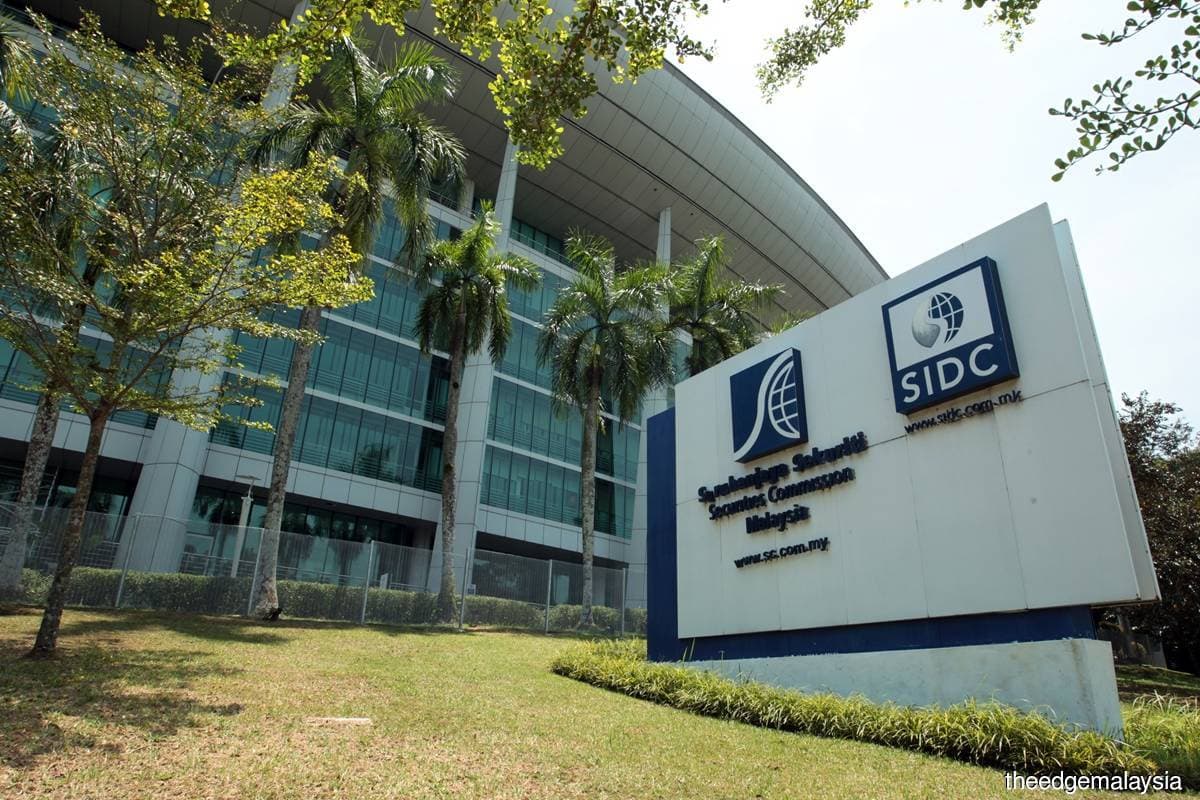
KUALA LUMPUR (Jan 20): Norges Bank Investment Management (NBIM), which manages the world’s largest sovereign wealth fund, has thrown its weight behind the Securities Commission Malaysia’s (SC) plan to raise profit thresholds and ease cash flow rules for Main Market companies, saying it will strengthen Malaysia’s capital markets.
NBIM, the investment management arm of Norway’s central bank, is responsible for investing the Norwegian Government Pension Fund Global. In Malaysia, its investments are concentrated exclusively on the Main Market.
Globally, NBIM had RM8.16 trillion invested across 68 countries as at end-June 2025, of which RM10.66 billion was in shares of 209 Bursa Malaysia-listed companies.
In its public consultation paper on the review, the SC outlined five key proposals including raising the minimum after-tax profit threshold for applicants seeking to list on the Main Market via the profit test, shortening the profit track record requirement from five to three full financial years preceding submission to the SC and removing the “uninterrupted” profit requirement over the three-year track record period.
The other proposals in the paper published in November last year include requiring audited financial statements to carry no modified opinion for applicants listing via the profit test route and treating positive cash flow from operating activities as a factor in assessing a company’s financial health rather than as a mandatory requirement over the profit track record period under the profit test route or the most recent financial year under the market capitalisation test route.
“We commend SC for undertaking this timely review of the effectiveness of Malaysia's public market segments,” NBIM said in a five-page response to the SC as sighted by The Edge.
It said it shared the regulator’s objective of ensuring that the Main Market remains a premier board for established corporations with strong fundamentals while also adapting the listing framework to accommodate evolving business models in the modern economy.
“A well-structured public market with clearly defined segments is essential for enabling investors to make informed decisions based on a clear understanding of the types of corporations in which they are investing,” it said.
“It is essential that listing frameworks remain fit for purpose, appropriately calibrated to market realities and supportive of both issuer access and investor protection. We therefore welcome these measures to grow and further strengthen Malaysian capital markets.”
SC knows best how much after-tax profit should be raised
As a long-term institutional investor, NBIM said it supports the SC’s move to raise the minimum profit thresholds to enhance the quality of Main Market listings, noting that profit requirements are a key indicator of an issuer’s financial strength and future performance. It said the higher thresholds would help reinforce the Main Market’s position as a premier board for established companies and provide greater clarity for international investors assessing risk across market segments.
NBIM noted that the current thresholds have remained unchanged since the 2009 board consolidation. Citing SC’s analysis, this shows that the average market capitalisation of small-cap Main Market issuers at listing has doubled since 2010, with reported profits substantially exceeding current minimums. “We agree that updating these thresholds is warranted to maintain the integrity and attractiveness of the Main Market,” it said.
It also highlighted that 54% of Ace Market IPO issuers from 2018 to 2024 met the Main Market eligibility criteria at submission, with six recording market capitalisation above RM500 million. This overlap, it said, can obscure the distinct investment propositions and risk profiles of each market.
“Raising profit thresholds will sharpen this distinction, helping investors to better differentiate between market segments,” it said.
On whether the proposed thresholds of RM30 million in aggregate profit and RM15 million for the most recent year are optimal for the Malaysian market, NBIM said the SC is best placed to determine the appropriate quantum, given its deep understanding of local market conditions, comprehensive data on issuer profiles and performance across market segments and ongoing engagement with market participants. “We note that SC’s detailed analysis of IPO applications from 2018 to 2024 indicates that only 5% of Main Market IPO applications would have been affected,” it said.
No ‘uninterrupted’ profit requirement, with no modified opinion clause
NBIM said it supports standardising the profit track record period at three full financial years as this change offers several benefits.
It noted that many innovative firms, particularly in the technology and digital sectors, may show strong financial performance over three years but lack the longer operating history required under a five-year rule. The three-year requirement, it said, strikes a better balance between demonstrating financial strength with commercial realities of newer business models and is also in line with regional trends toward accommodating newer companies with strong growth potential, particularly in emerging industries.
“SGX RegCo, for example, has recently reduced the minimum operating record requirement for life sciences companies from three years to two years, subject to other conditions. While Malaysia's proposed three-year requirement is more conservative, this is appropriate given the broader scope of industries seeking listing on the Main Market and the concurrent proposal to increase profit thresholds.
Further, NBIM agreed with SC’s proposal to remove the requirement for uninterrupted profits over the three-year track record period, subject to the safeguard that the accountant’s report must not contain any modified opinion. This change reflects a more nuanced and realistic approach to assessing issuer quality.
“Removing this requirement provides appropriate flexibility for industries that experience cyclical performance due to external factors. A temporary profit dip resulting from macroeconomic conditions, commodity price fluctuations or other factors beyond management's control does not necessarily indicate weak fundamentals. Requiring strict profit continuity could inadvertently exclude sound corporations operating in cyclical sectors,” it said.
No modified audit opinions; cash flow as financial health indicator
NBIM also supports SC’s move to extend the unmodified audit opinion requirement to applicants under the market capitalisation test route (for the most recent financial year) and to transfers from the ACE Market to the Main Market. Consistent financial reporting standards across all entry routes to the Main Market ensure a level playing field regardless of admission route, maintain the Main Market’s integrity and reputation and provide investors with consistent assurance regarding disclosure quality across all Main Market listed corporations, it said.
“We note that in its October 2025 reforms to the SGX-ST Mainboard Rules, SGX RegCo implemented a new requirement that audited financial statements submitted by a listing applicant with its application must not be subject to an adverse opinion, qualified opinion or disclaimer of opinion by the auditors. We encourage regional convergence on critical audit matters in listing requirements,” it said.
It also backed SC’s proposal to treat positive operating cash flow as a factor for consideration rather than a mandatory pass/fail requirement as this change appropriately modernises the listing framework to accommodate evolving business models.