

This article first appeared in The Edge Malaysia Weekly on January 19, 2026 - January 25, 2026
ASIA is set for a robust year of investment banking activity, building on the steady momentum of 2025, says US-headquartered banking group Citi, which is particularly bullish about the Asia South region.
Asia South refers to its grouping of Asean countries, India, Sri Lanka and Bangladesh.
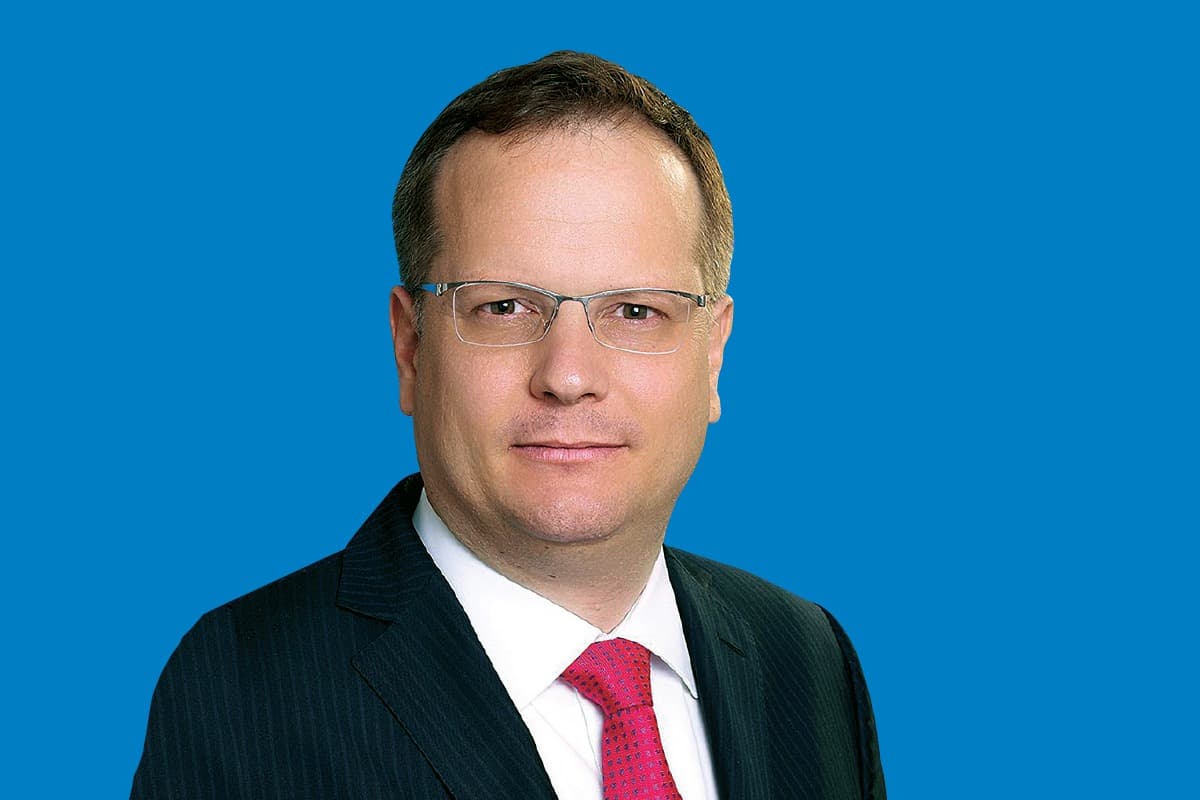
“The investment banking pipeline across this region is one of the strongest we’ve seen in a long time, with M&A (mergers and acquisitions) being particularly strong,” says Jan Metzger, Citi’s co-head of investment banking for Japan, Asia North and Australia as well as Asia South. He was speaking at an investment banking outlook briefing last week.
“Activity spans a healthy mix across sectors from consumer and healthcare to TMT (technology, media and telecommunications) and sponsor activity, which will be a key theme in 2026. We feel Citi is well positioned with recent investments in our sponsor franchise [in the region] and globally.”
Last year, Citi’s investment banking client revenues in the Asia-Pacific region were the strongest in over a decade. According to data provider Dealogic, Citi’s investment banking revenues in 2025 were up by 33% from the previous year to US$514 million.
Metzger reveals that last year, Citi helped Asian clients raise over US$250 billion from global capital markets. “We think we’re going to have another strong year ahead,” he remarks.

Last year, M&A deal value in Asia-Pacific excluding Japan rose 30% year on year (y-o-y) to US$933 billion, Metzger says, citing data from Dealogic. The amount raised by equity and equity-related offerings was up 38% to US$260 billion, while the amount raised by primary bond offerings was up 23% to US$278 billion.
Metzger notes that activity was subdued in the first half of the year due to market volatility, but momentum accelerated significantly in the third quarter and year-end, as improving macroeconomic conditions restored deal confidence.
“Interest rates eased in 2025, lowering cost of capital, reviving confidence and making refinancing, expansion and acquisition plans more feasible. It also narrowed valuation gaps,” he says, explaining the pickup in deal flow.
One of the biggest M&A deals announced in Asia last year was Toyota Fudosan’s US$33 billion acquisition of Toyota Industries.
Meanwhile, Rob Chan, Citi’s head of equity capital markets (ECM) syndicate for Asia, also anticipates promising prospects for ECM issuance in the region. Last year, Asia-Pacific issuance rose a solid 27% y-o-y to US$294 billion, according to Dealogic.
In Asean, there was a 20% growth in ECM volumes to US$13.8 billion. Strong equity market performances in Singapore, Malaysia and Vietnam resulted in these countries fuelling the majority of ECM activity in the region, says Chan.
“Singapore led in overall ECM activity [in Asean], with the Monetary Authority of Singapore’s (MAS) Equity Market Development Program (EQDP) contributing to a boost in markets and healthy initial public offering pipeline,” he notes.
Chan expects Singapore and Malaysia to continue leading ECM volumes this year.
“We could see US$12 billion to US$15 billion of ECM activity across Asean,” he states. “Overall, Malaysia has consistently been one of the more busy markets in Asean in ECM transactions. Last year, it was around US$3.9 billion of overall ECM activity, which was consistent across 2024 and 2023. So, we do expect that to continue going into 2026 as well.”
Save by subscribing to us for your print and/or digital copy.
P/S: The Edge is also available on Apple's App Store and Android's Google Play.