

This article first appeared in City & Country, The Edge Malaysia Weekly on January 19, 2026 - January 25, 2026
Driving through Bukit Beruntung in the north of Selangor, the impression today is no longer one of abandonment, like what the writer experienced in 2010, but of gradual renewal. Rows of once-neglected flats now sport a fresh coat of paint, making their surroundings noticeably tidier.
New housing projects are rising next to older developments, signalling a return of confidence. The streets seem more vibrant and traffic is heavier.
Bukit Beruntung is a story of investing in speculation and falling hard when the bubble burst. In the 1990s, it was a rising star, poised to shine even brighter on speculation that several mega projects, most notably the Kuala Lumpur International Airport (KLIA), would be located nearby.
These rumours ignited strong interest among developers and buyers, positioning Bukit Beruntung as part of a promising northern growth corridor alongside Lembah Beringin and Proton City in Tanjong Malim, Perak. Flats and apartments were launched in anticipation of rapid population inflows and economic activity.
However, the optimism proved to be short-lived. The Asian financial crisis, alongside the government’s decision to build KLIA in Sepang in southern Selangor, meant the foundation of Bukit Beruntung’s growth narrative collapsed.
The ensuing years were difficult. Many residential blocks were left abandoned as the buyers were mostly investors. Buildings were vandalised, with window frames, glass doors and even electrical cables completely stripped, while weeds took over roads.
In 2010, I interviewed a buyer, who only wished to be known as Keon, about his purchase of two apartment units in Bukit Beruntung in 1995. Drawn by the developer’s tagline, “The second Petaling Jaya”, he paid RM80,000 each for the 800 sq ft apartments, which were completed and handed over in 1998.

“Back then the advertisements said Bukit Beruntung would be a second PJ because the new airport and Proton City were purportedly to be located in Tanjong Malim, which is about 45km or a 38-minute drive away. The state government at the time even came out with a development plan involving Batang Kali, Hulu Selangor and Hulu Yam, but nothing has taken off,” he lamented.
Proton City now sits on a 4,000-acre tract 5km north of Tanjong Malim in Perak, but a university that was supposed to be built in Bukit Beruntung did not materialise. There was a college, but it has since ceased operations.
Keon believed that 80% of the investors in Bukit Beruntung were Petaling Jaya residents, like himself. He stopped paying maintenance fees when he noticed no work being done, and both empty apartments had been broken into.
After putting the properties on the market for more than two decades, he finally sold both units last year, at half the purchase price. “[Even with a bigger population there now,] I don’t feel it’s safe at night, so I decided to sell them.”
Slow recovery
Even today, signs of neglect at developments are still evident in different parts of Bukit Beruntung. One such example is a project in Jalan Tasik Widuri near the increasingly popular Tasik Widuri Recreational Park. One can barely find any information on the project — including the developer, type of development and whether it was ever completed. The blocks of four-storey shoplots currently stand without windows or door frames, slowly being reclaimed by nature.
In other areas, a number of completed shoplots look visibly quiet, with several units vacant. They are also clearly not well maintained, making them unappealing to outsiders.
Mines Golf City, which was supposed to be a world-class golf course-cum-residential development, also did not materialise after so many years. A joint venture between Country Heights Holdings Bhd (KL:CHHB) and its founder and adviser Tan Sri Lee Kim Yew’s privately owned company, this development sits on a 2,100-acre freehold tract formerly known as Rasa Estate. The land was acquired in 2008.

The ambitious project was envisioned to be a 63-hole golf course, the country’s largest, along with residential development. Should the developer succeed in obtaining approval to manage the existing 36-hole Bukit Beruntung Golf and Country Resort — adjacent to the Mines Golf City site and owned by the Selangor government — Lee would have control over a 99-hole golf course, unprecedented in this country.
Nevertheless, Bukit Beruntung is neither the boomtown once imagined, nor the ghost town it briefly became. Its recovery may be slow, but it is a work in progress.
Prospects are turning positive as the Serendah KTM Komuter station, located about 14km from Bukit Beruntung, is slated to become an integrated station with the upcoming East Coast Rail Link (ECRL). The rail link will connect Port Klang in the west of the Klang Valley to Kota Bharu in Kelantan.
According to Knight Frank Malaysia executive director of research and consultancy Amy Wong, Bukit Beruntung, originally developed by Talam Transform Bhd (KL:TALAMT) — formerly known as Talam Corp Bhd — features a mixed-use offering, comprising residential, industrial and commercial developments.
Talam, once known as the country’s largest developer of low-cost housing, has since faced long-standing financial issues. One of the longest classified Practice Note 17 (PN17) companies, its debt level once stood at over RM3.5 billion. At one point, its gearing ratio went up as high as three times.
The company’s prospects remain unclear after the demise of its founder Tan Sri Chan Ah Chye in 2024 and reports of his widow Puan Sri Thong Nyok Choo looking to sell a block of her controlling stake in Talam. Based on the latest Bloomberg data, the couple has a combined 30% stake in the company.
Residential properties, mostly landed, are spread throughout Bukit Beruntung with the major ones being Taman Bunga Raya, Bukit Sentosa and Prima Beruntung. There are also several apartment clusters such as Melur and Kenanga, and Taman Inai.

Meanwhile, commercial and industrial properties are mostly located in the southern side, with commercial activities concentrated in Bukit Beruntung town. Notable clusters include Adenium Business Centre, Bukit Beruntung commercial zone and Lotus’s Bukit Beruntung.
The industrial properties there include the UMW High Value Manufacturing (HVM) Park and Perodua Global Manufacturing.
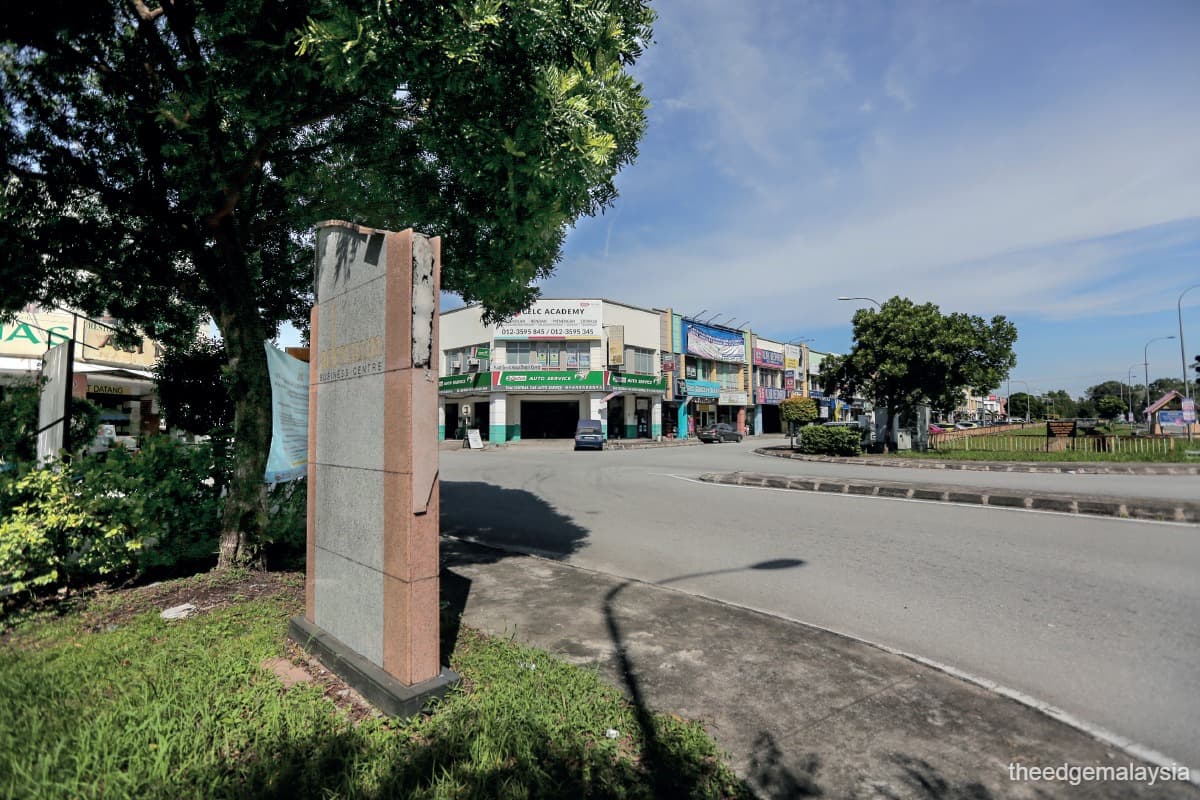
Adenium Business Centre by Setiatiwi Group, located next to the Bukit Beruntung interchange on the North-South Expressway, is relatively new. Thanks to its location, it enjoys higher visibility and shops there are occupied by various businesses and services.
Within the commercial zone, especially the area surrounding Lotus’s Bukit Beruntung, there are various offerings to serve daily needs, such as F&B (Zus Coffee, Tealive, Baker’s Cottage, KFC and Bask Bear), convenience shops (7-Eleven, FamilyMart and CU), pharmacies (Sunway Multicare, Watsons and Health Lane), home improvement stores (Mr DIY, Eco-Shop and SuperSave), LaundryBar self-service laundry and Becan stationery store.
Metro Homes Realty Bhd executive director See Kok Loong observes that the township has seen a gradual revival, with industrial activity, new housing and commercial interest picking up.
“Developers have since introduced smaller, more targeted projects to meet demand. For example, MK Land Holdings Bhd (KL:MKLAND) has been active in Taman Bunga Raya, delivering over 11,000 affordable homes to house more than 40,000 residents, with expectations this will increase to 70,000 in the next decade,” he says.
“Other residential projects such as Mawar Gardens and Mawar Gardens 2 show the trend of incremental, community-focused housing expansion. Similarly, mixed-use schemes like Adenium Indah have added a blend of residential units and commercial lots, creating more self-contained neighbourhoods. These housing initiatives have lifted occupancy rates, drawn in middle-income families and improved the overall vibrancy of the township.”
Industrial and commercial projects have complemented the housing market. Knight Frank’s Wong notes that with the presence of the UMW HVM Park, proximity to the North-South Expressway and the future ECRL station, the land bank available holds strong potential for industrial activities, which could drive job creation and attract supporting industries.

Catalysts
Wong highlights the significant land bank available in Bukit Beruntung, which will provide opportunities for new developments once market timing and demand align. Notable landowners in the township include MDCon (Simpang Empat) Sdn Bhd with 520 acres, Country View Properties Sdn Bhd (340 acres), Murni Jaya Development Bhd (more than 1,000 acres), Novva Integrated Park by MJD Land Sdn Bhd (1,090 acres) and Zuriat Watan Sdn Bhd (305 acres), she says.
It has also been reported that the master developer Talam still has 183.08 acres in Bukit Beruntung, earmarked for residential and industrial development. Other developers include Setiatiwi Group (Taman Adenium, Taman Tanjung and Mawar Gardens), EH Property (Adenium Indah), Leo Vista Sdn Bhd (multiple phases in Bandar Baru Bukit Sentosa) and Seong Henng Group (88 Sentosa Utama and 88 Corporate Industrial Park).
See says these developers are reshaping Bukit Beruntung’s trajectory.
“Large land bank holders like Talam, MK Land and TA Global [Bhd] are positioned to drive long-term, township-scale projects, while groups such as Setiatiwi, EH Property, Leo Vista and Seong Henng are steadily filling in with focused residential and industrial schemes,” he adds.
“The balance of these initiatives points to a future Bukit Beruntung that combines affordable and mid-market housing, integrated mixed-use townships, niche lifestyle estates and industrial-commercial hubs, catering to a diverse target group from young families and middle-income households to SMEs and higher-income niche buyers.”
Wong thinks the growth of Bukit Beruntung as a suburban township will largely depend on catalyst investments, the strength of commercial activities and continued infrastructure expansion.
“Compared to central Klang Valley, growth in Bukit Beruntung is slower due to its distance from the urban core. However, when measured against other northern Selangor townships such as Serendah and Batang Kali, Bukit Beruntung shows healthier expansion. At present, the area has recorded stable and active residential and industrial activity, reflecting steady, moderate momentum in the township’s overall growth. Looking ahead, the upcoming ECRL station at Serendah and major new township projects are expected to help propel Bukit Beruntung’s growth,” she says.

With TA Global said to be planning a 1,000-acre development, Wong expects this to boost population growth, attract catalyst investments, create new employment opportunities and stimulate commercial activities in Bukit Beruntung and its surrounding areas.
“Currently, Bukit Beruntung is characterised by low-density residential townships. With the introduction of a large-scale development of over 1,000 acres, the rising population may drive demand for essential facilities such as hospitals, schools, retail and public services. If not matched with timely provision, this could place pressure on the existing infrastructure,” she adds.
“The sizeable land area offers ample scope for master-planning, enabling efficient site and building layouts, improved infrastructure and integration of community facilities. This positions the TA Global project as a potential catalyst township that could redefine the area’s growth trajectory.”
See also believes the TA Global development has the potential to act as a catalyst for Bukit Beruntung’s transformation, accelerating its shift from a quiet township into a more vibrant, self-reliant hub with rising property appeal and improved liveability.
“With the upcoming 1,000-acre master plan, the township is set to experience a major shift in both perception and trajectory. [This can] transform Bukit Beruntung from a largely affordable housing base into a more integrated and self-sustaining township,” he says.
“The scale of the development will inject significant residential momentum, offering modern housing options for families and first-time buyers as well as strengthening the area’s appeal as an affordable yet strategic location. To support such a large-scale development, improvements to infrastructure, schools, clinics, utilities and retail are anticipated, which will benefit not only new residents but the broader Bukit Beruntung community.”
Nevertheless, Wong reckons that affordable and mid-market residential developments are still essential, catering particularly to young families and first-time homebuyers. This aligns with the area’s relatively lower household income levels compared to other districts in Selangor.
She notes that to ensure sustainable and impactful growth, a Highest and Best Use (HBU) study is recommended to evaluate market viability and optimal development strategies. All future projects, she says, should align with local authority guidelines, while carefully considering infrastructure capacity, market demand and community needs.
“A community-centric approach should be prioritised, with developments focusing on schools, proper healthcare facilities and well-planned commercial areas to support long-term liveability,” she adds.

Challenges
The suburban areas of the Klang Valley, including Bukit Beruntung, are still predominantly focused on landed residential developments, while the supply of commercial properties remains limited due to moderate population growth.
Wong notes that Bukit Beruntung also has a history as an “underperforming” township where growth is rather slow compared to other suburban areas in the Klang Valley. She feels a name change is essential to shake off historical connotations.
See agrees, adding that the stigma of abandoned and incomplete projects has undermined buyer confidence and made banks more cautious about financing new schemes.
“For many years, the area also suffered from weak economic activity and low housing demand, as the grand vision of an integrated township with strong job creation never fully materialised, leaving some residential projects under-occupied,” he says.
“Adding to this, the maintenance burden fell heavily on the local council when developers failed to hand over infrastructure properly, resulting in deteriorating roads, drainage, lighting and cleanliness, issues that continue to affect liveability and investor perceptions.”
On the ground, he notes that infrastructure and safety concerns further complicate matters. He points out roads such as Jalan Bukit Beruntung (Federal Route 3208) have gained a reputation for accidents due to poor lighting and conditions, while environmental risks like slope instability and landslides add to the cost and complexity of development.
“Beyond physical factors, developers also face regulatory and coordination hurdles, as rezoning agricultural parcels, securing approvals and aligning with multiple state and local authorities can be a drawn-out process. Together, these challenges mean developers in Bukit Beruntung must not only deliver housing or commercial products, but also actively rebuild trust, invest in infrastructure and position projects to create sustainable value for residents and the wider township,” he adds.
Wong observes that much of the population growth in Bukit Beruntung stems from households moving out of Kuala Lumpur and other urban centres in search of lower property prices, privacy and a community neighbourhood. This trend, she adds, shapes demand but also highlights the continued reliance on connectivity to the city centre.
As Bukit Beruntung is located more than 40km from Kuala Lumpur — with the nearest rail connection, Serendah KTM Komuter station, 14km away — she says limited direct public transport access remains a key challenge for attracting large-scale investments.
While road access via the North-South Expressway is an advantage, she reckons the area still requires stronger transport integration, commercial hubs and social infrastructure to balance its growth. The upcoming ECRL station at Serendah offers potential to improve accessibility and stimulate future development.

Future
Wong sees slow-paced growth at Bukit Beruntung and reckons new launches may not be as rapid as in the city centre, in line with slower population growth, although demand remains stable.
“Most of the new residential supply that has been launched focuses on landed homes under the affordable housing programme of Rumah Selangorku. Meanwhile, the industrial segment has been more active, led by the UMW HVM Park, which spans 861 acres. This industrial growth is expected to drive positive spillover effects across the township,” she says.
“Looking ahead, the combination of industrial expansion, future large-scale township launches and upcoming infrastructure upgrades, notably the ECRL station at Serendah, positions Bukit Beruntung as a strategic northern growth corridor for Selangor.”
If planned holistically with a balance of residential, commercial and industrial ecosystems, she believes Bukit Beruntung could evolve into a self-sustaining suburban hub with strong long-term prospects.
Meanwhile, See notes that several new projects there signal a maturing and increasingly vibrant township. Beyond housing, he reckons that infrastructure and economic enhancements are boosting the township’s viability.
“A new JPJ Puspakom centre, replacing the one in Wangsa Maju, is currently under construction and slated for completion in the coming years. It is expected to drive additional traffic and business activity to the area,” he says.
He believes Bukit Beruntung is evolving from a quiet satellite township into a more diverse, mixed-use corridor with new housing phases and integrated projects as well as critical infrastructure and high-value industrial activity.
“Together, these initiatives point to a future where Bukit Beruntung becomes not just a commuter town, but a self-sustaining hub for families, businesses and industry, anchored by affordable housing, commercial convenience and strong industrial growth,” he says.
As for numbers, Wong notes that in the Hulu Selangor District, which includes Bukit Beruntung, residential transactions recorded a 13.8% decline in volume in 1H2025 compared to 1H2024. However, transaction values increased 6.7%, indicating resilience in pricing despite lower activity.
“The commercial segment experienced a sharper slowdown, with transaction volume falling 13.2% and transaction value decreasing 26.5% year on year in 1H2025. The numbers reflect a cautious but stable market despite global economic uncertainties, with only marginal softening compared to the same period last year,” she says.
Meanwhile, See observes a mixed outlook across different asset classes in Bukit Beruntung. Terraced houses show varied performance, with certain areas such as Widuri, Semarak and Tanjung recording price growth, while Kesumba experienced a slight softening.
“In contrast, bungalows are trending downwards, suggesting weaker demand for larger and higher-priced homes. Shopoffices remain relatively stable overall. The older units, typically 1- and 1½-storey and smaller in size, with weaker visibility and facilities have seen slight declines, while those better located, newer and well-maintained developments, usually in the form of modern three-storey shopoffices, have stronger tenant profiles and are able to maintain their value,” he says.
“Industrial properties, particularly factories, are showing signs of softening, which may indicate slower industrial demand in the area. Meanwhile, industrial land prices are holding steady in the range of RM68 to RM80 psf, although there is no fresh transaction data available for 2025 to confirm ongoing trends.”
After more than 20 years, it seems Bukit Beruntung is seeing a glimmer of hope with the gradual increase of industrial developments, migration for more affordable homes and increased accessibility. Only time will tell what happens next.
Save by subscribing to us for your print and/or digital copy.
P/S: The Edge is also available on Apple's App Store and Android's Google Play.