

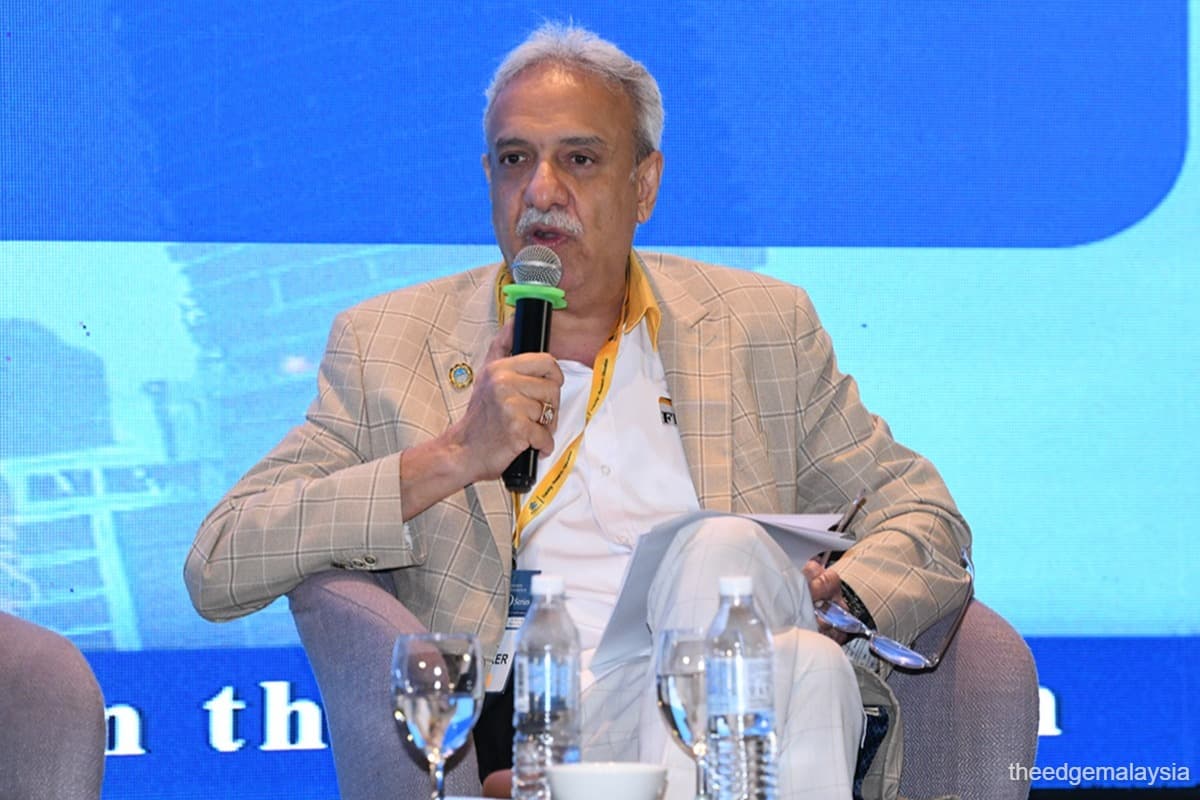
KUALA LUMPUR (Jan 15): Cost and cash flow pressures remain the biggest risks facing small and medium enterprises (SMEs), as rising input costs, wages and tighter financing conditions continue to weigh on smaller firms, according to the Federation of Malaysian Business Associations (FMBA).
Its president Datuk Seri Dr Abdul Malik Abdullah urged the government to provide more measurable incentives as many SMEs are losing competitiveness due to low levels of digitalisation, weak process discipline and limited use of data, which continue to constrain efficiency and scalability.
“What SMEs need are simpler pathways, faster cash flow, quicker adoption and easier access to markets to grow,” he said at a panel discussion at the Rehda CEO Series 2026 on Thursday. “SME resilience must be built as a system, not treated as a slogan.”
“Policy incentives should be fast, simple and measurable. SMEs respond best to incentives that are easy to apply for, quick to approve and tied to clear outcomes. Cost discipline, market diversification and capability upgrading are critical,” he stressed.
“Further, trade agreements only help when SMEs are able to use them. Although RCEP [Regional Comprehensive Economic Partnership] covers 15 economies, its benefits often remain on paper. SMEs need practical support, including export readiness programmes, guidance on rules of origin, financing, logistics assistance and simplified cross-border procedures,” Abdul Malik added.
Federation of Malaysian Manufacturers (FMM) president Jacob Lee echoed the call for stronger, coordinated government support, saying such backing is crucial for SMEs to remain competitive and resilient.
He said businesses have faced multiple tax hikes and rising costs in recent years, which have squeezed profit margins without corresponding gains in productivity.
“The industry is willing to invest if the spending leads to higher efficiency and productivity,” Lee said. “However, non-productive costs only erode margins. When margins are squeezed, profits decline, resources for technology transformation become limited, technology adoption slows and research and development (R&D) activity stagnates.”