

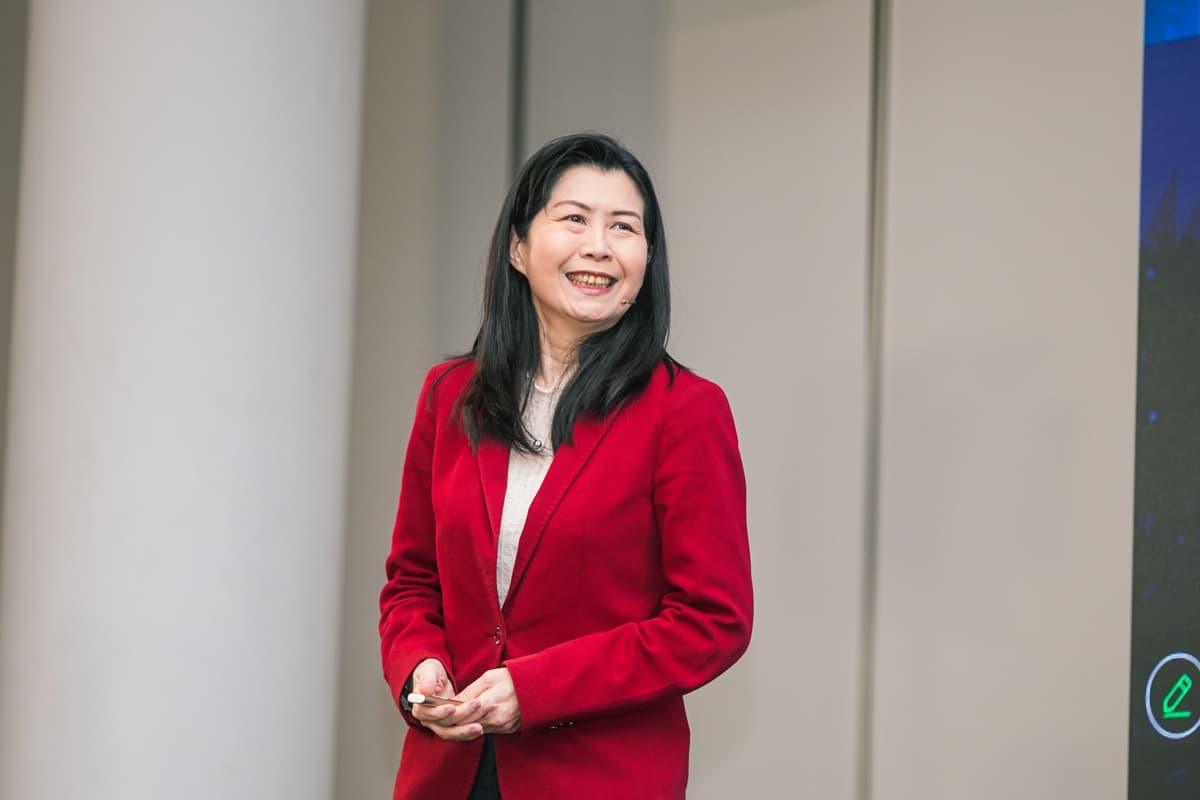
KUALA LUMPUR (Jan 13): As artificial intelligence (AI) dominates most investor attention, investment and trading education firm Beyond Insights founder Kathlyn Toh is urging investors to look beyond headline applications and focus instead on the less visible, but more durable backbone of the digital economy, which is data storage and the infrastructure that supports it.
Unlike macroeconomic forecasts or sentiment driven rallies, Toh said the surge in data generation is already structurally embedded in how governments, businesses, and consumers operate today.
“What is the one thing we can be certain about, that presents an [investment] opportunity? It is data explosion. This is undeniable,” she told attendees at the Beyond Insights Symposium 2026 held at the Securities Commission Malaysia’s headquarters on Jan 11.
The most direct investment implication, she argued, lies not in consumer electronics but in enterprise infrastructure. Data centre storage, unlike laptops or smartphones, does not follow predictable replacement cycles.
"If you are looking at vendors that provide laptop hard disks, you are looking in the wrong place. That market isn't driven by volume anymore. Laptops are not a growth sector. People are merely replacing old units or moving to mobile, which is also very saturated. There is no boom there, just organic growth. That is not where the exposure is.
"The real explosion is in data centre storage. You need to identify who provides data centre storage. Who are the suppliers? Is the list limited or extensive? And once you understand the suppliers, you must determine if demand exceeds supply," she said.
Toh said global data volumes are projected to grow by roughly 50% between 2024 and 2026, reaching 221 zettabytes (ZB), before expanding further to an estimated 500ZB by 2030. A single zettabyte contains a trillion gigabytes.
She stressed that this growth predates Open AI’s debut in 2022, driven instead by government digitisation, corporate workflows shifting online, and the expansion of cloud computing well before the current AI wave.
Storage providers Western Digital and Seagate dominate the data centre storage market, with Toshiba trailing at a distance. Western Digital shares have climbed about 280% in 2025.
Meanwhile, Toh warned retail investors against assuming utilities investments, such as energy companies, offer an easy win. She said the power sector is heavily regulated, capital intensive, and slow to scale.
“Because utilities are regulated, you cannot charge prices that are too high. At the same time, when you need to invest heavily, it takes many years before you can operate new power capacity,” she said.
“For example, building a new nuclear reactor can take up to 10 years. But in the US, they cannot wait 10 years. Data centres are already facing power constraints.
“So instead of building from scratch, they are renovating existing facilities. They are refurbishing and upgrading current power plants. Even then, it still takes several years.”
Cybersecurity presents a more complicated picture. Toh said an estimated 65% of firms plan to increase security budgets and cybercrime costs are projected to reach US$1 trillion (RM4.06 trillion) a month by 2031. Yet, sector performance has lagged expectations.
She attributed this to heightened existential risk driven by AI, which has made attacks more sophisticated and unpredictable, raising legal and reputational exposure for providers in the event of breaches. As a result, cybersecurity stocks have struggled to sustain investor confidence.
Beyond data infrastructure, Toh said agentic AI, capable of automating entire workflows, is emerging rapidly, with research firm Gartner forecasting that 15% of daily work decisions could be made autonomously by 2028.
She added that robotics and autonomous vehicles are advancing faster than public perception, while satellite broadband, fintech, biotechnology, and clean energy are among the areas retail investors should monitor closely.