

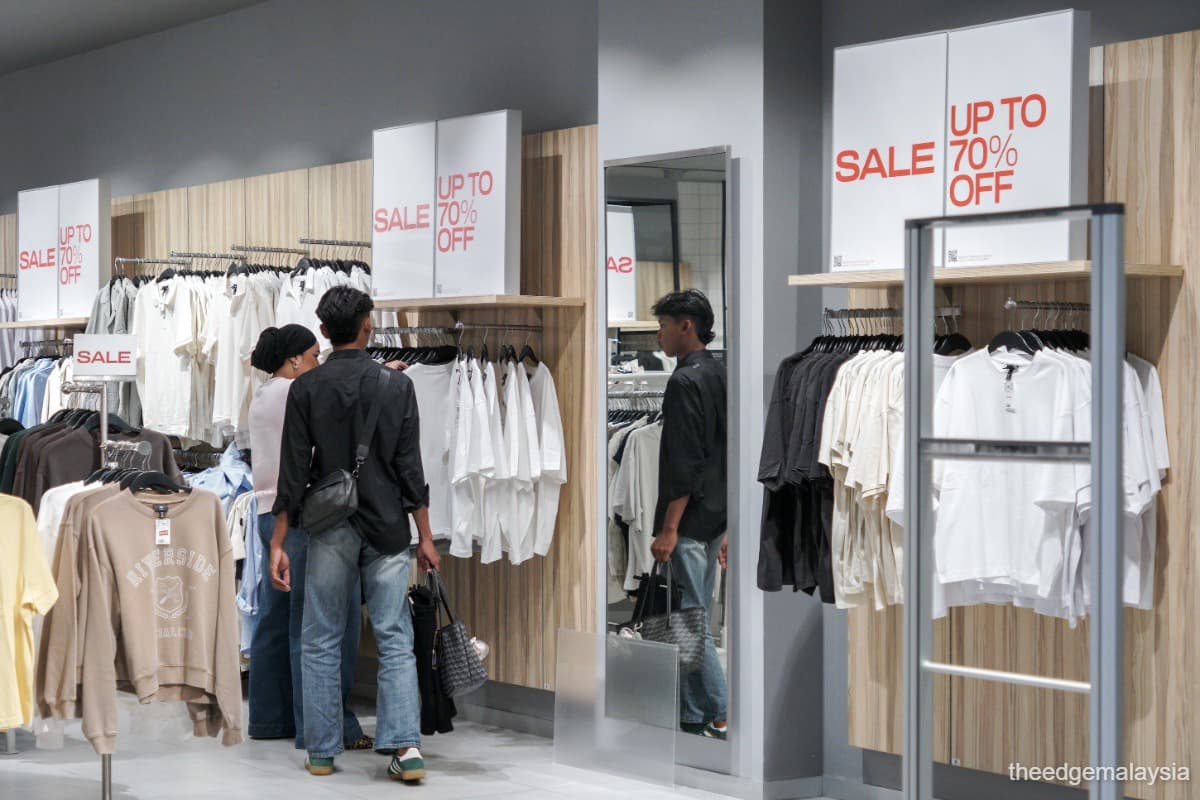
KUALA LUMPUR (Jan 9): Malaysia’s consumer spending is expected to remain firm in the first quarter of 2026, supported by festive demand and higher disposable income among civil servants, analysts said.
MBSB Research, in a note on Friday, said spending will be driven by Chinese New Year and Hari Raya Aidilfitri festivities, higher disposable income from phase two of the Public Service Remuneration System (SSPA) salary adjustments and government cash transfers, including the Sara special transfer in February.
Official data released earlier in the day showed that distributive trade growth moderated to 6.4% year-on-year in November, compared with 7.2% in October, due to slower growth across wholesale, retail and motor vehicle segments. Analysts, however, expect consumer spending to strengthen in December, when spending typically peaks.
MBSB raised its 2025 retail sales growth forecast to 6.0% from 5.5% previously, compared with 6.1% in 2024, citing stronger-than-expected year-end sales. It expects sales growth to remain around 6% in 2026, supported by fiscal measures and stable macroeconomic conditions.
“Domestic consumption is expected to remain the key driver of growth, helping to cushion the economy against external trade and geopolitical uncertainties,” the research house said.
However, risks remain. MBSB cautioned that ongoing fiscal consolidation and the gradual rationalisation of subsidies for essentials such as sugar, rice and cooking oil could temper near-term household spending.
Kenanga Research, in a separate note, said a strong distributive trade performance in the fourth quarter of 2025 should support its 4Q2025 GDP growth projection of 5.0%, bringing full-year growth to 4.8% for 2025. Malaysia’s advance 4Q GDP data is scheduled for release on Jan 16.
"However, we remain cautiously optimistic for 2026 outlook particularly for manufacturing export-oriented and mining sectors given global uncertainty, lingering geopolitical risk and the delayed impact of higher US tariffs which could cap growth potential. That said, we maintain our 2026 GDP forecast at 4.2%," said Kenanga.
Pantheon Macroeconomics, meanwhile, raised its fourth quarter GDP growth forecast to 5.4%, from 4.5% a year earlier, citing continued acceleration from 5.2% in the third quarter. The upgrade reflects stronger industrial production and exports, with average industrial output growth rising to 8.1% year-on-year from 6.8%, while export growth improved to 5.7% from 4.9% previously, Pantheon said in its note.