

This article first appeared in Digital Edge, The Edge Malaysia Weekly on January 12, 2026 - January 18, 2026
Malaysia’s ambition to transform into a global chip hub, anchored by the National Semiconductor Strategy or NSS, faces a critical bottleneck: talent. The government has identified a pressing need for 60,000 skilled engineers by 2030 to support this vision, yet the country currently produces only around 5,000 engineering graduates annually.
This discrepancy signals that industry stakeholders and educational institutions must urgently find ways to bridge this shortfall before the nation loses out on a slice of the nearly US$1 trillion (RM4.05 trillion) global semiconductor market.
While the immediate focus often falls on filling industry gaps with technical and vocational education and training (TVET) skills, and electrical and electronic (E&E) manufacturing roles — the bedrock of Penang’s economy — a more significant shift is occurring at the high-value end of the talent spectrum.
The future of industry, including the E&E sector, is increasingly entwined with the digital economy, requiring proficiencies that go beyond traditional hardware or factory floor expertise. The demand is for talents who can be creators of technology, rather than merely its consumers or maintainers.
This evolving landscape necessitates a strategic pivot to attract and cultivate capabilities in emerging fields such as software engineering, artificial intelligence (AI), data analytics and product design, among others.
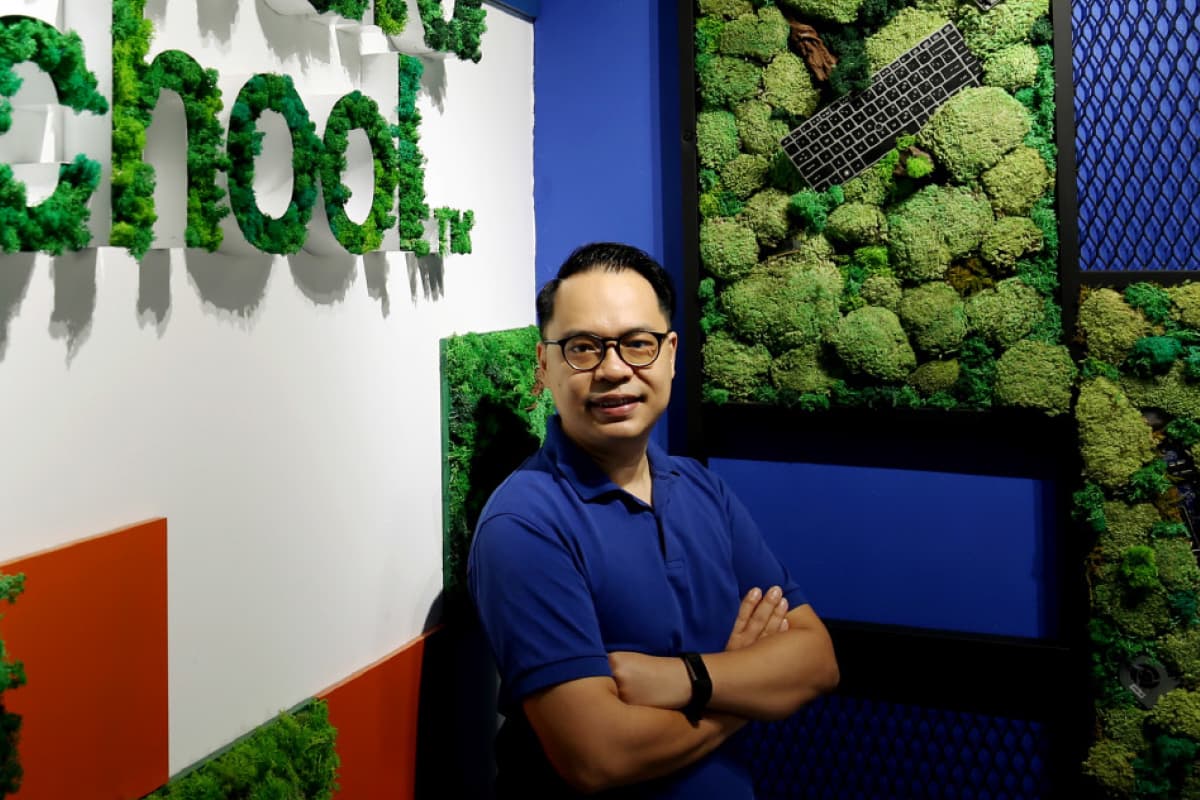
Forward College co-founder and CEO Howie Chang argues that the growth potential for Malaysia — not just Penang — lies in the digital sphere. He believes a focus on the digital side is essential to attracting high-skill global enterprises, such as setting up engineering teams for companies like OpenAI.
Over the years, announcements were made by hyperscalers like Amazon Web Services (AWS) to set up data centres here. While it’s great for the economy, the focus is on the construction of these data centres, not the technologies that will be built. However, Chang hopes that there will be increased interest and talent development in digital applications and software development with more exposure.
“Malaysia’s focus has been so heavy on hardware lately, especially with all the talk around semiconductor and chip design. And yes, that’s important, but we can’t forget that it’s the software that actually brings the hardware to life,” he says.
“In many of my conversations with government folk, the sentiment is roughly the same — hardware feels easier to ‘show’ because you can build factories and facilities. Software, being more intangible, doesn’t get the same visibility. But that mindset really needs to change.
“What drives real growth and adoption aren’t just the chips but the applications built on top of them. If Malaysia wants to stay competitive, it has to make software development just as much a national priority as hardware manufacturing.”
The primary challenge in developing this high-skill digital pipeline stems from a misalignment of incentives within the national education system. Traditional academic institutions, particularly research universities, are often incentivised by key performance indicators or KPIs tied to academic papers, journals and global ranking metrics.
This focus inevitably draws attention away from the rapid, real-time demands of the modern workforce, especially in the technology sector where knowledge can become obsolete in six months.
Chang says the slow pace of curriculum change, coupled with a limited awareness of actual industry demands among students, widens the skill gap.
It is against this backdrop that alternative education models, such as Forward College, have emerged, with the aim of delivering industry-ready talent, re-evaluating what education looks like today. This also takes into consideration that most secondary school leavers would rather enter the workforce and obtain microcredentials than take the traditional route.
“The founding of Forward College is directly linked to the disconnect seen in the local start-up ecosystem. I noticed that while Penang was generating brilliant entrepreneurial concepts, there was a severe lack of individuals capable of executing them. The ideas were plentiful, but the builders were not,” says Chang.
Established in 2019, Forward College has been intentionally aligned with industry outcomes. The college is accredited under the Ministry of Human Resources, rather than the Ministry of Education, setting it apart from regular tertiary institutions.
At the core of Forward College’s philosophy is the concept of “employment as a norm”, says Chang, where the purpose of its diploma programme is unequivocally tied to career outcomes.
“The purpose [of our programmes] is to help students be better at what they are doing currently, or help them find a job placement. This is why, for our diploma programme, we have a job guarantee,” he says.
The programmes at Forward College complement the traditional lecture-and-exam model with intensive project-based learning, ensuring that students are not just acquiring theoretical knowledge but applying it to solve real-world industry challenges. The curriculum is structured to constantly adapt to the pace of technological change.
Adding value to its courses, Chang says, are experienced educators from the industry.
“All of our instructors are from the industry. Some of them don’t have a degree or master’s, but have 20 years of experience in the field,” he explains.
Semiconductor talent demand not just in Penang, but nationwide
After only a few years in operation, Forward College’s model appears to be yielding tangible results. Chang notes that a majority of its students are placed right away after their two-year programme. While the conversation around graduate salaries often cites national entry-level wages far below Penang’s market rate, Forward College graduates nationally are seeing salaries of up to RM4,000 upon graduation.
Although Forward College is based in Penang and collaborates with established industry players such as ViTrox Corp Bhd (KL:VITROX) and Exabytes Network Sdn Bhd, Chang emphasises that the college’s hiring ecosystem extends well beyond the state. With more than 20 hiring partners nationwide, graduates secure roles across multiple sectors and regions, including the Klang Valley, where the concentration of consumer-facing software companies and digital product teams remains highest.
“It’s not that students do not want to remain in Penang,” he says. “The reality is that large software and digital product companies are still predominantly clustered in Selangor and Kuala Lumpur. Meanwhile, Penang has a strong base of technology SMEs [small and medium enterprises] and established firms that primarily support the multinational ecosystem in semiconductors, advanced manufacturing and global business services (GBS) while steadily expanding their software capabilities.
“ViTrox continues to take on our talents, simply because it has both hardware and software as products, and also builds its own machines and systems.”
Chang adds that companies across Forward College’s partner network continue to hire its graduates for their application-layer strengths in web and mobile development, along with practical data science skills, capabilities that allow them to contribute from day one.
When it comes to funding and maintaining the college, Chang prefers to align with angel investors over venture capitalists to ensure the institution remains impact-driven rather than solely profit-focused.
“We see ourselves as a start-up and are focusing more on being impact-driven, not so much on profit-making. We raised a few more rounds of funding but all were angel investors, specifically from industry captains,” he says.
Communication skill pertinent for using AI
In an era of rapid AI adoption, the Forward’s focus is not just on coding prowess, but on developing the soft skills that AI cannot replicate. As automation handles routine tasks, the necessity for critical thinking, creativity and, above all, communication, becomes paramount.
“In an AI world, in order to get the best out of technology is [to have effective] communication. Individuals who are unable to articulate their needs or structure their thoughts will struggle to extract quality results from sophisticated AI systems,” Chang says.
To cultivate these human skills, Forward College mandates daily “stand-up meetings” for its students, which encourages them to articulate updates and challenges clearly. This routine training helps address a communication and critical thinking gap, as well as instilling confidence when asked to present in front of a crowd.
Communication is important in the AI world, says Chang, as it is the best way to get quality outcomes from the technology. An example is when one writes prompts into a large language model (LLM). The prompt needs to be clear and well-articulated for it to churn out an effective outcome.
“If you are unable to articulate what you want or break down what you need from an AI system, you will have trouble getting quality results.
“It’s the same with people, and those who are not able to articulate well also have issues interacting with people and the LLM,” Chang points out.
Save by subscribing to us for your print and/or digital copy.
P/S: The Edge is also available on Apple's App Store and Android's Google Play.