

This article first appeared in Digital Edge, The Edge Malaysia Weekly on January 12, 2026 - January 18, 2026
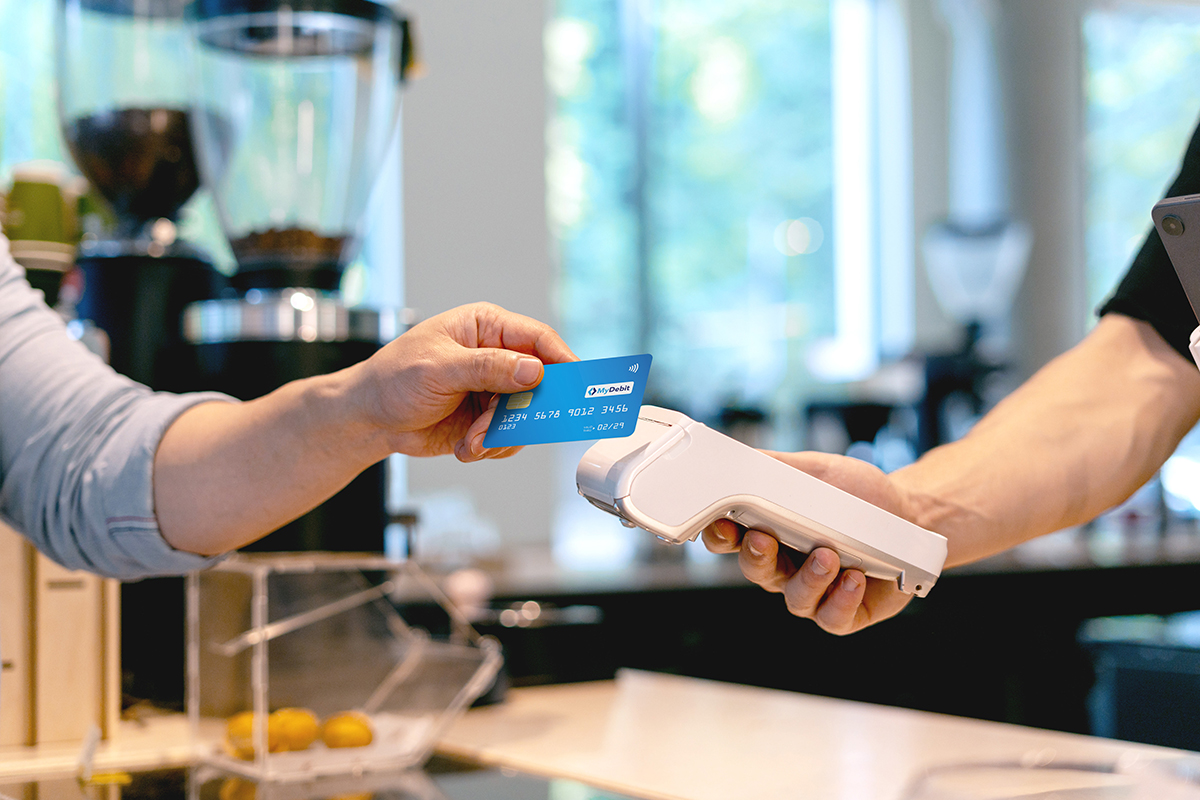
Since 2025, all players in Malaysia’s MyDebit network have migrated to NextSwitch, a locally developed and nationally owned payment switch operated by Payments Network Malaysia Sdn Bhd (PayNet). The platform enables the domestic routing, clearing and settlement of electronic transactions, independent of foreign vendors.
This enables the country to be in control of internal upgrades, keep sensitive data within borders, reduce vendor costs and ensure the continuity of essential payment services regardless of external pressures.
“We wanted more assurance that we could continue to serve the country in all circumstances, so that’s what the word ‘sovereign’ in sovereign switch means to us. All banks and all debit card transactions today run on code that is written [for NextSwitch],” says Teh Lip Guan, chief technology officer of PayNet.
Malaysia’s previous payment switch system relied on the legacy BASE24 system by ACI Worldwide. Migrating from a foreign-owned system to a locally owned one allows for greater economic resilience, independence and flexibility through a secure and stable debit card network.
PayNet is the national payments network and shared central infrastructure for Malaysia’s financial markets. PayNet has processed transactions worth nearly four times of the country’s gross domestic product in 2024, and it is this responsibility which spurred the company to develop the NextSwitch to be fast, robust and scaleable.
“After we implemented NextSwitch for MyDebit, success rates have actually gone up. More people are able to use their cards and make purchases and it works faster. We’re happy to have both control for us and the new functionality and features.
“We also see it adopted well by the industry, and we see them enjoy the benefits and experience. When the banks enjoy the experience, it means the people also [benefit],” says Teh.
He compares the improved system to the operations of a bakery. At the end of the day, bakeries offer discounts on their surplus stock. When the traffic is high, the long wait may turn additional customers away.
With a better performing system, every transaction and interaction is expedited, creating a smoother experience for both business and customer even when demand is overwhelming.
“If we design a system that performs well, even though it is literally a couple of hundreds of a millisecond faster than the old system, then every customer is able to get in, tap his card and exit, and the shop is able complete its work and end the day earlier instead of doing more overtime,” Teh explains.
He says NextSwitch has already been adopted across the country, paving the way for more features to be implemented and providing solutions for needs unique to Malaysia.
“You can unlock when you have control of your solutions. Otherwise, I would just have to wait for a vendor to unlock certain features for Malaysia when they release it. We are now in control of our ideas and making them a reality.”

Behind NextSwitch
PayNet conceptualised the idea of a sovereign payment switch in 2019. Preparatory work went on until 2022, when development work began fully.
The company engaged closely with banks and the industry to better gauge pain points and gain perspectives. This was followed by integration testing with the banks through a transparent and experimental journey.
“We took some insights from tests with banks and then did thousands of runs on further internal testing ourselves. The goal was that to ensure the tests carried outcomes of positive experiences for all users,” says Teh.
The tests included thorough checks on everything from functionality to performance, such as the system’s durability during peak spending periods.
Most of NextSwitch was developed by in-house talent at PayNet, with the majority being Malaysians. There was constant engagement with Bank Negara Malaysia, PayNet’s major stakeholder, to ensure the system aligned with regulatory requirements.
When it was time to migrate the system, it was of utmost importance that there be no disruptions during the transition as that could result in major complications for businesses across the country.
Teh says a sidecar approach was used, where the old switch and NextSwitch ran side by side simultaneously, bridging the two systems until NextSwitch was fully operational.
“This method de-risks the migration, making it very safe, so that if anything really did go wrong, we would have had the option to go back to the vendor-based solution. Fortunately, nothing went awry, and we’re very proud of that.”
PayNet continued testing by trialling contingency plans in its post-migration stabilisation efforts. The old system has since then been decommitted, allowing for the new one to run independently today.
Another advantage of NextSwitch is a reduction in banks’ onboarding time into the system.
Teh explains that the process of joining an international card scheme can take months, or even a year, to finalise because of the tests that have to be run for different use cases, such as expired cards, contactless transitions and PIN (personal identification number) combinations.
To resolve these issues, PayNet developed NextSwitch’s architecture to have high visibility and data in near real-time, allowing for the capture data and feedback to be acted on more quickly by the banks.
“This means that we can cut the time, from typically about six months, needed for doing all the testing. We’ve now reduced that into weeks. So, the quick ones can get all their testing done.”
As such, it can take a new bank a much shorter time than before to come on board and start offering its cards to customers.
Any enhancements can be tested at any time, thanks to PayNet’s extensive library of experiments and current engineering capabilities.
Teh says there were two main reasons for open sourcing NextSwitch’s code. The first is sustainability, which ties in with PayNet’s goal of having NextSwitch being able to run “forever”. This in turn widens the access and talent pool to maintain and improve the switch.
“By open sourcing it, what we want to do is make sure that you’re not at the mercy of a single engineer. Because the code is made available, you can use that code forever more, and any engineer can pick it up, read it, and then go on and operate it,” he says.
“My children and grandchildren will be able to continue to iterate on this code that has been built and ensure that it will always run in Malaysia,” he adds.
The second reason is doing a digital public good, as open sourcing the code will help other smaller countries launch their respective debit card schemes in their local markets.
Other countries such as India and China, which have large populations, have similar sovereign switch systems. India’s domestic scheme is called RuPay while China has UnionPay International. However, as the two countries each have populations exceeding one billion, there are no known cases of smaller countries replicating their models.
“We want to make sure Malaysia is competitive and has similar capabilities as India and China. Otherwise, only the big countries can do it ... We want to punch above our weight, make Malaysia competitive and drive efficiency,” Teh says.
The launch of NextSwitch also strengthens the nation’s reputation as a rising technology hub and showcases the depth of local expertise as well as Malaysia’s ambitions to tackle complex and high-value challenges.
It could open the door for NextSwitch to be used by other countries as a reference, and for collaborations in foreign markets.
“If we can get other smaller countries to do the same thing, they can then do e-commerce with Malaysia and [we can] potentially link both of our debit card systems. Maybe then, when a Malaysian travels to a foreign country, he can simply tap his card at any machine, and it’ll be a positive experience,” Teh says.
Save by subscribing to us for your print and/or digital copy.
P/S: The Edge is also available on Apple's App Store and Android's Google Play.