

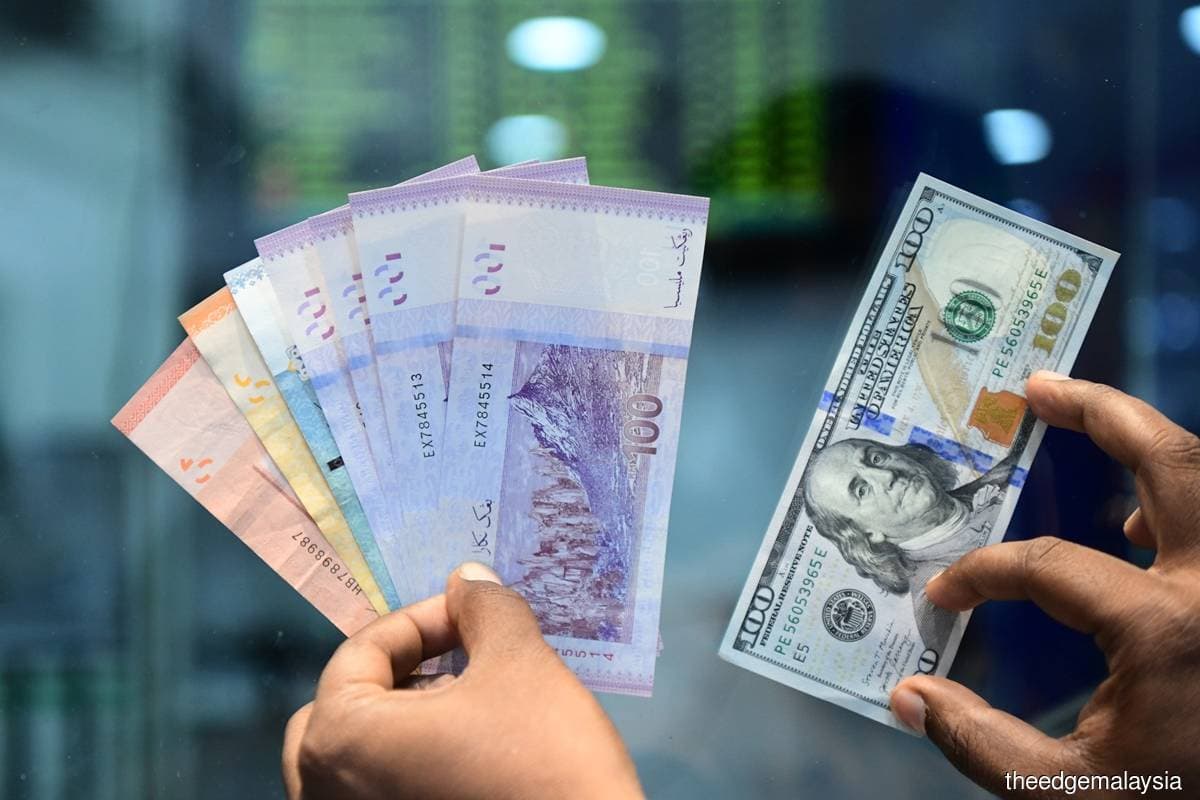
KUALA LUMPUR (Jan 7): UOB Global Economics and Markets expects the ringgit to remain firm but believes it is unlikely to strengthen beyond the “4 handle” in 2026. This comes even as Asian currencies are projected to gain against the US dollar this year, bolstered by narrowing interest rate differentials.
Speaking at a webinar on Wednesday, UOB FX strategist Peter Chia said the US Federal Reserve is anticipated to cut rates at least twice this year. In contrast, most Asian central banks have already moved deep into their easing cycles.
Chia highlighted that the Chinese yuan — a key anchor for regional currencies — benefitted from the temporary truce in the US-China trade war, stabilising and even strengthening towards the end of 2025. More broadly, Asian currencies outperformed expectations last year, gaining against the greenback despite persistent geopolitical risks and trade frictions.
The ringgit emerged as the region's standout performer, appreciating nearly 10% against the dollar in 2025. However, Chia cautioned that gains are likely to plateau around current levels.
“We are a little more cautious about projecting strength beyond the four level at this point in time. Our forecast is for the ringgit to stay around four,” he said, adding that the currency may be somewhat overbought despite Malaysia’s strong fundamentals.
US dollar and the 'Powell factor'
On the US dollar, Chia expects it to fall a further 3% in 2026, but not as sharply as the 9% decline seen in 2025 that was largely driven by de-dollarisation pressures following a sudden US-initiated tariff war.
Markets are currently pricing US rate cuts to begin in May or June, coinciding with Jerome Powell’s departure as US Federal Reserve chair. “This is broadly in line with swap market expectations for the second and third quarters. In fact, swaps are slightly more aggressive, pricing in an additional cut in the fourth quarter,” Chia noted.
From a peak of roughly 5.5%, US interest rates are expected to trend towards 3%. However, Chia stressed that a return to zero-interest-rate policy is unlikely.
“Even with last year’s trade war, US and global growth remained resilient. With the trade war now winding down, the macro backdrop looks positive at the start of the year. We are not expecting a US recession in 2026, and the probability of rates dropping to recession levels is very low,” he added.