

KUALA LUMPUR (Jan 7): Tax experts said Malaysia should start its carbon tax at a reasonable rate to cut emissions without overburdening businesses, suggesting a benchmark similar to Singapore’s initial S$5 per tonne.
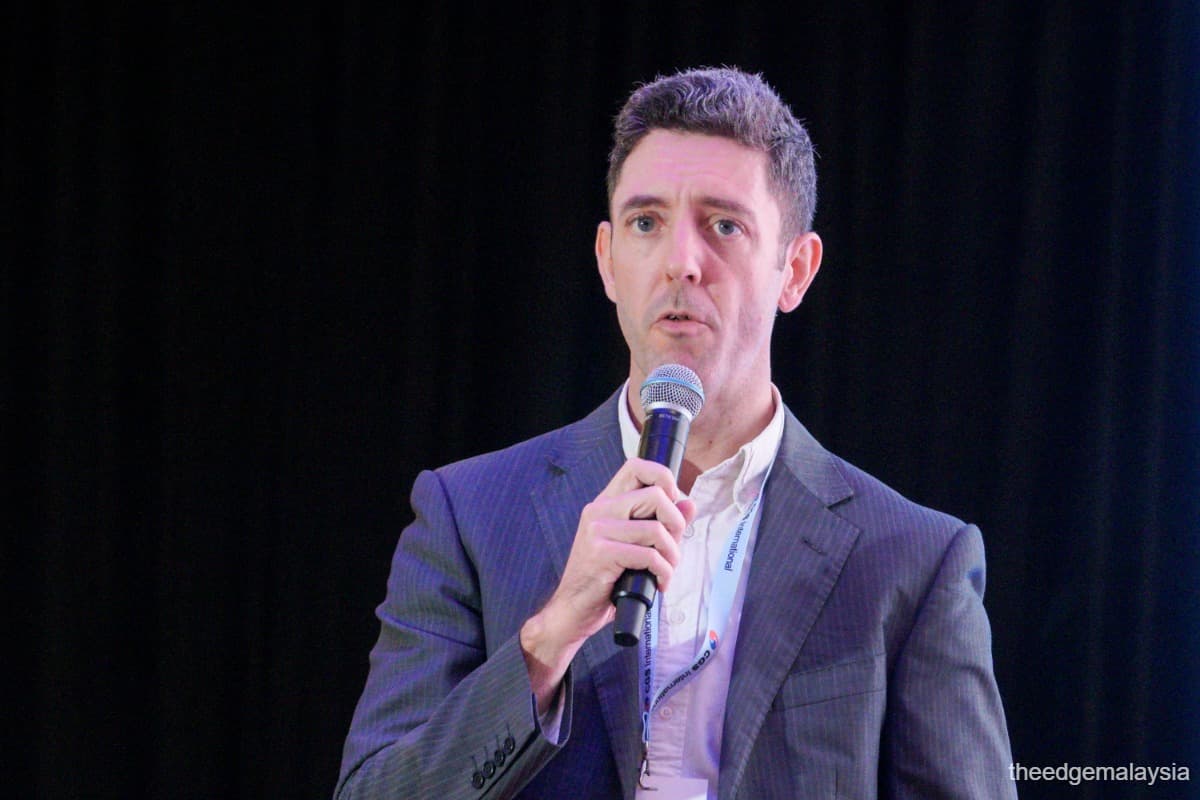
PwC Malaysia director Richard Baker warned that a tax that is too high could drive businesses out of the country, while one that is too low would not reduce emissions effectively.
CGS International Securities Malaysia Sdn Bhd head of research Prem Jearajasingam told The Edge at the sidelines of the event that Malaysia should at least benchmark its initial carbon tax rate similar to Singapore’s starting price of S$5 per tonne of carbon dioxide equivalent (tCO₂e).
Singapore introduced its carbon tax at S$5/tCO₂e before subsequently raising this to S$25/tCO₂e in 2024. The rate is set to increase to S$45/tCO₂e in 2026 and 2027, with a longer-term target of S$50 to S$80/tCO₂e by 2030.
“There is a very fine balancing act,” Baker said during a presentation at CGS International’s 18th Annual Malaysia Corporate Day 2026. “If you set the tax too high, it becomes a burden and businesses may relocate, as we have seen happen in Singapore.”
While the carbon tax was first flagged during the tabling of Budget 2025 and reiterated in Budget 2026, key details — including pricing and implementation timelines, among others — have yet to be finalised.
Many countries have adopted widely different carbon pricing levels depending on their economic structure, competitiveness concerns and public awareness, while Malaysia needs to calibrate its approach carefully, Baker added.
Under a carbon tax regime, companies are required to pay a levy based on the amount of greenhouse gas emissions they produce. Firms must measure, report and verify their emissions, with the tax designed to encourage investments in cleaner technologies and energy efficiency, rather than a continued reliance on high-emission processes.
Baker encouraged companies to invest early in emissions-reduction strategies rather than viewing the carbon tax purely as a cost. These include adopting renewable energy, improving energy efficiency and upskilling employees in sustainability-related functions.
He also highlighted that various tax incentives and grants are currently available to offset transition costs. These include capital allowances and tax deductions for approved green assets, renewable energy systems, energy-efficient buildings and energy storage solutions, as well as grants for sustainability training and compliance-related consultancy costs.
Details on the carbon tax framework are expected to be outlined in the long-awaited Climate Change Bill, which is set to provide the legal foundation for Malaysia’s transition to a low-carbon economy. The bill is expected to be tabled during the first sitting of Parliament in 2026.
The proposed legislation will include provisions for emissions monitoring, reporting and verification, and is expected to be tabled by the newly appointed Natural Resources and Environmental Sustainability Minister Datuk Seri Arthur Joseph Kurup.
The government has indicated that the iron, steel and energy sectors are among those expected to be covered by the carbon tax from the year of assessment 2026. Baker said the scope could eventually be expanded to other emissions-intensive industries such as fertilisers, cement and aluminium, among others.