

This article first appeared in City & Country, The Edge Malaysia Weekly on January 5, 2026 - January 11, 2026
For the longest time, the automotive real estate scene in Malaysia has comprised standalone retail lots with a sprawling inventory of vehicles on display. In the past couple of years, the industry has seen a shift and, today, that familiar model is being reimagined.
A report by CBRE Research titled “What’s Happening (and What’s Next) in Automotive Retail Real Estate?” revealed that many automotive firms in Asia-Pacific are reorganising operations, reducing headcount as well as engaging in mergers and acquisitions and partnerships.
The report also highlights that the automotive retail real estate sector in Asia-Pacific is increasingly complex and competitive.
To understand what is unfolding in the local market, City & Country reached out to CBRE | WTW and Bermaz Auto Bhd (KL:BAUTO), the distributor and service provider for foreign automotive brands such as Mazda and Xpeng in Malaysia.

Driving factors
According to the report, the global industry has seen the automotive sector grapple with an array of challenges, including supply chain disruption, the ongoing transition to and subsequent slowdown in electric vehicle (EV) sales, evolving consumer requirements and, most recently, escalating geopolitical tension and tariffs.
Other hurdles include a need to comply with 2030 net zero and sustainability targets for manufacturers continuing to build petrol engine cars, as well as to fulfil the regulatory requirements related to new technologies, such as connected and autonomous vehicles.
The report also states that labour shortages and younger generations’ unwillingness to enter this traditional manufacturing sector have been making it even more difficult for automakers to recruit employees, particularly those with new and sought-after technical skills such as those related to EV technology, software and data analysis.
Taking all these factors into consideration, CBRE | WTW Malaysia group managing director Tan Ka Leong says there is a clear diversification of automotive real estate formats in Malaysia, largely driven by EV-centric operating models.
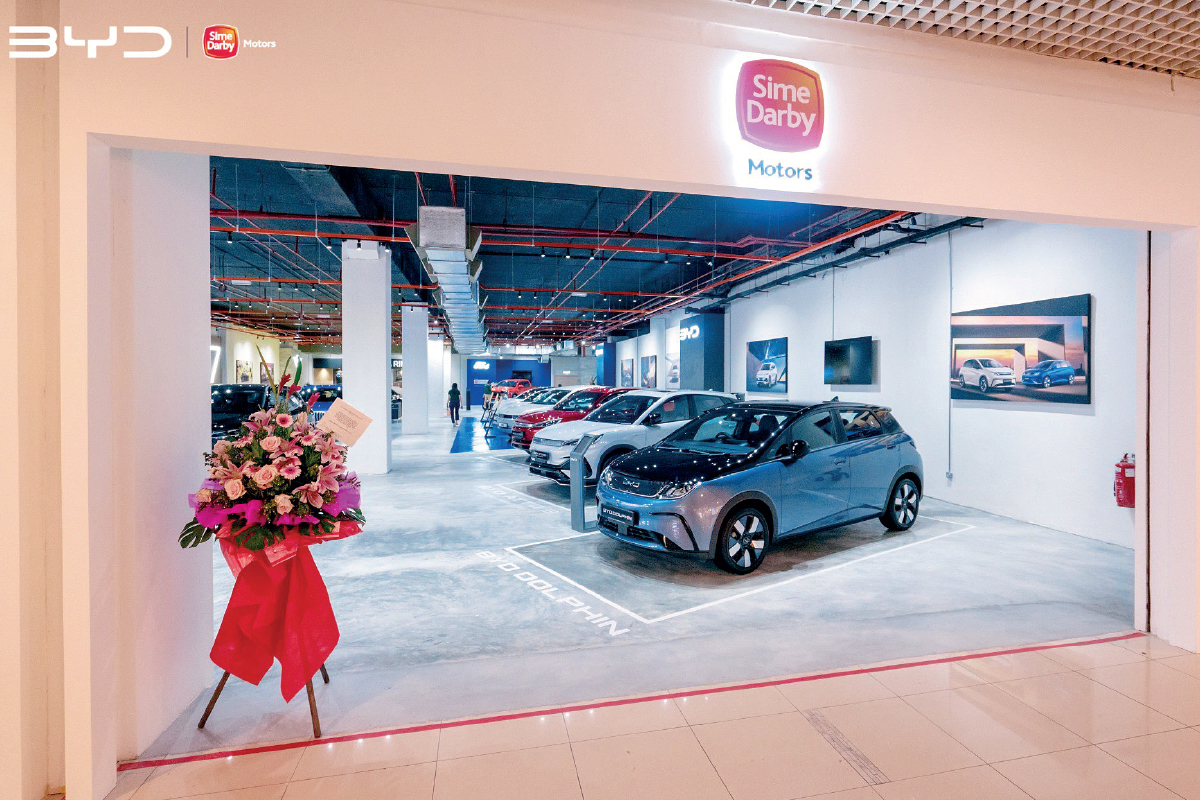
“EV-only brands generally require smaller display areas and place greater emphasis on customer experience, resulting in compact urban showrooms, mall-based galleries and service-light or service-free concept stores,” Tan says.
He adds that the new age of automotive retail real estate in Malaysia will revolve around compact urban showrooms, which he says typically comprise high-visibility ground-floor retail units in city centres or ground floor shopoffices in mature neighbourhoods.
“These spaces function more as brand experience points rather than full dealerships. Another one is mall-based galleries, which is increasingly preferred by new-to-market EV brands for footfall, quick market entry and flexible leasing structures. These spaces are generally with minimal back-of-house requirements.
“Service-light or service-free concept stores are designed for EVs requiring less mechanical servicing. Many brands are adopting decentralised service models, relying on mobile servicing or regional hubs instead of traditional workshop-heavy dealerships,” Tan explains.
Similarly, a representative from Bermaz Auto observes the same thing. “We are seeing greater demand for smaller urban showrooms as they allow better reach to urban communities. These spaces give consumers the opportunity for a direct touch-and-feel experience with the vehicles, while detailed product information is readily accessible online through our websites.”
In terms of preferred dealership locations, Tan says the current preference for suburban hubs and mixed-use developments is not entirely new in Malaysia.
“For many years, automotive brands have gravitated towards suburban locations due to larger land parcels, better accessibility and more favourable development costs. Mixed-use developments remain attractive for compact or experiential showrooms, particularly for brands aiming to enhance visibility and customer engagement without the capital intensity of full-scale dealerships,” he shares, adding that brands are also exploring transit-oriented nodes, benefiting from high visibility and accessibility.
He also believes that rather than a new shift, this current trend represents a refinement of established location strategies, with brands balancing suburban service hubs and high-visibility urban or mall-based touchpoints to optimise their network coverage.

Renewed car-buying experience
Malaysia is not the only country that has seen a transformation in the sector.
The report points out that the EV shift and industry digitisation trend have expanded to emerging Southeast Asia markets from mainland China in Asia-Pacific, backed by growing demand for EVs and supportive government incentives.
In the Malaysian context, Tan says the digital car-buying journey has not yet driven a meaningful reduction in dealership size. While consumers increasingly undertake online research, he says most still prefer to visit a physical showroom for test drives, trade-in evaluations, financing discussions and to experience the vehicle first-hand.
“Rather than downsizing or reallocating space for test-drive and delivery areas, dealers are maintaining their existing footprints while making internal adjustments to enhance customer reception areas and improve the overall experiential journey, without altering total space requirements,” Tan says.
Concurring with Tan, the Bermaz Auto representative says, “Concerns about exhaust emissions and noise pollution are driving the preference for EV showrooms and service centres to be located within malls, lifestyle hubs and mixed-use developments, making them more accessible and aligned with sustainable living.”
Apart from retail centres for their products, Bermaz Auto has also been investing in physical training centres for its staff.
“The introduction of EV models has required us to focus on training both sales and after-sales staff, particularly those handling high-voltage vehicles. Technicians are now required to be properly certified, and Bermaz has taken the initiative to establish a dedicated training school to ensure this. The school provides specialised training and certification for our EV technicians.”
This new training centre called BAuto Training School was established in Shah Alam, Selangor, a few years ago.

Capitalising on demand
In the report, CBRE Research highlights that demand for automotive retail real estate is being shaped by dealer consolidation, investor activity and rising land values. Consolidation continues, with larger dealer groups acquiring smaller operators and rationalising portfolios. This trend, it adds, is creating more deliberate real estate strategies, including closing redundant locations, investing in flagship facilities and divesting non-core properties.
As dealer groups grow, the report says, real estate decisions are increasingly made at the portfolio level. Properties that cannot meet operational or branding standards are more likely to be sold, relocated or redeveloped. The report also notes that demand remains strong for modern, high-quality facilities capable of supporting EV sales and service.
It stresses that investor interest in automotive retail real estate is growing, driven by sale-leaseback transactions. These deals appeal to investors seeking long-term income streams from creditworthy tenants. Investors favour newer properties in strong locations, with modern layouts and clear alignment with leading automotive brands.
The report also emphasises the role of developers in shaping demand. Large parcels with existing zoning, visibility and infrastructure are increasingly attractive for residential, mixed-use or industrial redevelopment.
This trend is particularly evident in high-growth or land-constrained markets, where competition for well-located sites has intensified, putting additional pressure on older or functionally obsolete dealership properties.
Apart from that, the report also highlights that EVs are not only reshaping dealership operations but also creating a growing demand for EV charging infrastructure. “As EV adoption accelerates across the US, Europe and parts of Asia-Pacific, dealerships are under increasing pressure to provide robust, on-site charging capabilities to support both sales and service operations.”
It says that charging infrastructure has become a critical component of modern automotive retail real estate, influencing site selection, design and capital planning; hence, dealerships must now accommodate high-capacity chargers capable of handling multiple vehicles simultaneously, as well as dedicated EV delivery and demonstration areas.
Nonetheless, many existing properties were not designed for this level of electrical demand, making retrofitting both complex and costly. “In urban markets, limited site area further constrains the installation of charging stations, while in suburban and high-growth markets, ample land presents opportunities to incorporate EV infrastructure as part of site redevelopment or expansion.”
The report observes that manufacturers are increasingly requiring dealers to integrate EV charging as part of facility upgrades, with expectations for standardised power capacity, safety protocols and customer experience areas. This mandate is accelerating investment decisions, particularly for dealers in states and countries with aggressive EV adoption targets, such as California, New York, Germany, Norway and China.
Meanwhile, the report notes that charging stations are influencing the overall design and layout of dealership facilities. Reduced on-site vehicle inventory allows space to be repurposed for chargers and dedicated EV service bays, but it also requires careful planning to balance sales, service and charging functions. “Demand for automotive retail real estate is no longer purely operational; it is increasingly strategic, tied to both long-term capital investment and land value considerations.”
Future opportunities
On what lies ahead for Malaysia’s automotive retail real estate landscape, CBRE | WTW’s Tan says it is still dominated by large 3S and 4S centres, which remain essential for established internal combustion engine and premium brands due to servicing demand, after-sales requirements and the need for comprehensive customer touchpoints.
“For EV brands, which are still relatively new in Malaysia, the early phase of expansion has focused on compact showrooms, service-light outlets and mall-based brand galleries, as these formats allow faster market entry, higher visibility and lower capital commitment. These smaller formats are effective in building brand presence and educating the market,” he says.
However, he believes as EV adoption matures and after-sales requirements grow, there will be a gradual transition back towards more traditional 3S and 4S environments, particularly for brands aiming to scale sustainably and support a larger vehicle population.
Bermaz Auto has a more automotive-focused approach. It says, “We anticipate a transition from internal combustion engine vehicles to mild hybrid and plug-in hybrid models, as EVs continue to face challenges such as range anxiety and infrastructure requirements. This shift will be marked by a higher level of electrification and enhanced connectivity, aligning with the expectations of younger consumers who value technology integration and sustainable mobility.”
The report has a similar take, pointing out that automotive retail real estate will continue evolving as electrification, consolidation and land value pressures persist. Opportunities will favour owners and operators who approach real estate strategically and understand the highest and best use of their sites.
Therefore, properties capable of supporting EV infrastructure, meeting manufacturer requirements and adapting to changing inventory and service models are expected to perform well. Conversely, assets that cannot be economically upgraded may face declining relevance, particularly in markets where redevelopment alternatives are financially compelling.
Meanwhile, the report also highlights the potential to reposition existing sites. This includes redeveloping underutilised land, integrating automotive uses into mixed-use developments and creating more efficient facility layouts.
“In dense urban markets, vertical development and shared-use concepts may allow dealerships to maintain operations while unlocking additional land value.”
From an investment perspective, the report says automotive retail real estate is becoming increasingly institutionalised. “As the sector matures, assets with strong location, tenant quality and modern facilities are likely to remain attractive to long-term investors, while weaker properties may be filtered out as the market adjusts to operational and infrastructure demands.”
As a conclusion, CBRE believes that dealerships will not disappear but are evolving. Physical locations remain essential, even as sales processes become more digital and vehicles become more electric. What is changing, according to the report, is how these properties are designed, valued and integrated into the broader commercial real estate landscape.
Save by subscribing to us for your print and/or digital copy.
P/S: The Edge is also available on Apple's App Store and Android's Google Play.