

This article first appeared in The Edge Malaysia Weekly on January 5, 2026 - January 11, 2026
1 Trump’s trade tariffs
As we enter the new year, US trade tariffs will remain centre stage.
The US Supreme Court is set to rule this month on whether to overturn the Court of Appeals’ decision that President Donald Trump’s imposition of the tariffs was an illegal overreach of his emergency powers under the 1977 International Emergency Economic Powers Act (IEEPA).
While the legality of the reciprocal tariffs is being challenged in the courts, they remain in effect in the meantime.
Should the Supreme Court rule that Trump exceeded his authority in implementing the reciprocal tariffs — which were estimated to have totalled about US$108 billion on an annualised basis as at October — some parties are hoping there will be refund on the tariffs collected. Others, however, doubt that will materialise given the complexities involved.
Economists, in general, do not expect the Court of Appeals’ ruling to spell the end of the tariffs, as Trump has several other legal alternatives at his disposal. The change could, however, generate some short-term volatility.
JP Morgan Research says the administration could invoke Section 122 of the US Trade Act 1974 to maintain a 15% tariff for 150 days and use that period of time to work out more permanent alternatives.
Meanwhile, ING Research says the administration could make greater use of Section 301 of the 1974 Act and Section 232 of the US Trade Expansion Act 1962, which are currently employed to impose sectoral tariffs in response to unfair trade practices and national security threats respectively.
Regardless of the Supreme Court ruling, the Section 301 tariffs on Chinese products and Section 232 tariffs on steel, aluminium and copper, as well as cars and car parts, will remain unaffected.
However, the process of implementing further tariffs under Section 301 will take some time — up to nine months — according to ING Research, as it requires investigation into the trade and economic policies of foreign countries. This is also the case with Section 232, which requires a lengthy investigation before new duties can be imposed.
All said, sectoral tariffs will remain a major issue for Malaysia and other Asean countries this year.
“Asean stands vulnerable to any changes in the US tariff policies, especially on semiconductors, solar, pharmaceuticals and rubber. While there are carve-outs that Asean could be accorded, we think there is still no guarantee this will play out positively in 2026,” notes CGS International Securities Research in a report.
CGS’ 2026 Asean economic focus report estimates that current tariff exemptions have so far insulated over 60% of Malaysia’s and Singapore’s exports to the US, and close to 45% for Thailand and Vietnam, while countries such as Indonesia are striving to strike similar deals.
“We think there is still some risk stemming from the soon-to-be announced sectoral tariff. However, the US has agreed to give ‘special consideration’ to the four Asean countries in the event of any future tariff increase. In addition, the strong presence of US-based multinational corporations in Asean further reduces risk of retaliatory tariffs,” it adds.
2 New US Fed chair and interest rate outlook
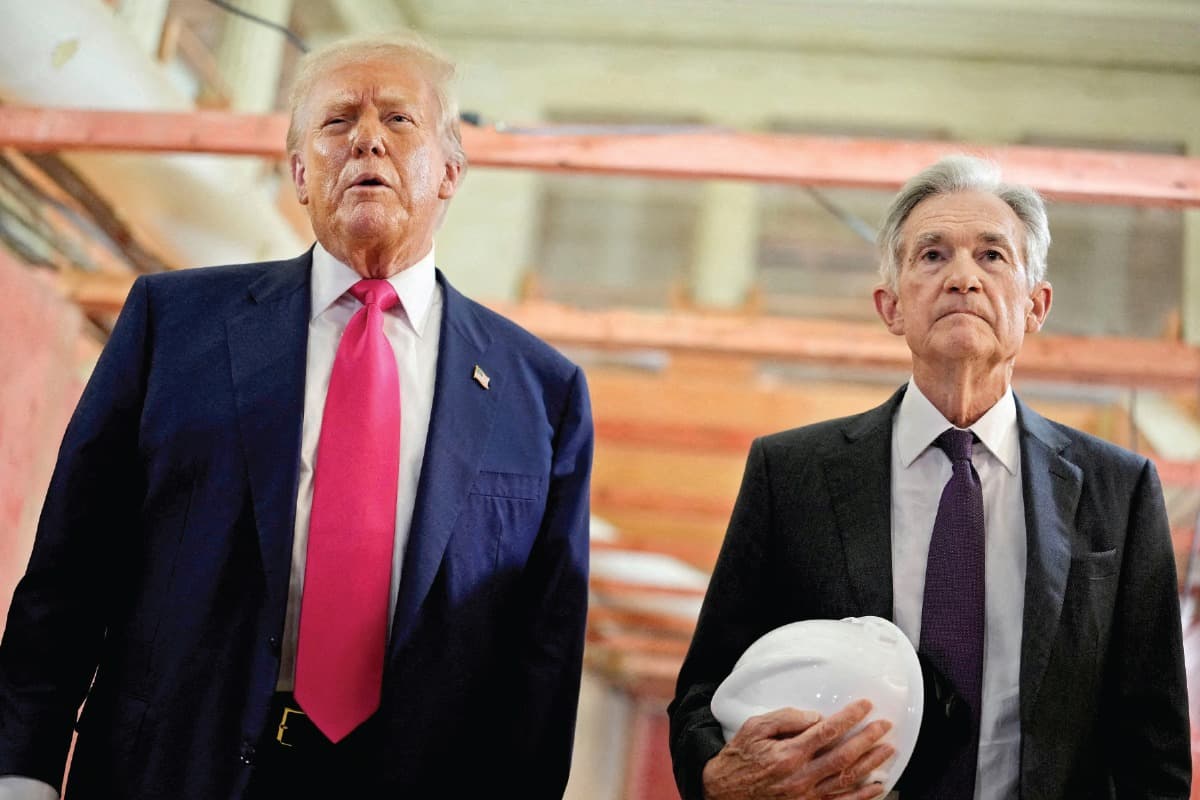
The US Federal Reserve, which dictates the country’s interest rate direction, will have a new chair this year.
As the saying goes, when the US sneezes, the world catches a cold. Current chair Jerome Powell’s term will end in May, and who he passes the baton to will certainly matter to policymakers, especially central banks, globally in 2026.
Market watchers believe that a Trump-appointed Fed chair will be more inclined to be dovish.
In its Global Macro Outlook 2026 report, research house Nomura points out that the key question is not whether rates will move lower but rather how aggressively and quickly they will be cut.
“The intensity of the easing cycle will be shaped by the chair’s personal policy framework — including their estimate of the terminal rate and views on the balance of risks to both sides of the dual mandate — as well as their influence within the FOMC [Federal Open Market Committee],” it says.
Nomura also points out that in addition to the policy framework, the chair’s influence and ability to forge consensus within the FOMC is important, considering the notable rise in disagreements among FOMC participants at recent meetings.
Among the candidates to replace Powell, Kevin Hassett, Stephen Miran and Scott Bessent are seen as being more flexible on changing their policy stance to align with the White House, given their roles in the Trump administration, says Nomura.
In contrast, Christopher Waller, a current Fed governor, is regarded as a more traditional central banker, weighing incoming data and the economic outlook more heavily when navigating monetary policy.
Hassett has been widely reported as the leading contender to succeed Powell.
“Even if the policy outcome is ultimately more measured than the rhetoric suggests, the market tends to dislike the idea of a more politicised Fed. In practice, this can show up as higher volatility and a lower tolerance for sustained US dollar overvaluation, particularly if investors begin to price a greater probability of policy being leaned on to support growth,” says RHB Research in its foreign exchange outlook report dated Dec 11.
Many are expecting the Fed to make two more rate cuts in 2026, bringing the funds rate closer to the neutral rate of 3% to 3.25%.
“Markets are pricing in roughly 80 basis points of Fed rate cuts through 2026, at the time of writing,” notes Maybank Investment Bank Research in its Asean Macro 2026 report dated Dec 9.
For Asean, Maybank IB Research is forecasting a 75bps cut by Indonesia’s central bank this year, a 50bps cut for the Philippines and 25bps for Thailand, to support domestic demand following the aggressive rate cuts in 2025.
The central banks of Malaysia, Singapore and Vietnam are likely to maintain their monetary policy stance, adds the research house.
Besides setting the direction of the global interest rate trend, the new chair’s monetary policy stance will shape the landscape for the capital markets and foreign exchange rates.
3 Will the ringgit remain strong?
Few would have expected the ringgit to be among the top-performing Asian currencies in 2025, given that the local currency had hit a record low of 4.80 against the US dollar the year before. The ringgit closed the year at 4.06 — the strongest since March 2021.

A strong ringgit is a double-edged sword. A firm local currency will make imports cheaper, which in turn will lower inflationary pressure. If it strengthens further, there will be growing concerns over the competitiveness of the country’s exports — an important growth engine of the Malaysian economy. Small and medium enterprises are likely to be the most vulnerable.
The continuous appreciation of the ringgit will change the current conversation from whether its rally is sustainable to whether it is appreciating too quickly and too strongly, to the extent that it will hurt domestic economic growth.
On top of that, exporters are likely to experience the full impact of the US tariffs this year.
RHB Research believes the ringgit has structural tailwinds, although it is not immune to renewed volatility. It has RM4 to US$1 as its end-of-2026 forecast. The research house believes Malaysia’s sovereign credit profile, fiscal consolidation trajectory and the potential for incremental improvements in US trade engagement are constructive for medium-term inflows, particularly when recent export outcomes have surprised to the upside.
“Importantly, we continue to see ‘latent’ conversion support from corporates and exporters: Foreign-currency deposits and unconverted proceeds still represent dry powder that can amplify ringgit strength when sentiment is favourable,” it adds.
However, there are still downside risks for the currency. Escalation in US trade protectionism or a broad risk-off shock would likely pull capital back to safe havens, notes RHB Research, pressuring the currencies in the emerging markets, including the ringgit, which has appreciated as a result of investors’ risk-on approach.
Besides that, a sharper-than-expected domestic slowdown could revive expectations of additional easing by Bank Negara Malaysia, undermining rate support for the local currency.
“In short, we remain constructive on the ringgit’s medium-term direction. Still, we would frame the near term as a consolidation with bullish bias rather than a one-way appreciation trade,” it says.
4 AI revolution
The artificial intelligence (AI) wave, be it its usage in our daily lives or an investment theme in the stock markets, swept the globe in 2025.
AI is the equivalent of the steam engines that fuelled the Industrial Revolution in the 18th century. Like the steam engines, AI is being deployed to improve productivity.

The economic superpowers are also competing in the technology space, with the US and China leading the race currently. While the world started using US-based large language models (LLMs) like ChatGPT, Gemini and Copilot, China-based firm DeepSeek stunned the world with the launch of its own LLM that was developed for a fraction of the cost incurred by US firms. Soon after, fintech giant Ant Group launched Ling-1T. This set the backdrop for attracting billions in investment money to AI-related companies on the stock market.
Large US technology companies are tripling their annual capital expenditure (capex) from US$150 billion in 2023 to possibly more than US$500 billion this year, notes JP Morgan Wealth Management in its 2026 outlook report.
“Spending from the leaders (Alphabet, Amazon, Meta, Microsoft, Oracle and Nvidia) now accounts for almost 25% of total US market capex. AI-related investment contributed more to US gross domestic product (GDP) growth than consumer spending in 2025,” it elaborates.
This raises the question of whether the spending on capex is sustainable.
Yet, total direct AI investment to date is about 1% of US GDP, which some say is below that of the general purpose technology investment cycle, such as electricity, railroads and communication, in which investment peaked at 2% to 5% of GDP.
In the equity market, AI-themed play was a powerful catalyst that lifted equity prices, particularly those in the US, to fresh peaks.
Technology-related stocks have never been more expensive than they are now. This has led to concerns that the US technology sector’s high premium valuations could be signs of a bubble — similar to the dotcom bubble that burst at end-1999. AI chipmaker Nvidia is trading at 40 times 2025 forecast earnings while Palantir Technologies, a US firm that specialises in big data analytics, is trading at 249 times.
Is it a bubble or not? Most have pointed out the differences in the elevated valuations of the technology stocks currently compared with those during the dotcom bubble.
Amundi Investment Institute says in its 2026 outlook report that while US equity valuations may be elevated, they are underpinned by robust earnings. It adds that returns in US equities have been driven by earnings per share growth, instead of reratings, especially for the big tech names.
“Current margins are also much higher than they were in the dotcom bubble. Lastly, the Fed has resumed its accommodative stance, with more rate cuts to come, which is another key supporting factor for equities,” it says.
AI technology is here to stay, but will the share price rally and investments gather steam in 2026?
5 Climate change
From the California fires at the beginning of 2025 to Cyclone Senyar in November that hit Indonesia, Thailand and Malaysia, climate change is an element that cannot be overlooked.
It has become a wild card in recent years, given its unexpected and unpredictable nature. Its impact on the economy is becoming more significant and something that business owners, policymakers and even investors have to consider when making their decisions.

An example is cocoa prices. As severe drought and disease ravaged crops, the price of cocoa soared to a record high of over US$12,000 per tonne at end-2024. Prices plunged in 2025 to around 50% from its high, but chocolate remains expensive as manufacturers work through the stockpiles bought at the record high prices.
This, in turn, affects demand as consumers purchase less of the sweet treats.
Should drought and disease brought on by climate change affect essential crops such as wheat, rice, soy or even oil palm, the effects would be far more devastating for the global economy.
Any acute supply shortage of essential crops would drive up prices and fuel food inflation. Countries whose food security is weak will bear the brunt of it.
The World Meteorological Department has warned that there is a 70% chance that the five-year average warming for 2025-2029 will be more than 1.5°C. This is 47% higher than the previous year’s report for the 2024 to 2028 period.
At the Conference of the Parties to the United Nations Framework Convention on Climate Change (COP30) in Brazil last November, it was revealed that only 121 countries submitted new Nationally Determined Contributions, with 76 still missing targets, representing over a quarter of global emission, says the World Economic Forum in an article.
“For the first time, parties acknowledged the likelihood of overshooting 1.5°C this century,” the article notes.
Another criticism was the lack of road maps for the phasing out of fossil fuels and deforestation as leaders failed to agree on binding commitments.
This resulted in separate initiatives — Brazil said it would launch a voluntary process to develop a deforestation road map to be presented at COP31 in Türkiye, while Colombia and Netherlands announced they would co-host the first International Conference on the Just Transition Away from Fossil Fuels this year.
Going into 2026, how countries continue to tackle climate change with the commitments made will be closely watched. Besides finding ways to reduce carbon emissions, it is equally important that governments take measures — for instance, flood mitigation — to minimise disastrous consequences.
6 Geopolitical tensions
While the US and China have agreed on a trade truce for a period of one year to November 2026, relations on that front remain shaky.
Whether the truce can last for the period agreed upon remains to be seen, as the two economic superpowers continue to have many unresolved issues surrounding national security, trade fairness and technology; for instance, in relation to semiconductors.
Nevertheless, the hope is that during the truce, the parties will be able to find middle ground. As such, the announcement at end-October appears to have calmed the markets.
Points in the agreement include the US’ agreement to reduce fentanyl-related tariffs on Chinese goods in exchange for a pledge by China to crack down on the trade in the chemicals used for fentanyl.
“The latest one-year suspension is a positive sign. This supports our view that, despite ongoing de-risking efforts, a hard decoupling or trade embargo remains unlikely in the near term,” says JP Morgan economist Tingting Ge. “Both sides have shown willingness to compromise, but strategic competition will persist, with the possibility of further tit-for-tat actions and potential escalation or de-escalation during the upcoming truce period.”
China has been a strong opponent of Trump’s tariffs, showing that it will not bow down to the US with its own series of retaliatory tariffs in 2025. The tit-for-tat retaliatory tariffs between the two countries have caused jitters not just for the markets but also US allies, as they are pressured to choose sides while still having to deal with the US tariffs.
Elsewhere, the war between Russia and Ukraine continues, four years after it started in 2022. While peace talks are reported to be in progress, the countries continue to launch missile attacks on civilians and energy infrastructure.
Public polls in Russia reveal that more than half of the respondents believe the war will end this year. However, that remains public sentiment. Experts, on the other hand, are of the opinion that it is unlikely to end soon.
Meanwhile, the fragile Gaza truce is also being monitored. There continue to be accusations of violence from both Israel and Hamas despite the ceasefire.
A 20-point plan issued by Trump in September called for an initial truce that was to be followed by steps towards wider peace. So far, only phase one, which entails a ceasefire, release of hostages and prisoners, and a partial Israeli withdrawal, has taken effect.
Will tensions re-escalate or otherwise in 2026?
7 Undercurrents in domestic politics
Political dynamics in Malaysia are expected to become even more fluid in 2026, with the two major coalitions Pakatan Harapan (PH) and Perikatan Nasional (PN) facing issues that threaten their cohesion.
The latest development in PN, where Tan Sri Muhyiddin Yassin stepped down from the post of chairman, highlights the growing fracture within the coalition, with PAS courting Umno to form a coalition.

For PAS, Umno seems a better bet now that Parti Pribumi Bersatu Malaysia (Bersatu) is having its own internal problems. For months, calls for Muhyiddin to step down from the post of president and make way for Datuk Seri Hamzah Zainudin have been getting louder.
The political crisis in Perlis, which saw the ousting of Mohd Shukri Ramli from the post of menteri besar, presented an opportunity for PAS and the anti-Muhyiddin camp within Bersatu to push for Muhyiddin’s resignation as leader of the coalition.
Bersatu’s internal problems have led to instability within PN, prompting some in PAS to court Umno. This was supported by calls within Umno — led by its youth chief Datuk Dr Muhamad Akmal Saleh — for the party to leave the Madani government.
The calls to leave the Madani government grew louder following the apex court’s decision not to grant former prime minister Datuk Seri Najib Razak’s application for him to serve the rest of his jail sentence for the SRC International Sdn Bhd case at home.
Meanwhile, in PH, Democratic Action Party (DAP) has given itself six months before reassessing its position within the Madani government, following the party’s disastrous showing at the Sabah state election in November.
As for MCA, it has issued an ultimatum to Barisan Nasional (BN) that the party will leave the coalition if any of its members work with DAP in the next general election.
Political observers do not believe that the government’s stability would be jeopardised by Umno leaving the Madani set-up. If Umno does do so, the government will still stand with 127 seats, including confidence and supply, compared with 153 seats.
However, if Umno were to withdraw its support from the current unity government, three states — Negeri Sembilan, Pahang and Perak — would likely see changes in their state assembly. This is certainly not a situation that Prime Minister Datuk Seri Anwar Ibrahim would want to contend with, especially when his own party — Parti Keadilan Rakyat (PKR) — is having its own internal tensions.
Federal coalitions to be tested through state elections
Melaka, Sarawak and Johor are set to see their state assemblies dissolved in 2027. This means that these states could hold the polls in 2026, or at the very least, start preparing for the election campaigns this year, with parties positioning their messaging and line-ups.
Although the dissolution of the state assemblies will not change the status quo at the federal level, the actions of the politicians and parties will signal the stability of the Madani government.
The Melaka state election — which must be held on or before Feb 25, 2027 — will test if PH and BN will continue with their collaboration, which started in November 2022. With only five seats in the state assembly, PH might want to stand in more seats and some might overlap with BN.
Prior to the dissolution of the Melaka state assembly on Oct 4, 2021, PH held 11 seats to BN’s 12. PH lost eight seats in the 2021 state polls, seven of which went to BN.
Will BN and PH contest against each other in all seven seats?
How the two coalitions handle this will determine their cooperation at the federal level.
A breakdown in collaboration between BN and PH at the Melaka state election could also cause the collapse of the state governments of Negeri Sembilan, Pahang and Perak, where the coalitions share power.
In Negeri Sembilan, neither PH nor BN has the majority, requiring a coalition government. PH’s Datuk Seri Aminuddin Harun of PKR became the state’s menteri besar with the support of 16 PH assemblypersons and 14 from Umno.
Likewise in Perak, where PH only managed to secure 24 seats, six seats short of a simple majority. Thus, the support of BN’s nine assemblypersons was crucial in forming the state government.
In Pahang, the 19 seats that BN won in the November 2022 state election are three short for a simple majority in the assembly. However, PH only has 10 seats, while PN is the second largest bloc in the assembly with 17.
Sarawak’s state poll will be another interesting one to watch in the domestic political landscape, particularly since Petroliam Nasional Bhd (PETRONAS) and Petroleum Sarawak Bhd (Petros) have yet to sort out the details on the ownership of the natural gas there.
8 Outlook for global growth
Global growth is expected to be modest in 2026, with the International Monetary Fund (IMF) forecasting growth of 3.1% for the world, around 1.5% for advanced economies, and just above 4% for emerging markets and developing economies.
Nonetheless, consensus has projected a more conservative number for global gross domestic product (GDP), hovering at an average of 2.5% in 2026.
For the world’s two major economic powers, the average growth forecast stands at 2% for the US and 4.5% for China in 2026.
China is still struggling with its property crisis, while weak domestic demand and deflation continue to plague the country.
Maybank IB Research says in a report that China’s policy focus in 2026 will be on growing the share of technologically advanced sectors as well as modern services while it weans the economy off old engines such as real estate. The research house expects to see divergent trajectories for the new and old engines, with emerging sectors such as semiconductors, robotics and biomedical science receiving policy support and financial resources.
Besides that, Maybank IB is of the opinion that deflation in the country will come to an end in the second half of 2026, with core inflation turning firmly positive.
“Consumer Price Index (CPI) inflation should average +1.1% in 2026. Producer Price Index (PPI) inflation should return to positive territory in 4Q2026. Efforts to curb ‘involution’ or intense price competition in oversupplied industries have been rolled out. Selected sectors could see preferential policies such as tax breaks and subsidies pared back, leading to industry consolidation,” notes the research house.
Nevertheless, weak domestic demand, coupled with trade uncertainty in recent times, has seen China diversifying its exports from the US to other regions such as Europe and Southeast Asia.
This has been disadvantageous to local businesses, especially small and medium enterprises, which have neither the scale nor finances to compete with the Chinese manufacturers.
One question that has been raised is whether the spillover from the overcapacity in Chinese manufacturing will cause other countries to implement tariffs as well — in a bid to “save” their domestic companies from the flood of Chinese imports.
In the US, questions about its economic resilience were raised in 2025. The country has proved critics wrong and performed better than expected despite the tariff shocks.
In 2026, the US economy is expected to exceed consensus estimates because of tax cuts, easier financial conditions and a reduced drag on the economy from tariffs, says Goldman Sachs in a note.
The firm adds that tax cuts will give consumers an additional US$100 billion in tax refunds in the first half of the year.
“The impulse from these forces is expected to be front-loaded in the first half of 2026, and the rebound from the US government shutdown will also provide a boost,” it notes.
Meanwhile, Nomura says labour supply constraints in the US have likely peaked, which should drive a rebound in trend job gains. It expects the unemployment rate to reverse its recent upward trend, falling to 4% by end-2026.
Save by subscribing to us for your print and/or digital copy.
P/S: The Edge is also available on Apple's App Store and Android's Google Play.