

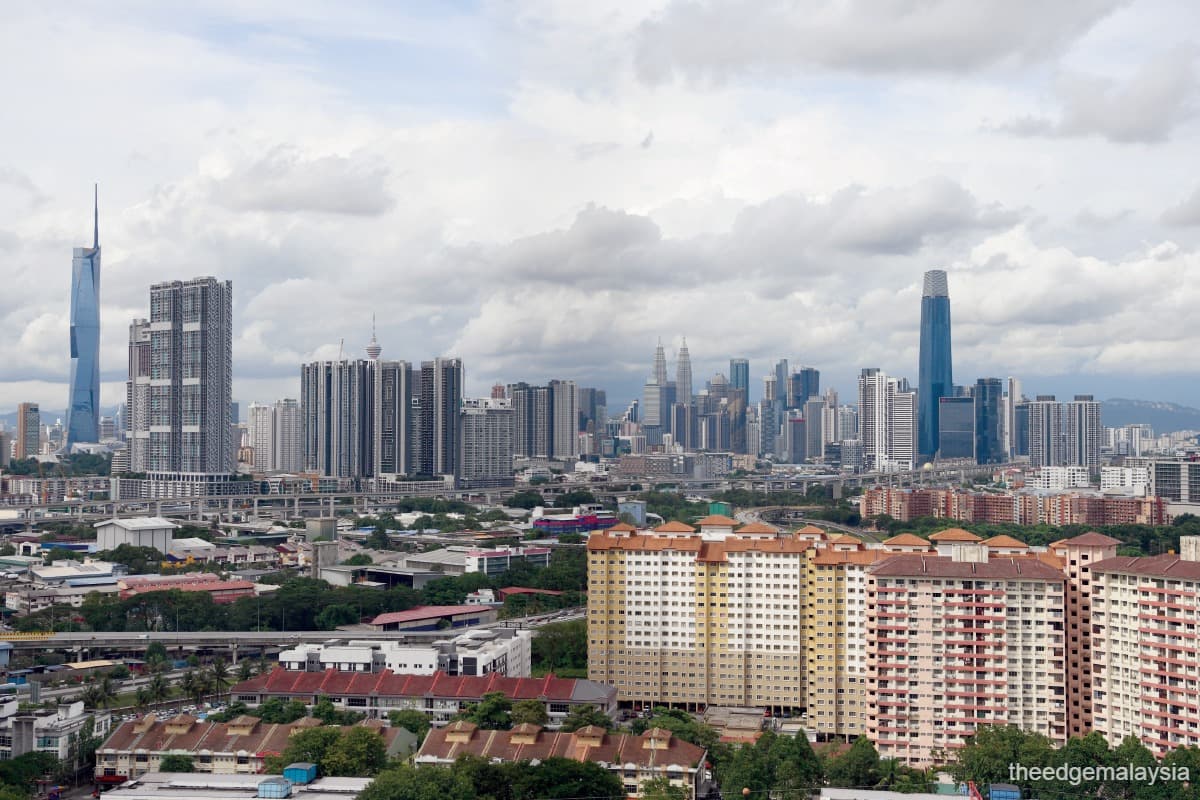
This article first appeared in City & Country, The Edge Malaysia Weekly on January 5, 2026 - January 11, 2026
Property experts believe 2025 was a resilient year for the real estate sector and the positive momentum is expected to continue into the new year. Both the residential and industrial segments delivered a strong performance, a trend likely to persist. While opportunities abound, they will require careful study and planning to ensure optimal and profitable outcomes. Here is part one of the poll, part two will be published in the Jan 12 issue.

PPC International Sdn Bhd
Managing Director
Datuk Siders Sittampalam
With the overnight policy rate reduced from 3% to 2.75% in July 2025, housing affordability improved, particularly for first-time homebuyers. Government measures such as tax reliefs of up to RM7,000 for homes below RM500,000, stamp duty exemptions and the Housing Credit Guarantee Scheme (SJKP) continued to stimulate residential demand.
Johor and Penang stood out as the best-performing regions in 2025. Johor’s proximity to Singapore and strong cross-border connectivity spurred both residential and industrial demand. In addition, the Johor-Singapore Special Economic Zone (JS-SEZ) and the Johor Bahru–Singapore Rapid Transit System (RTS) Link also acted as major catalysts, boosting investor sentiment and housing activity, with Johor recording a 10.2% uplift in landed home transactions and serviced apartment prices rising over 20% since 2024. On the other hand, Penang’s premium market remained supported by limited land supply and sustained foreign interest, particularly from long-term investors.
In contrast, Kuala Lumpur’s high-rise segment remained stagnant amid a lingering oversupply, though well-located and affordable luxury condominiums continued to attract steady foreign attention. The industrial and data centre segments, while experiencing a temporary slowdown due to global economic uncertainty and the SST expansion in July 2025, continued to demonstrate underlying strength, supported by sustained demand for logistics hubs, high-tech manufacturing to some extent and digital infrastructure.
Looking ahead to 2026, the market is expected to maintain a cautiously optimistic trajectory. Budget 2026 measures, including full stamp duty exemptions for first homes up to RM500,000 (extended to end-2027), tax incentives for converting commercial to residential use and support for rent-to-own schemes will further enhance affordability, stimulate urban regeneration and broaden homeownership access.
Coupled with major infrastructure projects such as the East Coast Rail Link (ECRL) and JS-SEZ, these policies are poised to strengthen purchasing power and regional growth momentum.

Nawawi Tie Leung Property Consultants Sdn Bhd
Executive director and regional head of research and consulting
Saleha Yusoff
Penang’s residential property market maintained steady growth in 2025, with median prices across the state climbing to around RM475,000 to RM486,000. Momentum was strongest in prime locations, where high-rise and luxury units on the island saw year-on-year (y-o-y) price gains of 6% to 12% in 2024/2025, particularly in Jelutong, Gelugor, Pulau Tikus, Bayan Baru, Tanjung Bungah and Gurney Drive.
We expect overall price growth of 3% to 5% in 2026. The high-end segment and prime island locations are forecast to remain the outperformers. Mainland and mid-market housing are expected to remain stable.
Areas tied to upcoming infrastructure projects, especially those benefiting from the Penang Light Rail Transit (Mutiara LRT) and future developments around Penang Silicon Island, are likely to see demand upticks. Industrial-driven residential demand will remain relevant as growth in manufacturing and foreign direct investments (FDIs) supports new jobs. This growth will bolster mid-range and rental demand.
Waterfront condominiums, heritage properties and landed homes in prime locations remain limited relative to demand, presenting opportunities for long-term capital appreciation and stable rental yields. For mid-market and first-time buyers, mainland areas such as Seberang Perai, Batu Kawan and Bukit Mertajam offer more affordable pricing and stronger value. Those areas are increasingly appealing as infrastructure and industrial growth extend beyond the island.
Meanwhile, residential units near industrial hubs stand to benefit from ongoing job creation. Similarly, transit-oriented developments (TOD) could deliver capital upside as connectivity improves. Mixed-use and waterfront developments that combine lifestyle, convenience and premium finishes are expected to remain in demand among both lifestyle-oriented buyers and investors.
To maintain momentum and avoid overheating, the following strategic moves would strengthen the market:
• Timely delivery of the LRT project and related connectivity improvements will enhance accessibility and unlock latent demand, especially outside core island zones.
• Government or state-level incentives, for example — subsidies, tax breaks or public-private partnerships — to make lower- and mid-range housing more attainable.
• Developers should continue offering a diverse product mix, preventing oversupply of condos and ensuring options across income segments.
• To promote industrial-residential linkage by strengthening planning to align housing supply with workforce growth. This linkage will enable more rental supply near employment centres.
• Maintain clear guidelines for foreign investment, foreign buyer participation and streamline approval processes; avoid sudden policy shifts that cause buyer/investor uncertainty.


Henry Butcher Real Estate Sdn Bhd
Director of corporate real estate
Long Shi Chuen
Overall, the Malaysian property market performed positively in 9M2025 although there was only a single-digit increase in the volume and value of transactions.
Barring any negative developments on the global stage, the property market in 2026 is expected to remain stable, supported by gradually improving consumer confidence. The Malaysian economy is forecast to grow between 4% and 4.5% in 2026, while Visit Malaysia 2026 (VM2026) will boost the economy, and also serves as a global platform to showcase Malaysia’s property market and attract international investment.
Malaysia and the US governments’ agreement on the tariff is expected to be positive for the industrial sector. Despite the current lull in the trade war between China and the US, the issue has not been fully resolved. Should the matter flare up again, it would have a detrimental impact on global trade, which could turn developers cautious, leading to fewer new launches in 2026 unless the launched projects see stronger take-ups.
The industrial sector will continue to be a key driver as Malaysia advances towards Industry 4.0. JS-SEZ policies position the country as a regional manufacturing and business hub. Tech-driven areas, supported by investments in semiconductors and digital infrastructure, will further strengthen the industrial segment.
The Johor RTS Link and upcoming Penang LRT project are expected to drive property value appreciation, particularly along the George Town-Butterworth corridor. In the Klang Valley, properties with convenient access to highways and public transport will continue to grow in value. Landed properties will continue to attract more interest from owner occupiers while high-rise strata developments in established areas will also be able to garner interest from the market.
In Budget 2026, the government has significantly expanded homeownership accessibility by doubling the SJKP allocation to RM20 billion. It also extended full stamp duty exemptions on transfer and loan documents for first-time home purchases priced up to RM500,000 until Dec 31, 2027.
The government can come out with policies and strategies to prevent uncontrolled increases in construction and development costs, and provide additional stimulus to the property market. However, to maximise impact, such initiatives should be expanded beyond new launch projects to include the secondary market to create more balanced and sustainable growth for the property sector.

IVPS Real Estate Sdn Bhd
Country manager, head of occupier services - transaction management and advisory
Tiffany Goh
The 2025 market was resilient but selective. While transaction volume dipped slightly (6%) in 1H2025 after a record 2024, values held firm.
The 2026 outlook is cautiously optimistic with gross domestic product growth projected at 4% to 4.5%. The market is expected to shift from recovery to sustainable growth, supported by government fiscal policy and external financial sectors. We anticipated that the top-performing sectors would be industrial and data centres, the industry’s “golden goose”, fuelled by FDI in Johor, Selangor and Penang. Affordable housing will remain robust, supported by government incentives such as stamp duty exemptions. VM2026 will also likely boost short-term rentals and retail real estate investment trusts (REITs).
Opportunities lie in TOD and infrastructure catalysts. For example, in Johor Bahru, with the RTS Link expected to be operational by end-2026, properties near Bukit Chagar and within the JS-SEZ are poised for strong capital appreciation and rental yields, driven by anticipated Singaporean cross-border demand.
Investors may look for adaptive reuse projects such as commercial-to-residential conversions and prioritise green-certified buildings as they increasingly command higher rental premiums and better financing rates.
While the market is stable, it suffers from a mismatch in supply rather than a shortage. The focus must be on fixing what we already have. We should revive a targeted Home Ownership Campaign to clear unsold homes in smaller cities and introduce flexible financing to help gig workers secure loans.
Instead of aggressive new construction, we should incentivise converting empty Grade B and C purpose-built offices into apartments and offer tax breaks for upgrading older buildings with green features.
Finally, to prevent future unsold inventory, authorities must require stricter proof of demand before approving new projects and ensure that affordable housing is properly connected to public transport.

JLL Malaysia
Managing director
Jamie Tan
In 2025, the property market demonstrated resilience rather than exuberance, stabilising after several years of uneven recovery. According to the National Property Information Centre (Napic), a total of 196,232 transactions were recorded in the first half of 2025, with a combined value of RM107.68 billion. This represented a modest 1.3% y-o-y decline in transaction volume but a 1.9% increase in transaction value, suggesting that investors and buyers are more selective in choosing higher quality assets and prime locations.
The outlook for 2026 remains cautiously optimistic, supported by strong fundamentals and the strategic measures announced under Budget 2026. The combination of fiscal support, potentially rising exports and infrastructure expansion should sustain momentum across several key real estate sectors.
Johor is expected to lead residential performance once again. The Johor–Singapore RTS Link and the JS-SEZ are set to catalyse significant demand for both owner-occupied and investment housing. With average prices still relatively low compared to Kuala Lumpur and Penang, Johor’s residential market offers one of the best prospects for capital appreciation in 2026.
The industrial segment will continue to expand, driven by Malaysia’s positioning in advanced manufacturing, electronics and precision engineering. The new trade agreement with the US, which exempts or lowers tariffs on over 1,700 export items — including semiconductors, aerospace components, pharmaceuticals, palm oil, rubber and cocoa products — will encourage both local and foreign investors to expand manufacturing capacity. This will directly boost demand for industrial land, factories, logistics facilities and worker housing.
Data centres remains a strong sector as the demand for computing capacity surges globally, driven by the proliferation of artificial intelligence (AI). With abundant land, stable power supply and attractive connectivity, Malaysia continues to draw hyperscale data centre investments, particularly in Johor, Selangor and Cyberjaya, with Negeri Sembilan emerging as a potential data centre hub.
Medical, educational and transit-oriented assets will attract institutional and private equity interest, especially in urban and high-density areas where alternative-use redevelopment offers stronger yields and returns on investments.
While foreign demand is expected to moderate following the 8% stamp duty rate for non-citizens and foreign companies, Malaysia remains one of the most competitively priced property markets in Southeast Asia.

Olive Tree Property Consultants Sdn Bhd
CEO
Samuel Tan
In Johor, 2026 is poised to be a pivotal inflection point, primarily driven by one mega project, the Johor Bahru–Singapore RTS Link. The outlook is bifurcated with high potential for specific micro-locations, but continued challenges for the broader market.
The RTS Link, which is targeted to be operational by January 2027, is the primary bullish driver. It moves the Johor-Singapore story from “promise” to physical reality. This boosts long-term investor confidence significantly.
We expect a sharp increase in rental demand and potential rental yield for properties within a one- to 2km radius of the RTS Station at Bukit Chagar. Prices for completed, move-in ready properties in the RTS catchment area are likely to see price firming and selective appreciation in the 12 to 24 months preceding and following the opening, as investors and end users position themselves for improved connectivity, resulting in increased demand.
The JS-SEZ momentum will boost commercial and industrial properties. This will create spillover demand for residential units for relocated executives and workers.
The success of the Forest City Special Financial Zone incentives will be more apparent. If successful, it could create a niche market for foreign-owned properties within that zone, but it remains separate from the mainstream Johor Bahru market.
The fundamental price arbitrage will remain with continued Singaporean demand. With the RTS easing the commute, more Malaysians working in Singapore and Singaporeans may consider Johor real estate for retirement homes, weekend properties or investment properties.
The oversupply of high-end high-rises in areas not served by the RTS will persist. These markets may remain soft, with stagnant prices and low rents. The Johor government may revise foreign buyers’ rules, such as minimum prices and quotas, to improve approval rates and sentiment.
The year 2026 is projected to be when Johor’s property market shifts from potential to tangible, transport-led integration. The RTS Link’s expected opening will be the defining event, likely creating a robust, high-occupancy sub-market around its terminal while leaving poorly located assets behind.
The master plan of the JS-SEZ initiative will be rolled out in early 2026, causing increased interest in the industrial sector, especially in Kulai, Iskandar Puteri, Tanjung Langsat and Tebrau. The standout narrative nationally will be Johor’s unique cross-border transformation, making it the most watched and volatile, yet opportunity-rich, market in the country.
Towns with stations along the Electric Train Service (Electrified Double-Tracked Rail), from KL Sentral to JB Sentral, will benefit. It will take 3½ to four hours from JB to KL. Pockets of development will be seen. These can be mini TODs. The rail will run from KL to JB from Dec 12, 2025, and will be carrying both passengers and cargo. Towns that will benefit include Kluang and Segamat in Johor and Gemas and Seremban in Negeri Sembilan.
A new passenger service line to help disperse the flood of commuter traffic expected from the soon to be completed RTS Link is scheduled to be launched in December 2026. KTM will expand its 40km Kempas Baru-Pasir Gudang line that currently serves only freight operations to include passenger services, with the establishment of two passenger stations. This bodes well for areas around the two stations.
We expected more clarity on the Elevated Autonomous Rapid Transit as a means to disperse the passengers from the RTS station. This will ease congestion in JB, and hopefully, the Iskandar Malaysia Bus Rapid Transit will be incorporated, so that 90% of the JB district will be covered with public transport through the feeder buses. This will cause a surge in demand for houses in the outlier areas.


Knight Frank Malaysia
Group managing director
Keith Ooi
The property market held firm throughout 2025 despite heightened global uncertainty. As at 3Q2025, transaction volume softened slightly by 3.5% y-o-y, yet total value rose 12.5% — a sign that activity shifted towards larger, higher-value deals, even as caution persists across certain segments.
The industrial sector remained the standout performer. Manufacturing continued to attract deep capital, with RM93.8 billion in approved investments in the first nine months of 2025, accounting for nearly a third of total approvals. High-value segments such as chemicals, and electrical and electronics (E&E) anchored expansion, while momentum grew in battery production, electric vehicle (EV)-linked manufacturing and data centre infrastructure. This reinforced Malaysia’s evolution into a technology-driven, sustainable manufacturing hub and kept industrial and logistics assets firmly on global and regional investors’ radar.
Residential demand was more uneven. Key rental markets like Mont’Kiara, Bangsar, Damansara Heights and KLCC in KL saw rents rise by 5% to 10% amid strong occupier interest. Yet sub-sale activity slowed, largely due to cautious sentiment and a buyer-driven resale market. Most purchasers were genuine homebuyers rather than investors. Rental performance should hold steady into 2026, although interest in new launches above RM1 million may moderate once the foreign-buyer stamp duty rises from 4% to 8% in January 2026.
Meanwhile, the office market is entering a period of stabilisation. Flight to quality remained a defining theme, benefiting newly completed buildings such as Sunway Square Corporate Towers 1 and 2, Menara TNB Bangsar and The Exchange TRX. With no major new supply in 2026, landlords in the KL Fringe and Selangor, where shortages of prime stock have persisted, are likely to enjoy a more supportive leasing environment.
Investment activity strengthened meaningfully in 2025, driven by industrial, logistics and data centre-linked assets. Occupancies of prime malls held firm on strong domestic spending and rising tourist arrivals, while secondary malls without a clear positioning strategy remained under pressure, underscoring a structural flight to quality.
Meanwhile, the market for suburban shoplots stayed active, supported by small and medium enterprise-driven demand. Ahead of VM2026, concerted efforts by Tourism Malaysia and industry stakeholders could benefit tourism-focused retail and hospitality segments.
Across the market, property management is playing a bigger role as environmental, social and governance (ESG) expectations, digital adoption and AI-led optimisation shape operational performance. Forward momentum will depend on more synchronised improvements — from approvals to infrastructure readiness and targeted incentives — to support Malaysia’s next phase of real estate growth.


Landserve Sdn Bhd
Managing director
Chen King Hoaw
The property market has shown signs of stabilising in 2025. Total transaction volume has declined while total transaction value has inched up, indicating that buyers have become more selective but remain willing to commit to the right property in the right location.
The property market is expected to enter 2026 on firmer ground, though sentiment will likely remain cautious. Homebuyers and investors looking for a good buy are expected to prudently focus on key fundamentals such as location, connectivity, product quality, and potential capital and rental returns.
The residential sector will remain the most active. Homes and units priced between RM300,000 and RM800,000 and those located in growth corridors, will show relatively stronger potential. The high-rise segment will stay competitive, particularly in the Klang Valley, Penang and Johor, where overhang remains elevated.
In the commercial sector, Grade A and green-certified offices will continue to record healthy occupancy, while older buildings will face pressure to upgrade. Huge and well-managed malls with strong footfall will sustain stable yields, with city malls attracting tourists and locals while township malls draw residents from surrounding areas.
In the industrial sector, warehousing and logistics properties will remain the top performers, supported by e-commerce demand, modern warehousing needs and nearshoring trends. Rental rates in mature logistics hubs in the Klang Valley, Penang and Johor are expected to rise as demand continues to outpace supply in 2026.
Investors and homebuyers will find opportunities in growth corridors anchored by catalytic projects such as the JS-SEZ, the Johor Bahru–Singapore RTS, the ECRL, the MRT3 Circle Line, the Penang LRT Mutiara Line and the Pan Borneo Highway. These developments are set to enhance connectivity, stimulate economic activity and support long-term property value growth in surrounding areas.
In the primary market, opportunities will emerge in lifestyle-oriented, well-connected developments with strong management, which appeal to a wide range of investors and homebuyers, from younger households to retirees. In the Klang Valley, demand for TOD properties will strengthen once the MRT3 Circle Line is implemented, creating a fully integrated rail network across the region.
Investors and homebuyers can also consider overhang stocks and opportunities in the secondary market, including properties put up for auction under foreclosure exercises, as prices in such cases are expected to become more attractive. Nonetheless, thorough due diligence remains essential before making any purchase decision.
Consequently, for those upgrading from a flat or apartment to a larger unit, or moving to a bigger landed property, 2026 could be an ideal year to buy. The reduction of the overnight policy rate from 3% to 2.75% also means lower borrowing costs.
While prioritising affordable housing for the B40 segment, the government should also expedite catalytic projects to stimulate economic activity, strengthen purchasing power and boost business confidence among Malaysians and small and medium enterprises. With 2026 designated as VM2026, revisiting policies such as Malaysia My Second Home could further attract foreign buyers and encourage greater foreign ownership.


Laurelcap Sdn Bhd
Executive director
Stanley Toh
The property market held steady in 2025 despite cautious sentiment, reflecting a sector that remains resilient even amid structural challenges. Transaction volumes slipped 1.3% to 196,000, yet total value rose 1.9% to RM107.7 billion as buyers gravitated towards higher-value assets.
Looking ahead, 2026 is projected to see stable, moderate growth supported by a steady economy, rising household incomes and Budget 2026 incentives aimed at boosting homeownership and urban revitalisation.
Residential activity is expected to concentrate on affordable and mid-market homes priced up to RM500,000, with stamp duty savings, mortgage guarantees and first-time buyer support helping sustain demand. Suburban townships should continue gaining traction, especially for compact landed homes and gated communities, while urban transit-oriented high-rises remain attractive for their rental potential. Even so, oversupply in certain high-rise segments will cap price growth, prompting investors to prioritise yield over speculative gains.
The industrial and logistics segments are set to lead the market again in 2026, supported by robust demand for warehouses, fulfilment centres, factories and data centre infrastructure. ESG-ready industrial parks are expected to outperform, offering low vacancy rates and favourable rental growth as occupiers seek sustainable, future-proof facilities. At the same time, selective opportunities will emerge in commercial assets with redevelopment potential, particularly in well-located urban areas.
Opportunities for homebuyers will centre on affordability, connectivity and township maturity, with emerging corridors offering better value relative to city cores. For investors, the strongest prospects lie in industrial corridors such as Shah Alam, Klang, Rawang, Bukit Raja, Senai, Pasir Gudang and Kulim, where rental yields remain compelling. Residential investments in well-planned townships or undersupplied suburban pockets can also deliver steady long-term returns.
Even as policy incentives continue to support the market, they ultimately address symptoms rather than underlying issues. Sustainable growth will depend on fixing structural imbalances, aligning supply with genuine demand, improving planning efficiency, revitalising ageing urban areas and tackling affordability at its root. A market grounded in coherent planning and structural reform will be better positioned to withstand cyclical shifts and continue supporting Malaysia’s broader economic trajectory.


Savills Malaysia
Group managing director
Datuk Paul Khong
Zooming into 2025 itself, the property market showed normalised activities while demonstrating strong resilience in overall values. Although there was a slight decline in transaction volumes in 1H2025, the overall transaction values remained steadily higher and trending well into the year end.
In 2025, the residential sector continued holding the lion’s share of total transactions with strong housing demand due to population growth, urbanisation, low interest rates and favourable mortgage terms. The rise in “remote working” has also led to more demand for new lifestyle-themed properties within suburban and new semi-rural areas. Governmental incentives for the first-time homebuyers also help stimulate market activities and enhance buyers’ confidence.
Industrial and development land is expected to continue gaining further momentum in 2026. In 9M2025, the country attracted approved investments totalling RM285.2 billion, representing a 13.2% increase from the previous year.
Johor led all states with RM91.1 billion in approved investments, followed by Selangor with RM51.9 billion, Kuala Lumpur with RM45.9 billion, Penang with RM23.7 billion and Kedah with RM17.5 billion.
The hospitality sector and good retail malls will continue to see better days on the back of a strong performance for 1H2025. These sectors are on an uptrend trajectory, with VM2026.
The office market has also performed well with a strong “flight to quality” trend emerging over the past 24 months. Many companies are relocating to new green buildings to align with their ESG agendas and net zero carbon journeys.
By location, new opportunities are within the economic zones such as JS-SEZ in Iskandar Malaysia, Greater KL where the main population and job centres are found as well as Penang, the major industrial and manufacturing hub.
As per the Napic report, foreign purchasers account for less than 1% of total residential property transactions (913 out of 120,307 transactions in 1H2025). There should be more effort to target qualified foreign purchasers of residential properties. Any sort of waivers or reduction in property taxes and costs will be welcomed. VM2026 is timely with the influx of tourists and will help boost the retail and hospitality sectors for next year.
Save by subscribing to us for your print and/or digital copy.
P/S: The Edge is also available on Apple's App Store and Android's Google Play.