

This article first appeared in The Edge Malaysia Weekly on December 29, 2025 - January 4, 2026
Sabah is tapping microalgae to support the state’s green energy goals under the Sabah Energy Roadmap and Master Plan 2040, which aims to achieve over 50% renewable energy capacity by 2035 and 80% by 2050.
In July, the Sabah Agro-Industrial Precinct (SAIP) signed a memorandum of understanding (MoU) with CCE Power Holdings Sdn Bhd to develop a microalgae biomass power plant utilising microalgae as feedstock to produce crude algae oil for biofuel and generate green energy in Kimanis, Sabah.
Microalgae is touted as a bioenergy source for its high growth productivity and its ability to absorb carbon dioxide during cultivation, says SAIP general manager Annef Osyairi Osman.
As a result, when microalgae are used for biofuel, it does not introduce new carbon into the environment, making it a cleaner alternative to fossil fuel and land-based crops.
The Kimanis plant will feature two main production streams. Algae biomass will be dried and converted into what is described as “green coal” for power generation, while crude algae oil will be processed into biofuels as well as products such as bioplastics, medical-grade creams and cosmetics,
“The plant is expected to generate 30MW of electricity through biomass combustion, using a fuel mix of dried microalgae biomass and palm-based residues,” he adds.
However, the capacity and volume of crude algae oil produced have not been disclosed.
“Using CCE Power’s technology and facilities, the microalgae can be cultivated around the clock, as the process does not require sunlight,” says Annef.
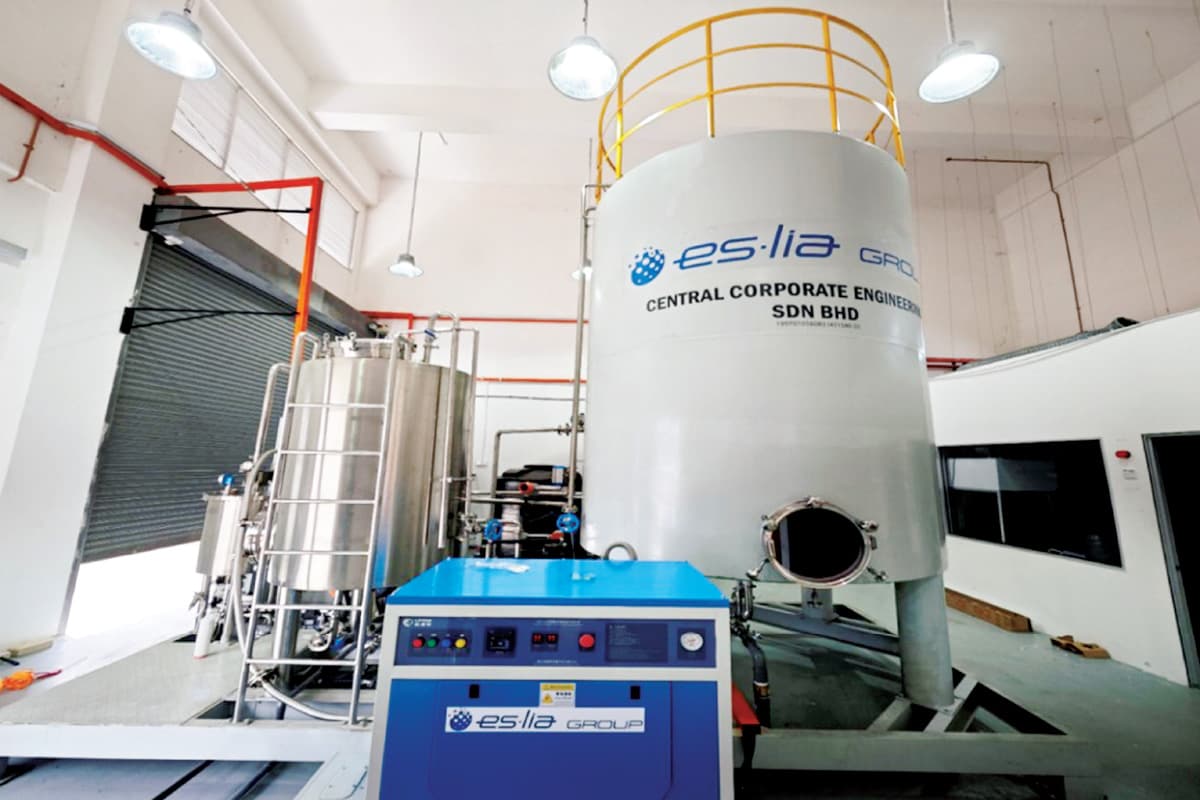
The project will employ a closed-tank heterotrophic cultivation system, a method that does not require sunlight and can achieve much faster microalgae production by growing algae on organic carbon sources in controlled fermenters.
Annef explains that microalgae cultivated using heterotrophic technology can be harvested within five to seven days, achieving yields of nearly 60%, significantly higher than photosynthesis-based systems.
“Microalgae can be harvested within five to seven days and then dried to produce algae biomass. Its calorific value is comparable to coal, which makes it a strong renewable energy option,” he says.
The overall capacity of the Kimanis plant will depend largely on the scale of investment. Annef says the facility is designed around a single large tank that can process 10 tonnes, 50 tonnes or up to 100 tonnes of microalgae, depending on funding and project requirements.
Based on current discussions, the proposed capacity is around 50 tonnes, requiring several million ringgit in investment.
For the development of the plant, SAIP has allocated a total of 100 acres (40ha) of land in Kimanis, structured for phased development over about three years from 2025 to 2027 towards full 30MW integration.


“For the first stage of this project, CCE Power is given about 50 acres of land, which can generate about 15MW, which this is for their feasibility study,” he says.
The feasibility study began in July following the signing of the MoU, with the first phase expected to be completed by the end of this year.
According to news reports, following a successful pilot project, CCE Power has filed for patents on its proprietary technology and is moving ahead with construction of the commercial facility.
Annef says the project team must also present feasibility study reports to the Energy Commission of Sabah (ECoS) to prove the concept’s viability by the end of year.
“Before they are able to develop the power plant, they need to comply with all the requirements set by ECoS,” he says.
Transitioning from palm biomass to microalgae biomass
One of the key advantages of microalgae is that it reduces the need for food crops to be used as biofuel feedstock, avoiding the land-use and food security concerns associated with crops such as palm oil.
The project positions microalgae as a complementary feedstock alongside conventional agricultural biomass, particularly palm oil residue, which has long underpinned Sabah’s bioenergy sector, says Annef.
According to the Malaysian Investment Development Authority, Sabah is the country’s second-largest oil palm-growing state and recorded the highest national oil extraction rate (OER) in 2023.
The state has 129 palm oil mills with a combined processing capacity of 34.7 million tonnes annually. In 2023, Sabah processed 22.4 million tonnes of fresh fruit bunches, achieving an OER of 20.4%, the highest in the country.
“Instead of depending entirely on palm-only biomass, the plant will be transitioning to an algae-rich feedstock. We are moving from 100% palm biomass to a 70% microalgae and 30% palm feedstock mix,” says Annef.
This approach is expected to ease land-use pressures, enhance carbon dioxide circularity and improve lifecycle emissions.
Growing pains

The production of microalgae remains challenging, especially for large-scale commercial operations. It is often criticised for being capital-intensive, time-consuming and limited in crude algae oil output.
“Investments in microalgae and the energy being sold to the grid will be somewhat costly. For the cultivation process, you have to wait at least a year for the initial growth before continuous production can begin,” says Annef.
“However, once the market matures, the costs will eventually stabilise.”
According to a study titled “Economic feasibility of microalga to produce commercial biodiesel and reduce carbon dioxide emissions in Malaysia” in 2022, algae oil is generally more expensive than its primary competitor, palm oil, but it is becoming increasingly cost-competitive.
The study reports that traditional diesel and palm-based biodiesel often benefit from much more mature supply chains and higher volume discounts compared to microalgae biofuel.
Other challenges include a limited pool of specialised talent and evolving downstream markets, Annef says.
“These issues will be addressed through a phased rollout that leverages CCE Power’s technology and strategic partnerships with universities and technical and vocational education, and training providers.”
Annef believes that while the microalgae biomass project represents a capital investment in the low hundreds of millions of ringgit, it is also expected to generate hundreds of jobs during the construction phase.
“It will definitely generate permanent high-skilled roles once operational. We will need general workers as well as engineers and our priority is to create job opportunities for local communities around Kimanis.”
Save by subscribing to us for your print and/or digital copy.
P/S: The Edge is also available on Apple's App Store and Android's Google Play.