

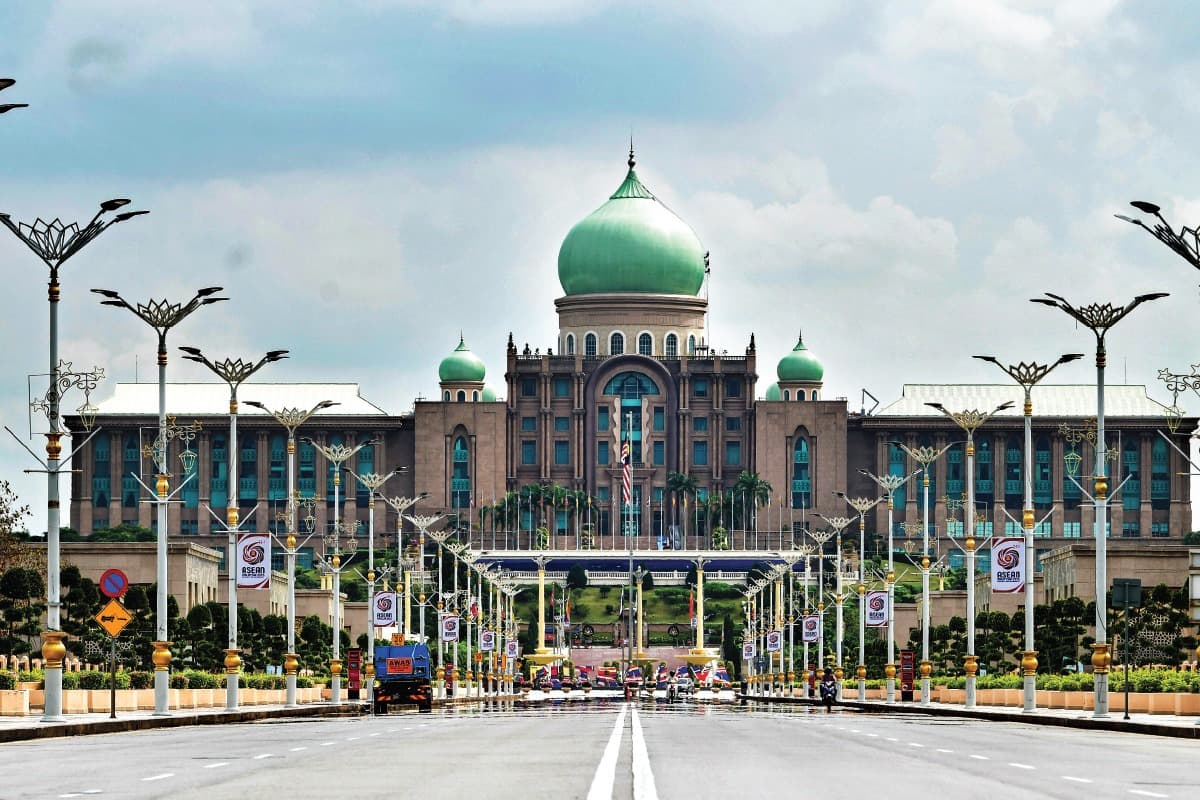
This article first appeared in The Edge Malaysia Weekly on December 29, 2025 - January 4, 2026
MALAYSIA’s justice system is about to see a major shift with the splitting of the dual function of the Attorney General’s Chambers (AGC). The aim is to give prosecutorial powers to an independent public prosecutor (PP) while retaining the attorney-general’s (AG) role as the government’s legal counsel.
Heeding the call of its many critics, the federal government in September agreed to fully separate the roles of AG and PP, a key institutional reform promise made by the Pakatan Harapan coalition in the last two general elections.
Amendments to the Federal Constitution, specifically Articles 145, 183 and 42, will have to be made to establish the PP as a fully independent authority. The separation of roles will be implemented in phases, with necessary adjustments to existing structures and procedures.
A special technical task force, led by the legal affairs division, will work with the AGC, Ministry of Finance (MoF) and other key agencies to come up with the details of all aspects of the implementation.
The proposed splitting of roles has received a strong wave of support from legal eagles and civil society groups, many of whom see this reform as long overdue, especially where doubts over prosecutorial impartiality have been a thorn in the side of politically charged cases.
The Sabah Law Society welcomed the cabinet’s September decision, describing it as “a significant move toward strengthening the rule of law, good governance and public confidence in Malaysia’s justice system”.
Public interest groups, including Bersih 2.0, Aliran and Transparency International Malaysia (TI-M), had advocated for the reform, as had constitutional lawyers like Datuk Malik Imtiaz Sarwar, Datuk Zaid Ibrahim (former de facto law minister) and associate professor Datuk Dr Wan Ahmad Fauzi Wan Husain.
If anything, critics have lamented the pace of implementation, which they say suggests a lack of political will to move forward quickly.
Minister in the Prime Minister’s Department (Law and Institutional Reform) Datuk Seri Azalina Othman Said announced that the proposed amendment of the Federal Constitution to separate the AG and PP roles will be tabled in parliament in 2026.
If passed, the government will proceed to introduce the Remuneration Bill to pay for the separate AG and PP roles and an omnibus Reform of Laws (Public Prosecutor) Bill to recast criminal procedure, evidence and other related statutes.
Notably, a proposal is also under discussion by the task force that the PP could potentially be appointed by the Yang di-Pertuan Agong on the advice of the Judicial and Legal Service Commission — a move that could shield the office from day-to-day political interference.
This could be one of the biggest institutional reforms in the country’s history, as well as a feather in the cap of Prime Minister Datuk Seri Anwar Ibrahim and his unity government.
If implemented fully and properly, the separation of roles could restore trust, that Malaysia’s prosecution of suspected criminals will be free of political interference. Only time will tell if the reforms will be delivered as promised, but the line has been drawn and the wheels are now in motion.
String of controversial decisions
For decades, the AG has worn two hats: chief legal adviser to the government and public prosecutor, with deputy public prosecutors serving under him as stated in the Criminal Procedure Code.
Critics of the government and many in the legal fraternity have been pushing for the separation of roles, as they argue that the dual role of the AG creates a conflict of interest, especially in politically sensitive or high-profile cases, opening the door to perceived or real selective prosecution against members of the public, politicians and others, while some are let off the hook.
Such concerns were raised repeatedly in recent years as there have been a string of controversial withdrawals, acquittals or delays in high-profile criminal cases by the AGC.
Key examples include the granting of a discharge not amounting to acquittal (DNAA) to former prime minister Datuk Seri Najib Razak and his then Treasury secretary-general Tan Sri Mohd Irwan Serigar as official documents related to the International Petroleum Investment Company (IPIC) case had yet to be declassified by the government (classified under the Official Secrets Act) even though the trial had dragged on for years.
In a separate case, Najib was granted a DNAA for three money laundering charges involving RM27 million in SRC International funds. The AGC had applied for the DNAA seven years after charging Najib on the grounds that material documents needed for this trial were being used as evidence in the ongoing 1Malaysia Development Bhd trial and requested time to gather all the relevant evidence.
Another example involves the prosecution’s decision not to appeal against the acquittal of Deputy Prime Minister Datuk Seri Ahmad Zahid Hamidi in 2022 of 40 graft charges pertaining to the extension of a foreign visa system contract. Last year, he was granted another DNAA for the other graft charges.
In yet another controversial case, the High Court acquitted Najib’s wife Datin Seri Rosmah Mansor of money laundering and income tax charges on the basis that the charges were defective.
Rosmah is not totally off the hook, however, as she was sentenced to 10 years’ jail and fined RM970 million after the High Court found her guilty of three counts of graft over a RM1.25 billion solar hybrid project for 369 rural schools in Sarawak. Her case before the Court of Appeal is pending and set for March 6, 2026.
Save by subscribing to us for your print and/or digital copy.
P/S: The Edge is also available on Apple's App Store and Android's Google Play.