

This article first appeared in The Edge Malaysia Weekly on December 29, 2025 - January 4, 2026
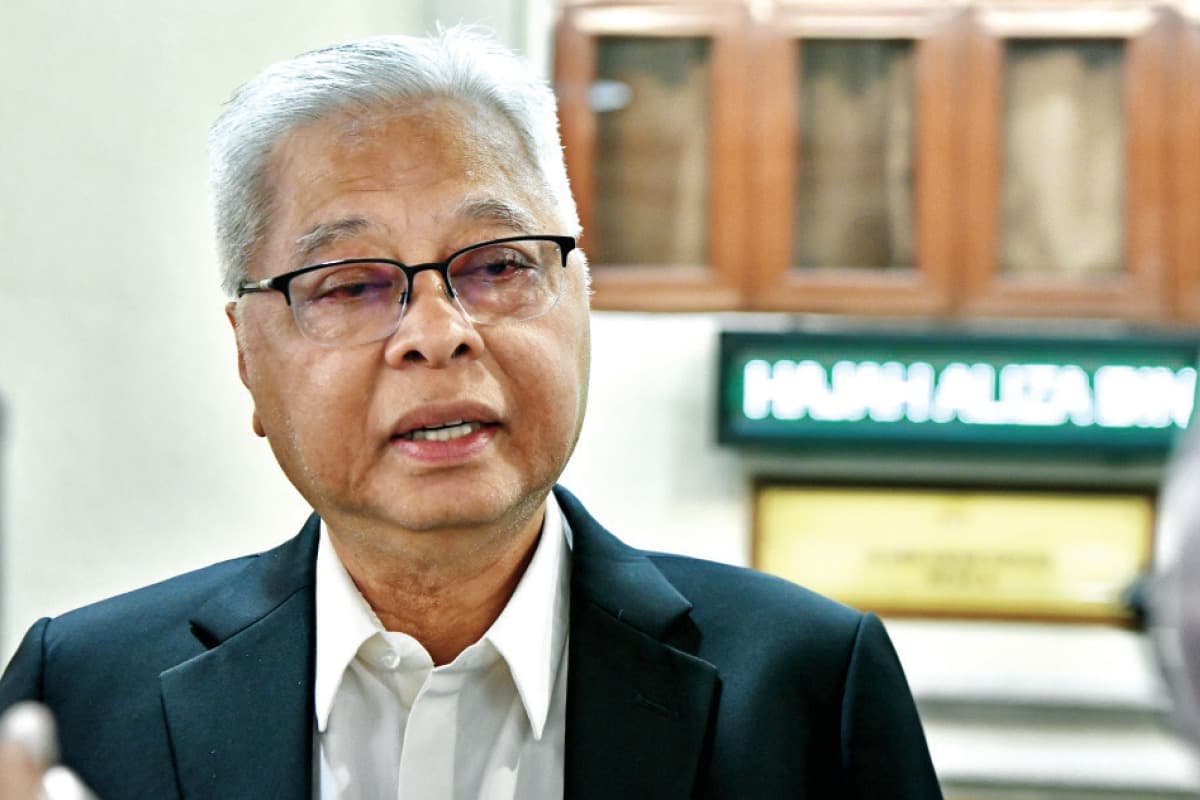
ONE could describe it as the RM177 million question. How can RM177million in cash, gold and other assets — seized from safe houses linked to former prime minister Datuk Seri Ismail Sabri Yaakob (pictured) and confiscated by the government without any objection from Ismail — still not result in any prosecution against anyone?
And why did the case involving politically connected entrepreneur Datuk Farhash Wafa Salvador’s mineral exploration licence fizzle out without any charges?
In Ismail’s case, raids this year across multiple properties by the anti-corruption agency, coordinated with law enforcement, netted RM177million in cash in multiple currencies, stacks of gold bullion, luxury watches and other high-value assets.
The seizures were tied to the Keluarga Malaysia initiative, an alleged money-laundering and corruption scheme during Ismail Sabri’s short tenure as prime minister between August 2021 and November 2022. The media dubbed it a “record recovery”, and Malaysian Anti-Corruption Commission (MACC) chief Tan Sri Azam Baki hailed it as proof that the agency could strike at grand corruption.
Yet, despite the dramatic headlines, no criminal charges have been proffered against Ismail. The Attorney-General’s Chambers (AGC) — the body responsible for deciding whether prosecution proceeds — has kept quiet on why the case has stalled. Observers note that while MACC conducts investigations, it cannot unilaterally prosecute; the AGC must approve charges.
The cash was seized by MACC on Feb 20. In September, the AGC announced that it is “thoroughly” reviewing MACC’s investigation report. Since then, the AGC has remained mum.
In a separate but related development, the sessions court in Kuala Lumpur ordered the forfeiture of about RM169 million in cash and 16kg of gold bars seized during the probe, as neither Ismail nor his former political secretary contested the government’s application for forfeiture.
Critics argue that the silence from Putrajaya fuels suspicion that political considerations, rather than evidentiary strength, are influencing prosecutorial decisions. This also makes a strong case for the separation of the roles of the public prosecutor and the attorney-general.
Only a little less beguiling, was the case of Farhash, the former political secretary of Prime Minister Datuk Seri Anwar Ibrahim.
In early 2025, MACC investigated claims that Farhash had acquired a mineral exploration licence through a politically connected company. The probe included witness statements, documentary evidence and internal communications from Sabah state authorities.
Despite this, Azam announced in September that no criminal elements were found, effectively closing the investigation. MACC maintained that Farhash’s company had not submitted the required documents and therefore no offence under existing law had occurred.
Farhash’s alleged connections to state officials and licensing authorities, combined with earlier MACC investigations and subsequent charging of two Sabah assemblymen and whistleblower Albert Tei, underscore a broader narrative: the system punishes some but shields others. In the eyes of the public, this raises the spectre of a two-tier justice system — one for the politically powerful, another for everyone else.
In contrast, Tei has faced a different ordeal.
The whistleblower who provided covert video evidence had to endure subsequent legal entanglements, demonstrating the risks individuals face when exposing politically sensitive corruption. He was charged with giving bribes as Azam and the MACC said he is not protected under the “whistleblowers” act.
While Farhash is a free man, it remains to be seen if Ismail will be charged once the AGC is done reviewing MACC’s investigation report.
Contrast these two men with Tei, Datuk Seri Shamsul Iskandar Mohd Akin, Sindumin assemblyman Datuk Dr Yusof Yacob and Tanjung Batu assemblyman Datuk Andi Muhammad Suryady Bandy of Sabah, who were all swiftly charged in court.
Tei’s covert videos suggest that Shamsul Iskandar had solicited and received bribes related to Sabah mining contracts. His evidence triggered immediate MACC action. Both he and Shamsul faced charges: Tei for giving bribes, Shamsul for receiving them. Two Sabah assemblymen implicated in facilitating the contracts were also charged. Tei has publicly claimed that MACC officers broke into his home and threatened his family during the arrest.
Save by subscribing to us for your print and/or digital copy.
P/S: The Edge is also available on Apple's App Store and Android's Google Play.