

This article first appeared in The Edge Malaysia Weekly on December 29, 2025 - January 4, 2026
THE Malaysian property market in 2025 was a picture of resilience and steadiness, with transaction data showing a more measured pace of activity but slightly stronger value growth.
Data from the National Property Information Centre (Napic) shows 108,250 transactions recorded in the third quarter of 2025, with a total value of RM64.39 billion. While transaction volumes slipped by a marginal 3.5% year on year (y-o-y), the overall transaction value rose 12.5%, reflecting a clear shift towards better-quality assets and prime locations rather than sheer volume.
That trend was echoed in pricing. The Malaysian House Price Index rose a modest 0.9% y-o-y to 229.1 points, pushing the average transacted home price nationwide to RM494,000.
Industry leaders say the year began on a firmer footing. JLL Malaysia managing director Jamie Tan observes that buyers had become noticeably more discerning, gravitating toward well-located, higher-quality developments. The result was a market defined by steadiness and discipline, rather than rapid acceleration.
Zerin Properties founder and group CEO Previn Singhe shares a similar assessment, noting that capital remained firmly in play, but was concentrated in larger, more substantial deals. This marked a departure from the broad-based rebound seen in 2024, as investors pivoted from volume-driven activity to strategic positioning.
Market sentiment in 2025 leaned toward cautious optimism, according to Laurelcap executive director Stanley Toh. He attributes this to a combination of lower interest rates, rising construction and material costs, and a more discerning buyer profile. Developers responded by recalibrating new launches to place greater emphasis on affordability, location strength and product differentiation. At the same time, lingering oversupply in certain high-rise segments reinforced a more selective approach among buyers.

Toh describes the year as a natural cooling-off period following the strong rebound of 2024, with the market settling into a more sustainable phase marked by selective demand, moderate price growth and continued resilience.
CBRE|WTW group managing director Tan Ka Leong highlights that a 5.6% increase in total transaction value was driven largely by development land deals, underpinned by active landbanking activity among developers. The industrial sector also played a key role, buoyed by strong investment confidence and supportive government initiatives at both state and national levels.
He characterises 2025 as a resilient year, with the market absorbing persistent headwinds such as rising living costs, tariff adjustments and ongoing fiscal restructuring, while remaining broadly stable across most sectors. The residential sector continued to dominate in both transaction volume and value.
Savills Malaysia CEO Datuk Paul Khong says 2025 was a better year than 2024, with tourism and data centres taking centre stage. A surge in tourist arrivals and demand for industrial and data centre properties emerged as key growth drivers.
He also points to the broader global context, noting that new tariffs imposed by the Donald Trump administration added volatility to global trade, while escalating regional conflicts and geopolitical tensions reshaped the global arms trade and affected multiple sectors.
Segments that stood out
The property market was defined by value-driven activity, selective sentiment and sectoral resilience.
Knight Frank Malaysia group managing director Keith Ooi describes 2025 as a value-driven year, with industrial, logistics and high-quality assets leading performance. Industrial stood out as the strongest sector, supported by RM93.8 billion in approved manufacturing investments in the first nine months of the year.
“Demand was anchored by electrical and electronics (E&E), chemicals, EV-related industries and data-centre expansion, reinforcing Malaysia’s position as a technology-driven manufacturing base,” he says.
Zerin Properties’ Previn concurs, noting that industrial and development land sub-sectors were the only ones to register y-o-y growth in both volume and value during the first half of 2025, with momentum sustained into the third quarter on the back of logistics, manufacturing and data centre-related demand.
Landbanking activity remained robust, Previn adds, as developers positioned themselves for longer-term growth. Large-scale township planning continued in strategic corridors such as Johor and Penang, both of which benefit from expanding manufacturing bases and increasingly mature digital ecosystems.
Southern Greater Kuala Lumpur continued to attract developer interest, with areas such as Semenyih and Sepang seeing heightened activity as Paramount Corp Bhd (KL:PARAMON), Eco World Development Group Bhd (KL:ECOWLD) and Mah Sing Group Bhd (KL:MAHSING) strengthened their presence in these locations. Improved connectivity and a positive employment outlook are expected to underpin demand for mid-market housing in these areas.
The residential sector, however, delivered a more mixed picture. Prime neighbourhoods such as Mont'Kiara, Bangsar, Damansara Heights and Kuala Lumpur City Centre (KLCC) recorded rental growth of between 5% and 10%. By contrast, the sub-sale market slowed as buyers adopted a more cautious stance, according to Knight Frank’s Ooi.
Activity at price points above RM1 million also moderated ahead of the higher foreign-buyer stamp duty, which takes effect in January 2026, prompting some buyers to defer decisions.
JLL Malaysia’s Tan notes that interest in affordable and mid-range homes held relatively steady, aided by targeted support measures such as the stamp duty exemption for properties priced at RM500,000 and below. That said, oversupply continued to weigh on high-rise developments in densely built urban corridors, where earlier construction pipelines are still working through the market.
Previn points out that much of the high-rise overhang consists of legacy stock rather than new supply, with nearly half of unsold units remaining on the market for six to 10 years, highlighting a structural mismatch between product and demand. Against this backdrop, transit-oriented developments and landed homes in mature, well-planned townships across major urban centres continued to record healthy absorption, reflecting buyers’ preference for connectivity and established environments.
Johor Bahru stood out as a notable bright spot. Housing demand strengthened on the back of spillover effects from the Rapid Transit System (RTS) Link, improved cross-border mobility, expanding industrial activity and rising investor interest linked to the Johor-Singapore Special Economic Zone (JS-SEZ).
In the commercial real estate segment, JLL Malaysia’s Tan says structural shifts continued to reshape the market. He notes that older Grade B and C office buildings faced ongoing challenges, with supply imbalances keeping rents under pressure. In contrast, modern Grade A offices, particularly those aligned with environmental, social and governance (ESG) and energy-efficiency standards, maintained strong tenant interest, higher rental levels and healthier occupancy rates.
Ooi adds that the office sector showed signs of stabilisation, with the ongoing flight-to-quality trend benefiting new Grade A completions such as The Exchange TRX and Menara TNB Bangsar. With limited new supply expected in 2026, occupancy levels in the Kuala Lumpur fringe and selected parts of Selangor are likely to find further support.
Top deals
A series of notable transactions across the land, hospitality, and retail and industrial segments underscored both investor confidence and the strategic repositioning of assets.
The Edge reached out to real estate experts to identify the top 10 property transactions of the year.
The notable deals include Mah Sing’s RM260 million acquisition of the Corus KLCC Hotel site on Jalan Ampang, Kuala Lumpur. The 1.485-acre freehold parcel is slated to be redeveloped into high-end serviced apartments with an estimated gross development value (GDV) of RM2.8 billion. Analysts highlighted that the purchase price at RM4,019 psf represents only 20% of the project’s GDV, making it a reasonable ratio for property development.
ExaStrata Solutions CEO Adzman Shah Mohd Ariffin describes the deal as a landmark pricing benchmark, particularly when assessed through the lens of redevelopment potential in Kuala Lumpur’s core.
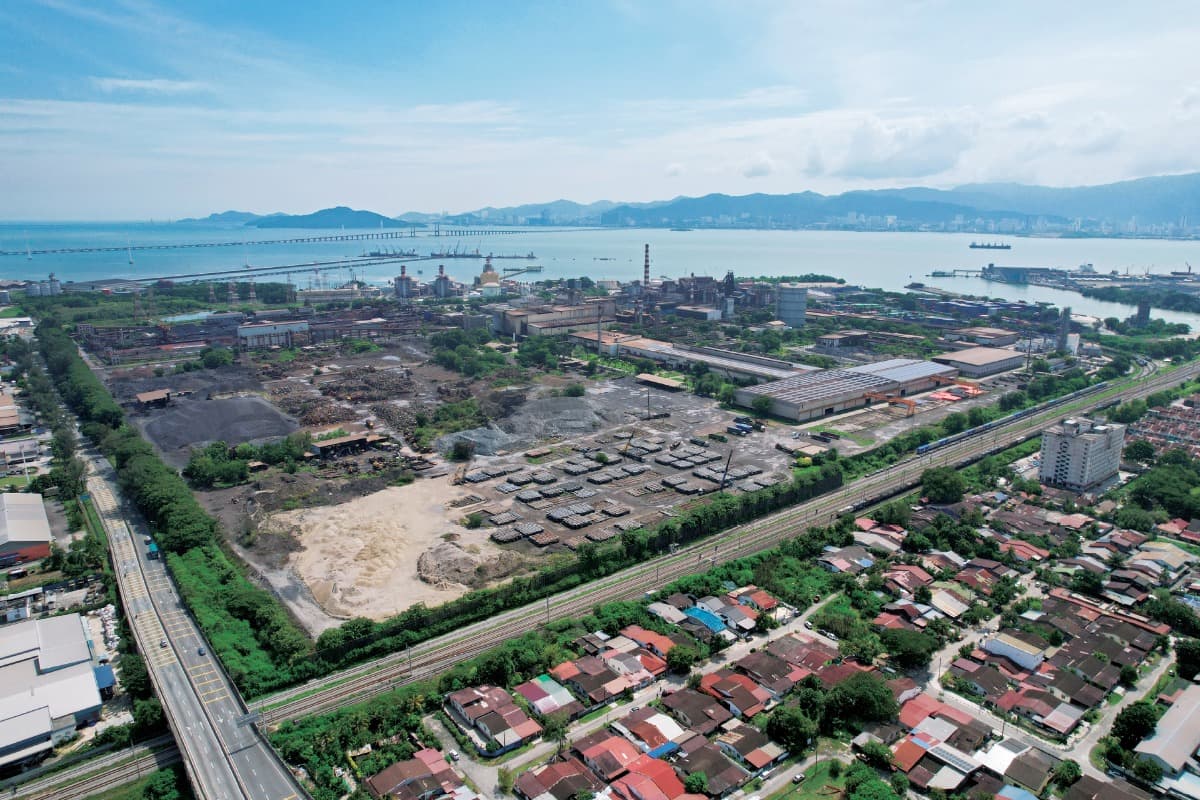
In the industrial space, Axis Real Estate Investment Trust’s (KL:AXREIT) RM800 million purchase of Ann Joo Steel Bhd’s 135.53-acre site in Seberang Perai, Penang, stood out as one of the year’s largest single asset industrial REIT deals. The transaction, brokered by Knight Frank Malaysia, included a leaseback arrangement, ensuring continuity of operations while securing long-term value for Axis REIT in a highly sought after locality.
Laurelcap’s Toh says the transaction was strategically attractive, given the scarcity of industrial assets available for sale in Seberang Perai.
Hospitality assets also saw significant movement this year. The 519-room Impiana KLCC Hotel was sold for RM315 million to Harum Aspirasi Sdn Bhd, a Valiram-related company, marking a strategic entry into hospitality for the luxury retail group.
At about RM607,000 per room, Toh notes that the acquisition compared favourably to other hotel transactions within the KLCC area, which have exceeded RM1 million per room.
Zerin Properties’ Previn describes the sale as a clean exit from a non-core asset for Magma Group Bhd (KL:MAGMA) and a calculated move by Valiram into hospitality, signalling sustained investor confidence.
Several consultants also highlight Oriental Holdings Bhd’s (KL:ORIENT) acquisition of three Bayview hotels in Penang, Georgetown and Langkawi for RM411 million from its major shareholder, the Loh family, in November.
“This related party portfolio consolidation gives Oriental Holdings full control of the Bayview assets, allowing the group to realign strategy, capital expenditure and brand direction under one coordinated plan. It also sets the stage for value creation through refurbishment and rebranding with operator like The Ascott Ltd,” Previn says.
On the regional front, Sunway Bhd (KL:SUNWAY) made one of the year’s largest cross-border moves, acquiring MCL Land, a Singapore and Malaysia residential developer, from Hongkong Land Holdings Ltd for RM2.42 billion. Rebranded as Sunway MCL, the acquisition added nine ongoing residential projects in Singapore with a combined GDV of RM14.9 billion.
Toh says the deal demonstrates a Malaysian developer’s capacity to compete on par with other leading Asian developers in terms of strength, execution, capability and industry experience.
Retail REITs were equally active. IGB Real Estate Investment Trust (KL:IGBREIT) completed its RM2.65 billion acquisition of The Mall, Mid Valley Southkey in Johor, raising its total assets under management to RM8.09 billion. Previn says it is one of Malaysia’s largest single asset retail deals, reinforcing institutional confidence in Johor Bahru’s growth anchored by the JS-SEZ and the RTS Link.
Paradigm Real Estate Investment Trust (KL:PARADIGM) followed with the RM2.44 billion acquisition of Bukit Tinggi Shopping Centre, Paradigm Mall Petaling Jaya and Paradigm Mall Johor Bahru, reflecting continued portfolio optimisation among listed REITs.
Commenting on both transactions, CBRE|WTW’s Tan says: “These transactions reflect REITs’ ongoing focus on portfolio optimisation and capacity recycling, aimed at enhancing long-term returns, improving diversification, and maintaining strong balance sheets.”
Data centre and industrial land deals rounded out the year’s major transactions. EcoWorld secured deals with Microsoft and Pearl Computing Malaysia for land in Johor and Ijok in Selangor, respectively, as well as with Microsoft Payments (Malaysia) for its land in Tebrau.
Knight Frank’s Ooi also highlights Eco Business Park 7 in Port Dickson and Eco Business Park 8 in Kulai, which are being developed by a joint venture between EcoWorld, SD Guthrie Bhd (KL:SDG) and state partners. The projects span more than 2,100 acres, with Eco Business Park 8 alone covering 935 acres and acquired for RM814.78 million. “These are among the largest industrial land bank transactions of the year, supporting EcoWorld-SD Guthrie’s expansion of large-scale business parks in MVV (Malaysia Vision Valley) 2.0 and the JS-SEZ corridor,” he adds.
Collectively, these transactions illustrate the breadth of activity in 2025, with industrial, hospitality and retail assets driving momentum. The year was marked by strategic repositioning, cross-border expansion and institutional confidence in Malaysia’s property market.
Looking ahead, consultants expect Johor to take centre stage in 2026, supported by the JS-SEZ and the RTS Link, while Penang’s electrical and electronics-driven industrial base and the Klang Valley’s diversified demand are set to sustain market activity.
Save by subscribing to us for your print and/or digital copy.
P/S: The Edge is also available on Apple's App Store and Android's Google Play.