

This article first appeared in The Edge Malaysia Weekly on December 29, 2025 - January 4, 2026
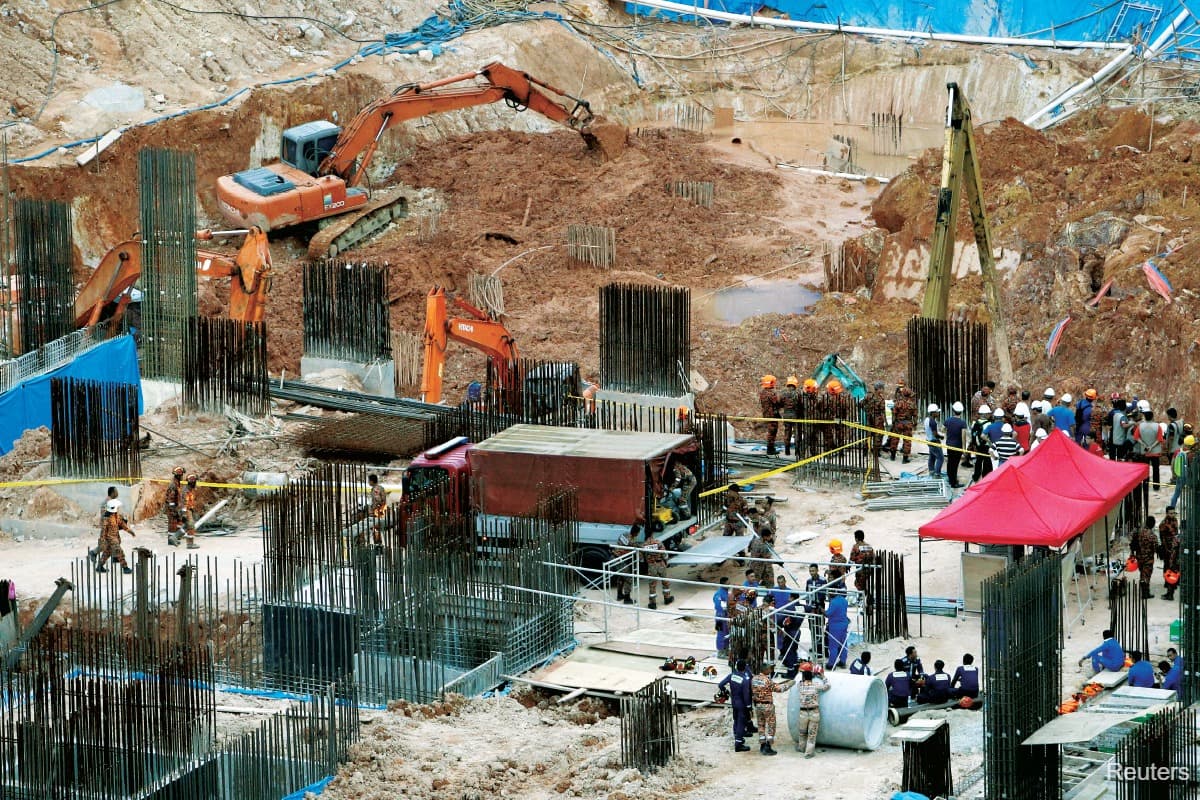
At a “Speak Up” forum organised by 11 civil society organisations in Penang late last month, members of the public and various associations discussed their concerns, many of which involved the impact of mega infrastructure projects and development, which could cause flash floods and landslides.
These, alongside concerns about rising heat on the island, the environmental impact of land reclamation, traffic congestion and an ageing population, were also brought up by the non-governmental organisations and people that ESG spoke to.
Penang’s ecosystem is in danger if development is left unchecked
One of the most outspoken long-time non-governmental organisations (NGOs) for consumers in Malaysia is the Consumers’ Association of Penang (CAP), which was founded in 1969.
For CAP to be established in Penang was not a coincidence, observes its president Mohideen Abdul Kader. At that time, Penangites were discontented with the government, the economy and rising prices due to new taxes and inflation.
Datuk Dr Anwar Fazal, a well-known advocate for consumer rights, co-founded CAP when he was working for the Penang City Council. This decision was made after a public forum — attended by trade unionists, high school students, women’s groups and teachers — was held to discuss the rights of Malaysians. S M Mohamed Idris, who was a prominent community leader and long-serving municipal councillor, was elected president.

Over the years, CAP has fought for the rights of displaced farmers and, famously, against the Bukit Merah Asian Rare Earth Plant in Perak that was blamed for causing birth defects and leukaemia cases in the surrounding community. The plant was shut down in 1994.
What are the pressing issues faced by Penang residents now? Mohideen cites affordable housing, public transport, food security, negative impacts of artificial intelligence, scams and environmental destruction involving hill cutting and reclamation of the sea.
The rapid development in the island is concerning, he adds. “We are concerned that it will lower the quality of life of the people, and the health of Penang’s ecosystem is in danger of deterioration if left unchecked. We must understand that our growth rates will bring about social, economic and environmental challenge.
“What is most disconcerting is that the state government, instead of taking preventive measures such as protecting hill lands and planting more trees to prevent soil erosion and surface water runoff, is approving more hill cutting and removal of trees along roads for all kinds of development projects.”
On the other hand, Penangites are expected to get its first Light Rail Transit (LRT) — the Mutiara Line — by 2031, connecting the new Silicon Island, Penang Island and Seberang Perai on the mainland. However, the cost of the project has increased to RM16.8 billion.

Prime Minister Datuk Seri Anwar Ibrahim has said the project is necessary to ensure that there is balanced development in the state that benefits all of its people.
CAP raised concerns about this development and believes there are other cheaper, less disruptive and more modern solutions. “Ultimately, the financial impact will fall upon taxpayers. There are other viable modes of public transport to consider, which could be implemented at a lower cost,” says Mohideen.
Land reclamation a tricky issue
CAP is also strongly against land reclamation projects in Penang. “The delicate balance between land reclamation and economic development hinges on the potential disruption of the marine ecosystem and current flow, which may lead to siltation, as evident from the extensive sedimentation observed along the coastal area south of Tanjong Tokong and south of Penang Island,” says Mohideen.
“Once the damage is done, it is irreversible, particularly with the depletion of fishing grounds and the threat to the seagrass meadow that serves as a vital habitat for marine life.”

This sentiment is echoed by Andrew Han, a filmmaker and community organiser with Jaringan Ekologi dan Iklim (Jedi) Malaysia. The NGO has been working with fishing communities in Penang.
“We hear a lot about severe storms and tree fallings. And because we work with a lot of coastal communities, we see damage in their fishing shacks, boats and nets,” he says.
Han says the fishermen feel that their catch has decreased due to land reclamation activities. Last year, seven fishermen, Jedi and Sahabat Alam Malaysia — another NGO based in Penang — filed an appeal against the Penang High Court’s dismissal of their judicial review against the approval for the Penang South Islands (PSI) reclamation project.
Penang has multiple land reclamation activities, and the biggest one currently is the PSI project. In 2013, the project was downsized from three islands to one, and only one 2,300-acre project — called the Silicon Island — will proceed, due to a request from the prime minister. The Silicon Island is designed to host a tech park as well as commercial and residential areas.
The state government has said the project will continue. Gamuda Bhd, which is developing the PSI, has said it is implementing a social impact management plan, which includes new fishing jetties, a navigation channel for around-the-clock access to the sea, and an environmental management plan, including containment bunds and silt curtains around the reclamation area, and a real-time total suspended solids monitoring programme.
CAP believes that there is land available across the bridge in Batu Kawan for economic growth, which is well connected to Butterworth port and Bayan Lepas Airport. “Investing there would contribute to bridging the uneven economic and social development between the mainland and island,” says Mohideen.
“One major issue in Penang is that development projects are approved in the absence of a local plan to ensure that development and land use planning are done properly, taking into account various aspects, with proper accountability and transparency.”


Empowering citizens
Ara Research, a policy research organisation based in Penang, has been carrying out various initiatives to engage the public on environmental issues since 2022.
Its directors Dr Kam Suan Pheng and Dr Chee Heng Leng began by organising community river awareness projects in Sungai Ara, Bayan Lepas and Sungai Kelian in Tanjung Bungah, in collaboration with the Penang Island City Council.
“The community has played a central role in the continued preservation of Sungai Ara, which was awarded the cleanest river [title] in Malaysia in 2015. Meanwhile, Sungai Kelian remains a well-used linear park for nearby residents, complemented by an active community farm along its bank,” says Evelyn Teh, executive director of Ara Research.
“As our mission is to promote a progressive understanding of sustainable development, we believe this must fundamentally take place at the societal level. It should not be confined to technocrats, the business circle, or academia. The public, local communities, are an essential part of this discourse.”

Another programme the company has organised is a series of environmental impact assessment (EIA) capacity-building workshops to enhance public participation in the process.
“The EIA process is perhaps the only legal avenue in Malaysia where concerned citizens can exercise their rights to participate and voice their opinions on development projects at the planning stage,” says Teh.
“For this reason, our workshops aim to build the capacity of the public, as well as non-governmental organisations and civil society organisations who support communities negatively affected by development projects that require an EIA.”
EIA reports are displayed on the Department of Environment’s (DoE) website, and public access is only limited to major projects, which are those listed under the Second Schedule of the Environmental Quality (Prescribed Activities) (EIA) Order 2015.
However, many are unaware that the EIA includes a public participation process. Furthermore, EIA documents are also technical and lengthy.
For a long while, NGOs have been criticising the lack of transparency in the EIA process in Malaysia. Former Minister of Natural Resources and Environmental Sustainability Nik Nazmi Nik Ahmad, during his term, had tried to improve the system by allowing executive summaries of all EIA reports to be accessible. Those who want the full report have to contact their state DoE or the DoE headquarters.
Ara Research is now expanding the workshops to include the legal aspects of EIAs and gap assessment of their content, to advocate for more meaningful reform of this process.
Rethink what constitutes economic growth
Continuous economic growth may not benefit people or industries if it is pursued at the expense of the environment, says Teh. For instance, the electrical and electronics (E&E) industry is the backbone of the state’s economy, but the future could be limited by water security problems.
“Hence, the future of E&E cluster does not need more land, but it has to become smarter, greener and less resource-intensive,” she says.
This can be done by moving the E&E industry up the value chain and strengthening its research and development capacity. “The competition among the global E&E industry is not so much about who’s got more land, but who’s got more brains. Hence, I believe this is how the E&E industry in Penang should rightly evolve into, one which promises a more sustainable future.”
Some environmental damages could be irreversible, and steps should have been taken to address the disasters currently faced by Penang. For instance, Teh suggests implementing clear zoning regulations that categorise high-risk areas as non-developable, and integrating sponge city features — such as permeable pavements and green roofs — into the current landscape to mitigate flooding risks.
The Penang Turf Club, which is designated as a commercial lot in the Penang Structure Plan, could be turned into an international urban park akin to New York’s Central Park.
“We cannot continue ‘developing’ the way we used to, such as clearing the hills and reclaiming the sea, especially on Penang Island. There will eventually be repercussions that come in the form of landslides and coastal erosions. There should be a comprehensive study on the physical and economic carrying capacity of the island so that we can be better informed when shaping policies that genuinely approach the future in a sustainable way,” she says.
Launched by the state government, the Penang Resilience Strategy outlines projects to address urban flooding, which are projected to cost RM100 million.
“Since there is no publicly accessible information detailing these plans, I hope that area representatives in places now currently targeted under the strategy can work with the authorities to assess their local landscape and propose interventions that do not require massive budgets,” she says.
Another issue that Teh hopes can be addressed is preparing Penang’s infrastructure to be age-friendly. The streets have to be walkable and housing has to be affordable and age friendly.
“At this rate, it seems there is only a matter of time before George Town is hollowed out of residents, as younger people cannot afford to move in and increasingly, pre-war houses are being transformed into commercial spaces, such as restaurants, bars, cafés, souvenir shops and budget hotels to serve the tourism industry,” she says.

Save by subscribing to us for your print and/or digital copy.
P/S: The Edge is also available on Apple's App Store and Android's Google Play.