

This article first appeared in The Edge Malaysia Weekly on December 29, 2025 - January 4, 2026
CHINA-made cars, especially electric vehicles, have taken the local automotive industry by storm. Less than three years after the Malaysian government introduced tax breaks for imported EVs, many local players are seeing the effects on their top and bottom lines, with some even contemplating disposing of their assembly plants to reduce their overheads.
Tan Chong Motor Holdings Bhd (KL:TCHONG), which assembles and distributes Japan’s Nissan vehicles in Malaysia, is reportedly mulling the sale of its assembly plant in Serendah, Selangor, to Perusahaan Otomobil Kedua Sdn Bhd (Perodua), according to industry sources. The group had signed an agreement with Perodua to lease out some of the capacity at its assembly plant in November.
The potential divestment comes amid weakening sales for the Nissan brand, which has seen the erosion of its market position in recent years. As at October 2025, Nissan’s market share stood at just 0.75% of total industry volume (TIV), underscoring the challenges faced by the marque in an increasingly competitive market. Some 10 years ago, Tan Chong had a market share of 7%.
Meanwhile, Bermaz Auto Bhd (KL:BAUTO), the assembler and distributor of Mazda vehicles in the country, saw its net profit plunge more than 77% in the first half of its financial year ended Oct 31, 2025 (1HFY2025) to RM25.48 million from RM110.57 million a year earlier.
The group attributed the lower numbers to declining sales of certain Mazda models that are nearing the end of their product life cycle. The situation was aggravated by the highly competitive market conditions, particularly due to the continuous influx of China-made vehicles “with their low-pricing strategy”, the company said in the notes accompanying its financials.
Once an investor favourite, Bermaz saw its share price fall to an 11-year low of 51 sen on Nov 25 from an all-time high of RM2.25 on July 17, 2024, wiping out RM2.53 billion in market capitalisation. Its share price has since rebounded slightly to closed at 70.5 sen on Dec 24.
It should be noted as well that the Malaysian automotive sector is quite protected compared to those of its regional peers, with the two national automakers Perodua and Proton remaining the top selling brands in the country.
Similar situation seen regionally
Traditional automotive players elsewhere are also taking a beating. In Indonesia and Thailand, the top two car markets in Southeast Asia, the sector has been under pressure since 2024 as demand for new cars has shrunk by double-digit percentage points.
While economists have blamed the decline on household indebtedness in Thailand and eroded purchasing power in Indonesia, automotive players point to the price war brought about by car makers from China.
Sales of cars in Thailand fell 25% year on year to 633,000 units in 2024, while the Indonesian market saw 13% fewer vehicles sold, at 865,700 units. That year, Thailand slipped to third place in the region — in terms of TIV — behind Malaysia, where sales of new vehicles reached an all-time high of 816,747 units owing to the government’s favourable policy on EVs and a backlog of orders.
Since 2022, China’s car makers have made a beeline for Southeast Asia in search of new markets that are hungry for competitively priced products. This came about as the Chinese economy softened, while an oversupply of EVs led to a price war among automakers.
Malaysia and Thailand have offered generous incentives to encourage EV adoption. In Malaysia, tax exemptions have been given to imported EVs from 2022 to 2025, and to locally assembled completely knocked down (CKD) units until 2027.
Today, Malaysians have more options than ever when buying cars. At last count, there were at least 15 automotive brands from China in the country, with BYD, Zeekr and Chery quickly becoming serious contenders owing to their aggressive pricing strategies and rapid model roll-outs. Meanwhile, the business of car maintenance service providers is being disrupted by Tuhu, China’s largest car service chain.
Nevertheless, with the end of the tax holiday for imported EVs, the automotive industry is bracing for a shake-up. While the policy change was not announced during the tabling of Budget 2026, the Ministry of Finance, in its Fiscal Outlook and Federal Government Revenue Estimates report released a few days earlier, said imported EVs will no longer be duty free starting next year, with excise duty collection projected to rise 2.3% to RM12.79 billion in 2026 from RM12.51 billion this year.
Beyond auto, China brands are disrupting Malaysia’s market
The impact of the Chinese wave has extended beyond the automotive sector, sweeping through the lifestyle, retail and service segments.
No longer just the world’s factory, churning out steel, textiles, footwear, toys and electronics as an original equipment manufacturer, China now has strong homegrown brands in the service industry and they are flooding the Malaysian market with their offerings.
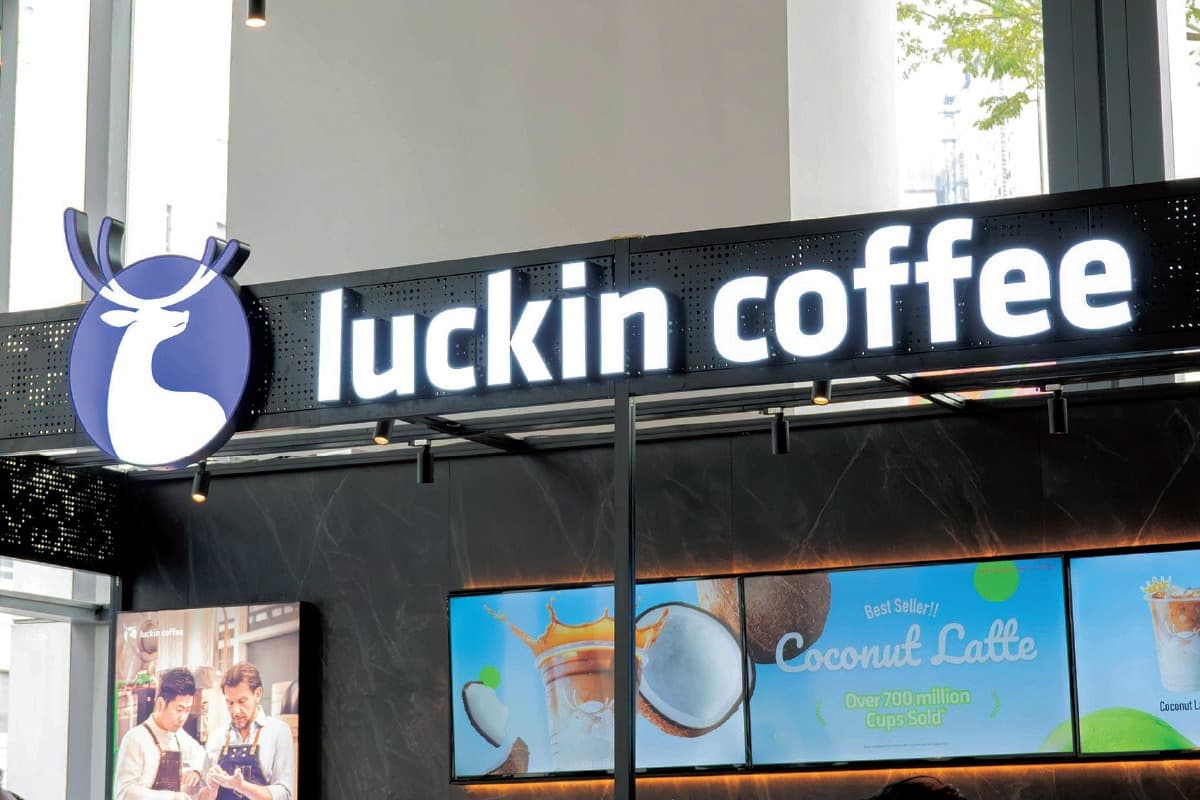
In the food and beverage (F&B) sector, brands such as Mixue, Lucky Cup, Chagee and Luckin Coffee are driving prices down to levels that many local operators are struggling to match.
According to the Malaysia Chinese Restaurant Association, there are more than 18,000 Chinese F&B brands operating in Malaysia, spanning a wide range of cuisines, barbecue concepts and tea-drink outlets. Hotpot brands such as Haidilao account for roughly one-third of these businesses.
The entry of brands from China is also evident in fashion and consumer goods, with fast-fashion giant Shein, sportswear brands Anta and Li-Ning, and collectible-toy maker Pop Mart gaining traction among Malaysian consumers.
In technology, Huawei, Xiaomi, Vivo and Oppo continue to chip away at the market share of American and South Korean incumbents in the smartphone and smart home device space.
On the digital front, TikTok has become both a cultural platform and a powerful e-commerce channel for younger consumers, intensifying competition with established marketplaces such as Lazada and Taobao — both controlled by Alibaba Group.
The next wave of disruption may be emerging in the supermarket space, with Mr Hippo Supermarket, a China-linked retail concept, now expanding in Malaysia.
Nevertheless, this is not the first time Malaysia has experienced an influx of foreign brands and on such a large scale. In earlier decades, Japanese companies made deep inroads into the local market, particularly in automobiles, electronics, consumer goods and F&B. Brands such as Toyota, Honda, Nissan, Panasonic and Sony built strong franchises in Malaysia, often through joint ventures, local assembly and long-term supplier development.
Chains such as Sushi King, Yoshinoya, Sukiya, Ajisen Ramen and Ootoya have expanded steadily over the years, typically through franchising or joint ventures with local partners. Their growth models emphasise menu localisation, staff training and gradual outlet expansion, allowing local suppliers, logistics players and workers to integrate into their operations.
Beyond restaurants, Japanese retailers have also played a significant role in shaping Malaysia’s modern retail landscape. Convenience store operator 7-Eleven and supermarket chain AEON have expanded across the country through long-term investment, local partnerships and extensive use of domestic supply chains.
The difference this time, industry observers note, lies in the speed, scale and pricing strategy of the Chinese entries, placing immediate pressure on margins across multiple sectors. The timing is also critical, as many local firms are already established in the very sectors the Chinese firms are entering.
Good for consumers, but painful for business owners
For consumers, the benefits are undeniable: lower prices, greater choice and faster access to new technology. But for business owners, especially small and medium enterprises (SMEs), the impact has been far less benign.
“Many local businesses are taking a wait-and-see stance now, especially when it comes to setting up manufacturing plants or expansion, as they remain uncertain about the intensity and nature of the competition ahead,” says a market observer.
Sustained price competition is compressing margins, reducing pricing power and discouraging investment. Over time, industry observers warn, this price slashing could translate into store closures, fewer expansions and job losses, particularly in manufacturing, distribution and labour-intensive service sectors.
“The consumer gains are immediate, but the business and employment effects tend to lag,” says an industry analyst. “If local companies cannot adapt fast enough or move up the value chain, the risk is a gradual hollowing out of domestic industries.”
For the automotive industry, although Malaysia’s policymakers have long encouraged the local assembly of EVs and battery-related investments, opportunities to join the supply chain are uneven, say industry players.
EV assembly operations tend to be more automated, while key components such as batteries, power electronics and advanced software are still largely imported. This could limit opportunities for local SMEs to meet the higher technological standards, which require capital many smaller firms lack.
Government-linked players and larger conglomerates may be better positioned to pivot, but smaller family-owned vendors risk being left behind if the market shifts too rapidly.
“Price competition alone is not a development strategy,” says an economist. “Without a clear roadmap to integrate local SMEs into EV and new-economy supply chains, Malaysia’s short-term consumer gains could be attained at the expense of long-term industrial growth,” he warns.
Save by subscribing to us for your print and/or digital copy.
P/S: The Edge is also available on Apple's App Store and Android's Google Play.