

This article first appeared in The Edge Malaysia Weekly on December 29, 2025 - January 4, 2026
AMONG the issues that defined 2025 was Sarawak’s escalating confrontation with the federal government over control of its gas resources, even as the state made advances in other areas of its broader autonomy agenda.
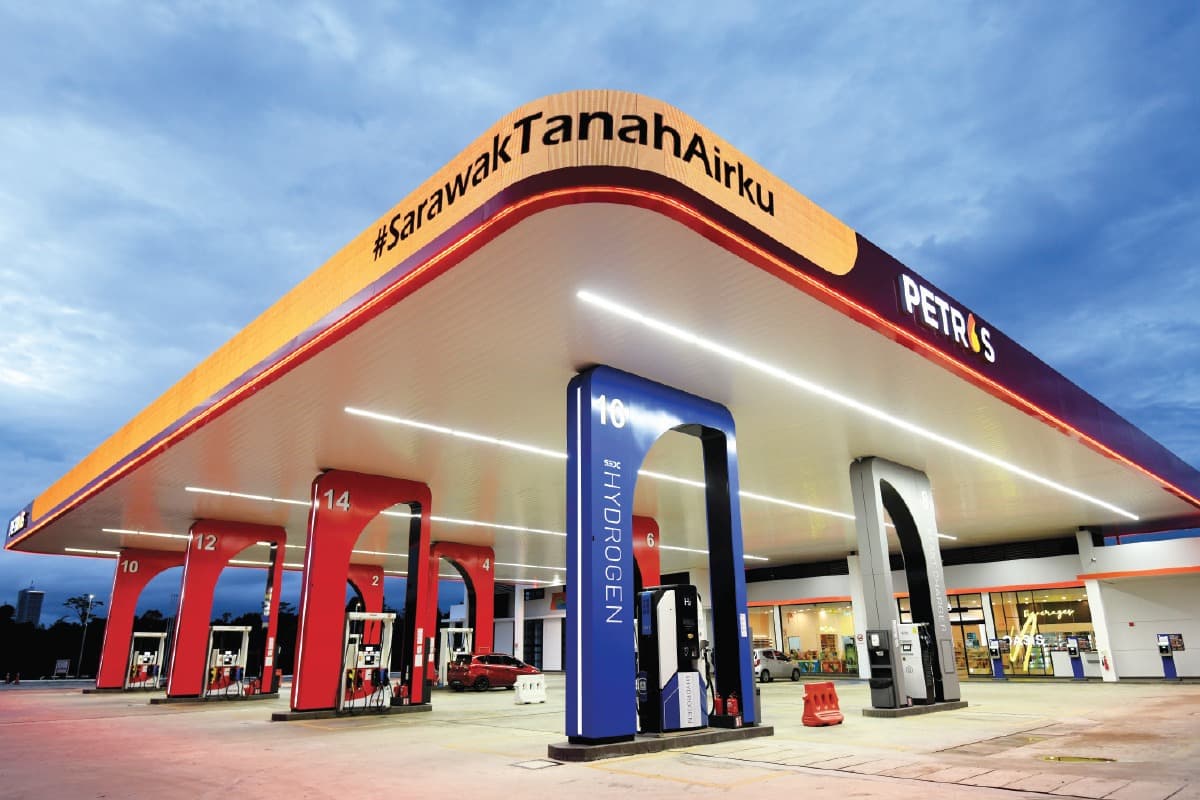
At the centre of this was the protracted legal dispute between state-owned Petroleum Sarawak Bhd (Petros) and the national oil company, Petroliam Nasional Bhd (PETRONAS).
What began as a regulatory conflict evolved into a high-stakes commercial battle. In May, Prime Minister Datuk Seri Anwar Ibrahim and Sarawak Premier Tan Sri Abang Johari Tun Openg moved to resolve the impasse. They affirmed that federal and state laws “must coexist and be respected”, particularly given the broader implications for federal-state relations under the Malaysia Agreement 1963, laying the groundwork for a negotiated commercial settlement.
However, the declaration was tested in October, when the Court of Appeal lifted injunctions that had shielded Shell MDS (Malaysia) Sdn Bhd (Shell MDS) from the billing dispute between Petros and PETRONAS. The injunctions had allowed Shell MDS to suspend payments after receiving invoices for gas supply from PETRONAS as well as Petros, which asserted its authority as the sole gas aggregator under Sarawak’s Distribution of Gas Ordinance 2016 (DGO).
The appellate court’s decision was widely interpreted as reinforcing the legal primacy of the federal Petroleum Development Act 1974 over Sarawak’s state-level laws, including the DGO — a hierarchy the state government consistently challenges.
Reinforcing the May declaration, Deputy Prime Minister Datuk Seri Fadillah Yusof in December indicated that the government was targeting a comprehensive resolution to the dispute in early 2026. His remarks reflected a growing consensus that sustained legal uncertainty could damage investor confidence and undermine Malaysia’s energy sector as a whole.
While Putrajaya has committed to fruitful negotiations with Sarawak, the courts continue to serve as a critical gauge of the issue.
Attention is now focused on a Kuching High Court decision scheduled for Jan 30, 2026. In the case, Petros is seeking to recover RM7.95 million from PETRONAS. The national oil firm had called on a bank guarantee after Petros refused to pay for gas supplied in August 2024, arguing PETRONAS lacked a valid licence under the DGO to supply gas in Sarawak.
Taken together, the events this year illustrate both the limits and possibilities of Sarawak’s push for greater control over its natural resources.
As the state moves into 2026, the balance between law, politics and negotiation will remain central to determining how much of its autonomy aspirations can ultimately be realised. Nevertheless, Sarawak leveraged its substantial oil and gas revenue to secure tangible autonomy gains beyond the energy sector.
End-2025 will mark a full year since the state increased its equity stake in Affin Bank Bhd (KL:AFFIN) to 31.25% from just 4.8%. During the year, it also entered the final phase of its takeover of Bintulu port from the federal government and finalised preparations for the January 2026 launch of its airline, AirBorneo.
Its financial strength also yielded a landmark social policy: the Free Tertiary Education Scheme (FTES), launched in mid-December. With a RM250 million allocation for 2026, FTES guarantees free tuition and living allowances for 10,000 students in state universities. The policy is financed entirely by Sarawak and is a direct extension of its educational autonomy.
Having moved decisively to build its own infrastructure — flying its own planes, educating its youth on its own terms and controlling key commercial levers — Sarawak enters the new year from a position of strength. The stage is set for it to potentially resolve the most contentious piece of its autonomy puzzle — direct control over natural gas — next year.
Sarawak has a RM14.9 billion budget for 2026, with RM9.3 billion for development and RM5.6 billion for operating expenditure. The state revised its 2025 revenue forecast to RM12.1 billion — 15% lower than the initial RM14.2 billion estimate.
The premier attributed the RM2.1 billion shortfall primarily to lower-than-expected global crude oil prices, which have averaged US$69 per barrel this year. As at October 2025, state revenue collection stood at RM10.3 billion, or 73% of the adjusted target.
The bulk of Sarawak’s revenue, RM3.9 billion, comes from state sales tax. Petroleum products accounted for RM2.9 billion, followed by taxes on crude palm oil and other commodities.
Additional state income included RM744 million in federal grants and reimbursements, RM120 million in cash compensations and RM593 million from miscellaneous sources such as mining royalties and land rentals.
Save by subscribing to us for your print and/or digital copy.
P/S: The Edge is also available on Apple's App Store and Android's Google Play.