

This article first appeared in Digital Edge, The Edge Malaysia Weekly on December 29, 2025 - January 4, 2026
The government is moving to consolidate federal services into a single, secure and personalised access window as it works towards its target of delivering 95% of services fully online by 2030 under the 13th Malaysia Plan.
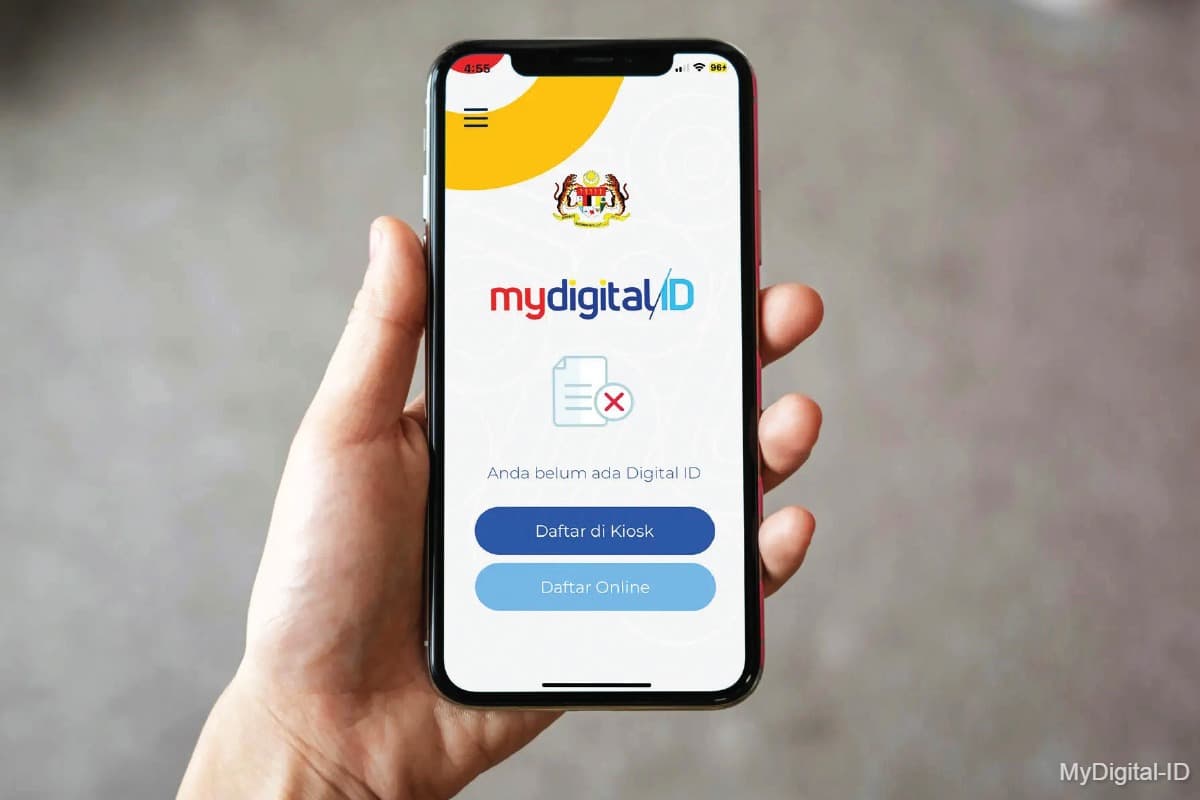
Central to this effort is the MyGov Malaysia mobile application and portal, designed to serve as a unified entry point for federal services. The platform is integrated with MyDigital ID, the national digital identity system that enables users to authenticate once and securely access multiple government services.
However, progress has not been smooth sailing. Users have reported technical issues with MyDigital ID, especially during periods of high demand, including system lags, server overloads and registration errors.
MyDigital ID has accrued about 5.9 million users, falling short of its target of 15 million users by the end of the year.
There are also usability concerns, ranging from the complexity of the registration process and the requirement for annual renewal to access challenges faced by citizens in rural areas or those without smartphones.
“The most significant challenge is the public trust deficit, fuelled by concerns over data privacy, the security of personal information against the backdrop of previous data breaches in other sectors, and a desire for greater transparency in how data is managed and protected,” says Fabian Bigar, secretary-general of the Ministry of Digital.
MyGov — which had 113,170 downloads as at mid-November — has also faced its own set of early challenges. These include technical glitches, integration complexity as well as uneven adoption.
“The most public of [the technical glitches] was the temporary shutdown of our artificial intelligence (AI) chatbot, which was providing inaccurate information due to its developmental stage. This highlighted the need for more rigorous training and clear operational boundaries for our AI models,” says Fabian.
Feedback from the beta rollout is being used to strengthen technical reliability, improve user experience and scale adoption nationwide, supported by the RM20 million allocation under Budget 2026, he adds.
This includes expanding server capacity to handle peak demand, refining the registration journey, reviewing the annual renewal requirement and widening access through physical registration kiosks at government premises to reduce exclusion risks.

“We are also redeveloping the AI chatbot with a more robust and thoroughly trained local large language model to ensure it becomes a reliable source of information for all government services,” says Fabian.
Budget 2026 includes a dedicated allocation to expand cybersecurity programmes and develop advanced cryptographic security services.
However, stakeholders say addressing user-facing issues alone will not be sufficient without tackling deeper interoperability gaps across government systems.
MyDigital ID today functions largely as a login and authentication tool, but there is no common framework that allows verified identity information to be securely reused across ministries, agencies and jurisdictions, says Salbiah Idris, research associate at Khazanah Research Institute (KRI). As a result, integrations are often built one by one, slowing delivery and leading to uneven implementation across the public sector.
“Without a unified interoperability model, it is difficult to achieve consistent and secure reuse of verified identity attributes across systems,” she says.
Malaysia’s transition to a “single identity, multiple services” model relies on three pillars: strong governance, interoperable standards and secure data exchange rails, says Nik Zalbiha Nik Mat, director-general of the National Digital Department.

In practice, the technical building blocks for interoperability are already in place. MyDigital ID is directly integrated with the National Registration Department, which serves as the sole authoritative source of identity data. Every verification request is validated against the national population registry, preventing identity duplication.
System-to-system connectivity is enabled through the MyGDX Data Exchange, which provides a standardised, secure and audited API layer for ministries, agencies and private sector partners. MyGDX is designed to ensure that identity authentication, data queries and service transactions run on common interoperable standards rather than custom integrations.
However, the main barrier to interoperability is not technology but mandate and compliance, says Zalbiha. While the Data Sharing Act 2025 (Act 864) provides a legal framework for public-sector data sharing, it does not mandate the use of specific platforms such as MyGDX.
“As a result, participation remains optional, leading to uneven data-sharing practices and inconsistent adoption of common standards across agencies,” she says.
Ultimately, the priority is to ensure that every service feels consistent, secure and easy for citizens to use, as more government apps come online across different ministries.
Zalbiha says the best way to achieve this is by having all agencies build on shared national platforms — MyDigital ID for authentication, MyGDX for secure data exchange and iPayment for transactions.
“When services use the same trusted digital rails, Malaysians enjoy a seamless and predictable experience instead of facing different logins, standards or interfaces from one ministry to another,” she says.
“Government information, communication and technology systems that were previously developed did not take into account the implementation of a centralised digital identity during their system design phase.
“With this in mind, every relevant government agency should reassess and plan for the integration of MyDigital ID into their digital service platforms, prioritising services that deliver the greatest impact to the public.”
Fabian says the long-term role for MyDigital ID will extend beyond government services. “It will become the standard for secure identity verification in all digital transactions, including banking, e-commerce, healthcare and more. This will create a high-trust environment that reduces fraud, lowers transaction costs and fosters innovation across the private sector,” he says.
Meanwhile, MyGov will transition from a reactive portal to an intelligent platform that anticipates citizens’ needs. “For example, upon the birth of a child, MyGov could proactively offer services like registration for healthcare benefits, education savings plans and childcare assistance, all without the citizen needing to apply separately to multiple agencies,” says Fabian.

Public services must be made available to everyone
Inclusion is an area that requires consistent attention. “Even with multiple registration channels, not everyone has equal access to them. Rural communities, older Malaysians and people with disabilities often face simple, practical obstacles like connectivity issues or limited digital skills, which can slow down adoption,” says KRI’s Salbiah.
She says accessibility must be built into the digital identity ecosystem from the beginning. If seniors, rural communities or users with low digital literacy struggle at the identity stage, their ability to benefit from the broader digital public infrastructure will be subsequently constrained.
“Making digital identity inclusive from day one ensures the rest of the ecosystem is truly usable,” she says.
Multi-channel onboarding is therefore essential. “Not everyone owns a smartphone, has reliable internet or feels confident using digital tools. Assisted registration at service counters, community centres and mobile outreach units enables people to enrol even when digital access is limited,” says Salbiah.
The registration and login process also needs to be simple and intuitive. Clear instructions, straightforward language and uncluttered interfaces can make a difference for older users and those with limited literacy, she says. Users are less likely to feel overwhelmed or abandon the process when steps are straightforward.
“Assisted verification is another important element for seniors and rural communities. Trained intermediaries or authorised officers can guide people through the process, explain how digital identity works and help them complete the journey with confidence. This reduces frustration and increases trust,” she adds.
Digital identity systems also need to function in low connectivity environments. Other than the QR-based login option, low-bandwidth modes and offline-tolerant flows allow rural users to authenticate even when network coverage is inconsistent.
“Inclusion needs continuous monitoring. Adoption and usage should be tracked across age groups, regions and demographic segments to identify where barriers persist. Inclusion cannot be assumed; it must be measured and supported over time,” says Salbiah.
Save by subscribing to us for your print and/or digital copy.
P/S: The Edge is also available on Apple's App Store and Android's Google Play.