

This article first appeared in Digital Edge, The Edge Malaysia Weekly on December 29, 2025 - January 4, 2026
The third phase of MyDigital demands solutions that are not merely digitised but transformative and capable of driving high-income growth while solving societal problems. This imperative is visible in the healthcare sector, where the Ministry of Health (MoH) is currently incorporating artificial intelligence (AI) to assist in screening and diagnosis among patients.
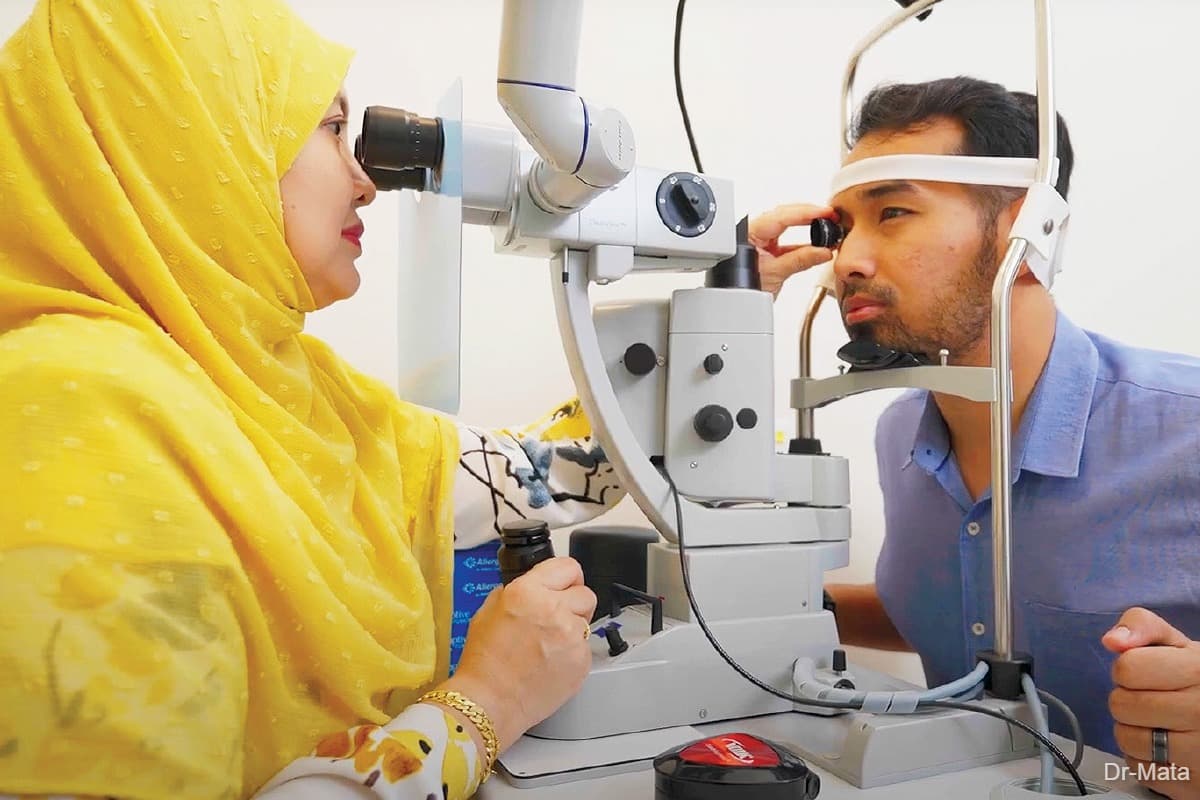
Dr Mata, a locally developed AI system designed to screen for diabetic retinopathy, is an example. It may seem like a clinical tool on the surface, but its development and deployment represent a strategic proof-of-concept for the government’s wider digital ambitions.
The system was developed via a public-private partnership with Qmed Asia. MoH deputy director general (research and technical support) Datuk Dr Nor Fariza Ngah frames the project as a critical intersection of public health necessity and digital economic strategy.
“It serves as a practical proof-of-concept for Malaysia’s MyDigital aspirations, offering a replicable model for how deep-tech solutions can improve equity, efficiency and clinical outcomes in primary care settings,” she tells Digital Edge.
The economic case for Dr Mata is rooted in the escalating burden of non-communicable diseases (NCDs), which threatens to overwhelm the public healthcare system’s capacity. According to the National Health and Mobility Survey (NHMS) 2023, the prevalence of Type 2 diabetes among adults has surged to 15.6%, a stark increase from 11.2% in 2011. This statistic translates to one in six adults living with a condition that carries severe microvascular complications.

Among these, diabetic retinopathy is particularly insidious. Nor Fariza notes that the condition remains one of the leading causes of preventable blindness in the country.
“Nearly 90% of people with diabetes will develop some degree of diabetic retinopathy after 20 years, and around 1% may have diabetic retinopathy at diagnosis,” she explains.
“As the disease is asymptomatic in its early stages, patients frequently present only after severe vision loss has occurred, at which point interventions are costly and less effective.”
Historically, the public health response has been hampered by operational bottlenecks. Despite clinical guidelines issued in 2011 mandating annual screening, local studies in 2015 revealed that fewer than 50% of diabetic individuals were being screened.
“There were a number of key barriers. These included a chronic shortage of trained graders, slow credentialing processes and the competing workloads faced by staff at Klinik Kesihatan (government health clinics),” says Nor Fariza.
“Furthermore, despite the deployment of 382 fundus cameras nationwide, equipment remained inconsistent in utilisation due to these human capital constraints. Delays in reporting led to missed follow-ups, effectively breaking the chain of care.”
A fundus camera is a specialised medical device used to take high-resolution photos of the inside of the eye, including the retina, optic disc and blood vessels. It is typically used by ophthalmologists to diagnose, monitor and treat eye diseases such as diabetic retinopathy, glaucoma and macular degeneration by documenting changes over time.
The impact of this deployment is already visible in the pilot sites, which have reported significant increases in screening uptake. Frontline providers have cited a reduction in decision-making burdens and clearer referral requirements.
“Primary care leaders expressed confidence in integrating Dr Mata into routine practice, citing improved efficiency, strengthened chronic disease management and alignment with MoH’s digital transformation agenda,” Nor Fariza says.
However, the scaling of AI in healthcare is not without risk, particularly regarding data privacy. Dr Mata adheres to the Personal Data Protection Act 2010 (PDPA), MoH data governance policies, and international standards such as ISO 27001 and ISO 13485.
Under such governance, key safeguards are ensured, including patient consent before imaging, full anonymisation prior to AI processing, end-to-end encrypted data transfer, role-based access controls and regular security audits.
“These measures uphold confidentiality, regulatory compliance, and trust,” she says.
To ensure continuous improvement, Dr Mata employs active learning, where uncertain cases are reviewed and fed back into the training dataset. Periodic retraining is carried out as well to ensure that the model is updated with new images and evolving guidelines.
Developing right solution no easy feat
While global AI solutions for retinal imaging began emerging around 2010, MoH faced significant hurdles, ranging from prohibitive costs to data privacy concerns, in adopting them. Crucially, foreign models often lacked training on diverse local datasets, raising questions about accuracy within the Malaysian demographic.
“This inspired the creation of a home-grown, cost-effective, scaleable system designed specifically for Malaysian primary care settings,” Nor Fariza says.
Initiated in 2018 by a multidisciplinary MoH team, Dr Mata was built to automate the assessment process. The system is capable of processing retinal images and generating a report within 30 seconds. This rapid turnaround is transformative for high-volume primary care settings, enabling real-time triage and immediate referral decisions.
Validation has been rigorous. The model was trained on a large, diverse dataset of Malaysian and international retinal images, all annotated by certified ophthalmologists to ensure the algorithm remains unbiased across different ethnicities and disease severities.
“The current 83% accuracy reflects strong agreement with expert graders and has been validated through extensive testing,” Nor Fariza says.
Beyond the algorithm, the commercial viability of the project rests on its architectural flexibility. Qmed Asia designed Dr Mata to be camera-agnostic. Using standardised application programming interfaces (APIs), the software can integrate with the wide variety of legacy camera brands already present in public and private facilities.
“This enables compatibility with the wide range of cameras used across public and private facilities, eliminating the need for hardware replacement,” Nor Fariza points out, adding that the deployment offers flexible cloud or on-premise options suitable for facilities ranging from tertiary hospitals to rural clinics.
The case for public-private partnerships
In this partnership with Qmed Asia, roles were strictly delineated to leverage the respective strengths of the public and private sectors. MoH retained leadership over regulatory oversight, clinical integration and data governance.
“MoH led regulatory oversight, ensuring the AI adhered to national standards for safety, data governance and clinical integration,” says Nor Fariza.
Conversely, Qmed Asia entered during the post-development phase as the strategic commercial partner, tasked with scaling the solution, ensuring system robustness and opening access to the private sector. This division of labour allowed the project to navigate the stringent regulatory environment inherent to government operations — including cybersecurity standards and the PDPA — while maintaining the agility of a tech start-up.
“The partnership shows that when government and local innovators work together — with clear clinical oversight, strong data governance and alignment to real service needs — AI solutions can be safely deployed at scale and deliver measurable population health benefits,” says Nor Fariza.
As the MyDigital blueprint enters its final phase, the ambition for Dr Mata expands beyond diabetic retinopathy. MoH and Qmed Asia are actively prioritising the development of AI detection models for other major causes of avoidable blindness, including age-related macular degeneration (AMD), glaucoma, diabetic macular edema (DME) and cataract severity assessment.
“Further exploration into additional retinal diseases will be based on national disease burden and service needs,” says Nor Fariza.
The vision extends to a fundamental shift in the nature of primary care. MoH envisages AI becoming a trusted “decision-support layer” in routine practice — automating documentation, prioritising high-risk cases for urgent referral and enabling proactive population health analytics.
This capability also holds export potential. Nor Fariza reveals that there are active plans to position the solution for regional expansion.
“Several Asean countries have expressed interest in similar AI-enabled screening solutions and discussions are ongoing to explore pilot opportunities and knowledge-sharing engagements,” she adds.
To fully realise this ecosystem, however, Nor Fariza emphasises the need for continued policy evolution. She identifies several regulatory enablers required to accelerate AI adoption, including a clear pathway for Software as a Medical Device (SaMD), a national AI-in-health framework covering governance, ethics, safety and accountability, and financing and reimbursement models for AI-enabled services.
On top of that, digital-health specific assessments need to be carried out and in tandem with that, there needs to be talent development and digital literacy capacity-building. Innovation-friendly testbeds and sandbox environments will also catalyse the future of AI in healthtech.
“Together, these enablers — many of which are already being developed under Malaysia’s digital health agenda — will help move the country from successful pilots to sustained, nationwide adoption of AI in healthcare.”
Save by subscribing to us for your print and/or digital copy.
P/S: The Edge is also available on Apple's App Store and Android's Google Play.