

This article first appeared in The Edge Malaysia Weekly on December 22, 2025 - December 28, 2025
IHH Healthcare Bhd’s (KL:IHH) affinity with the Indian market can be traced back to 2010. At the time, Khazanah Nasional Bhd, under then managing director Tan Sri Azman Mokhtar, saw healthcare as a growing business and started laying the foundations for what is now IHH.
Even in the early years of entering India’s healthcare sector, IHH took up a stake in Apollo Hospitals Enterprise Ltd as it saw the market experience and average growth rate was much higher than in other parts of Asia. But it was forced to sell the stake as it could not make much headway there.
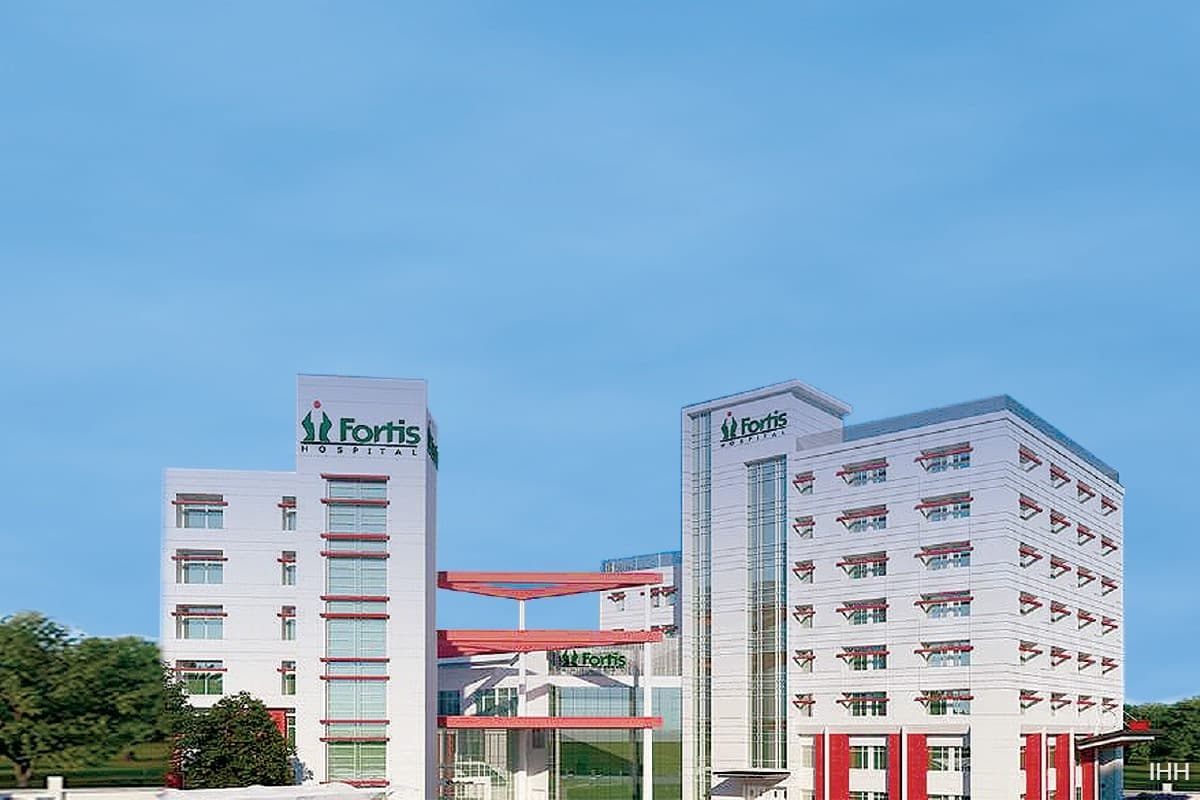
In 2015/16, IHH started to look at India again, and an opportunity came about in the form of Fortis Healthcare Ltd. After seven years of legal tangles, the group finally gained control of Fortis last month.
IHH group CEO Dr Prem Kumar Nair tells The Edge in an email interview that India is a crucial growth market for the group and it wants to expand its presence in the country. The following are excerpts from that interview.
The Edge: IHH has finally gained control of Fortis after seven years. Is the group comfortable with its current equity interest in Fortis? If IHH were to raise its stake, what would be a comfortable position?
Dr Prem Kumar Nair: The completion of the Fortis open offer marks a pivotal milestone, enabling us to move decisively into our next phase of growth. Together with the earlier operations and maintenance services agreement (MSA) between Fortis Healthcare and Gleneagles India, this positions IHH to deepen operational and clinical synergies, accelerate innovation, strengthen patient care and optimise our capital structure to support long-term, sustainable growth.
Our strategy remains to progressively increase our stake in Fortis, leveraging it as a platform for expansion in India. India continues to be our key growth market where we are scaling strategically to establish world-class hospitals and elevate care delivery for patients nationwide. We are committed to growing our presence across the country and adding close to 2,000 new beds by 2028.
Do you expect Fortis’ margins to keep improving? How significant will its contribution to IHH’s earnings be going forward?
In India, we are seeing a strong trajectory with double-digit revenue and Ebitda growth. Ebitda grew from RM360 million in FY2019 to RM723 million in FY2024, driven by higher patient volumes and greater case intensity.
Fortis is already a significant contributor to IHH’s earnings and we expect its contribution to grow. Its 3QFY2025 results reflect robust earnings and healthy margin improvements across both its hospital and diagnostics businesses.
We expect its margins to strengthen further, reaching the average market level of 25% for comparable assets, following the completion of the Fortis open offer, which delivers significant structural and financial benefits. In addition, the MSA between Fortis and Gleneagles India harmonises key processes and clinical governance, enhancing operational efficiency and expanding geographical reach.
What are the key priorities for the India operations over the next 12 to 18 months? Any expansion plans? Do you foresee India being the next frontier for growth for IHH amid competition from Apollo Hospitals and Max Healthcare?
India remains a core pillar of IHH’s growth strategy. Our unique, pan-India footprint spanning 11 states positions us well in this dynamic market where demand for quality healthcare is growing.
As the only multinational healthcare provider operating in India, we bring differentiated strengths in clinical leadership, governance, patient experience and deep operational capabilities that enable us to deliver trusted, next-level care. Over the next 12 to 18 months, our focus will be on deepening these strengths and further unlocking synergies across our Fortis and Gleneagles platforms.
We will continue to evaluate growth opportunities selectively, aligned with our long-term strategy of delivering high-quality, consistent care. This includes pursuing accretive acquisitions within our existing clusters. Our target is to add close to 2,000 beds by 2028.
With stricter payor controls and rising medical inflation, IHH said it was reassessing its near-term capital expenditure (capex) in Singapore and Malaysia. What initiatives are being implemented and what is the scale of the capex reallocation and reduction being considered?
As a multinational healthcare network, IHH continuously reviews our capital allocation across markets to optimise value for patients while delivering sustainable returns for shareholders. We actively engage with the government, regulators, industry bodies, insurers and partners to address systemic industry challenges such as medical inflation and healthcare accessibility, co-developing sustainable solutions together.
Key initiatives include:
‘Out-of-hospital’ new care model: Our growing ambulatory care network enables us to deliver high-quality day care to non-acute patients closer to where they live and work, while lowering the cost of care.
Transition to value-based care: By focusing on outcomes and quality of care rather than volume, we control overall costs while maintaining high clinical standards for patients and strengthening trust with insurers and payers.
Central procurement of high-cost items such as medical equipment and consumables: By consolidating our purchases and sourcing regionally, we achieve meaningful cost savings.
Operational efficiency initiatives, including nursing workforce transformation, continuous staff development and targeted investments in medical technologies and artificial intelligence: These measures optimise processes and manage costs effectively without compromising on the quality of care.
Overall, the long-term growth prospects across our markets remain strong. We remain committed to advancing healthcare sustainability by driving operational and clinical efficiencies that support accessible, high-quality care.
In Malaysia, what are the updates on the diagnosis-related group (DRG) discussions with the government? Is the targeted rollout, by next year or 2027, still realistic?
We are in active discussions with the government, regulators, industry bodies, insurers and partners on DRG, as collaboration between healthcare stakeholders is essential to ensuring an equitable outcome for the healthcare ecosystem.
At IHH Malaysia, we are strengthening our internal costing and data capabilities to support our transition towards value-based care. Some key initiatives include:
Expanding initiatives that lead to value-driven outcomes, which systematically links clinical outcomes with cost and quality across high-volume procedures.
Strengthening prevention by promoting comprehensive health screening, lifestyle counselling and long-term disease management.
Expanding access through the establishment of ambulatory care centres and by supporting national strategies via our Life Renewed corporate-giving programme, which widens access to advanced cancer treatment for patients from government hospitals.
IHH is reportedly offering a 12% to 13% discount to Malaysian insurers to help manage rising medical costs. When will this take effect, what procedures or items will fall under the discount, and what level of margin impact do you foresee? How will IHH mitigate this pressure?
While discounts to insurers have increased, the impact on our earnings is mitigated by our ongoing focus on driving operational and clinical efficiencies across our network. Since 2019, our shift towards value-based care has reduced costs by cutting waste while improving patient outcomes.
Central procurement and price harmonisation across our 18 IHH Malaysia hospitals further help manage costs responsibly while maintaining quality and safety of care. In addition, our growing medical tourism business provides a new engine to improve our margin.
Medical inflation and payor-driven changes have posed challenges for the industry. Considering the challenges, there is a view that the healthcare industry is seeing overvalued transactions. What are your views? Do you think valuations are currently on the high side?
Asset valuations are on the rise due to increasing demand for healthcare services. When evaluating potential merger and acquisition opportunities, we look at three criteria: the ability to deliver earnings accretion quickly, alignment with our cluster strategy and the potential to harness operational and clinical synergies. Recognising there are multiple market factors influencing valuations in the healthcare sector, we remain prudent in assessing inorganic opportunities while continuing to focus on brownfield projects and optimising the use of our existing assets.
How about the outlook for your Türkiye and European markets?
Our Turkish and European operations continue to perform strongly and in line with expectations, making a significant contribution to the group.
In our recent third-quarter results, Türkiye and Europe delivered robust double-digit revenue and Ebitda growth on both a reported and constant-currency basis, despite foreign exchange headwinds. Nearly 40% of this segment’s revenue is denominated in the euro, providing natural currency diversification. Revenue in ringgit terms has doubled over the past four years, demonstrating its strong growth potential.
Save by subscribing to us for your print and/or digital copy.
P/S: The Edge is also available on Apple's App Store and Android's Google Play.