

This article first appeared in The Edge Malaysia Weekly on December 22, 2025 - December 28, 2025
CATCHA Digital Bhd’s (KL:CATCHA) deal streak has been hard to ignore.
Over the past 12 months, the ACE Market-listed digital media and advertising group — controlled by techpreneur Patrick Y-Kin Grove — has stitched together seven acquisitions. Being a serial buyer, Catcha Digital’s earning growth is fed by investments in small but profitable businesses. The business model has helped revive a company that only in 2023 emerged from its six-year limbo in Guidance Note 2 (GN2), and it has lifted earnings in the process.
However, these acquisitions were often settled by a combination of shares and cash. The pace of its buying spree is now prompting investors to ask tougher, more uncomfortable questions.
At the top of the list — how much share dilution is too much?
This year’s rights issue — following earlier fundraising rounds — has reignited worries that shareholders are footing the bill for an acquisition engine that may not yet be self-sustaining. Just as pressing is the risk of over-diversification, with Catcha Digital spreading into media, software and trade expos at a pace some investors fear could outrun its managerial bandwidth.
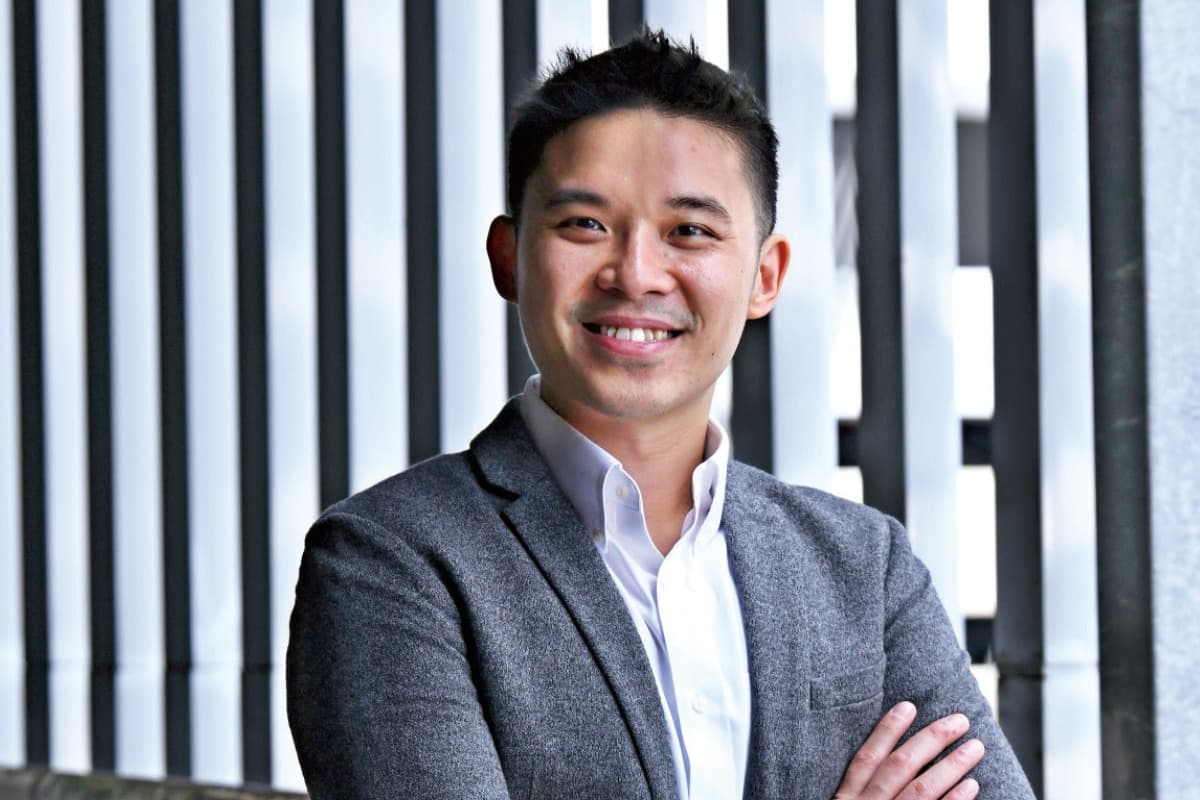
Group CEO Eric Tan Leong Yit recognises these concerns, but he insists that his team knows exactly what it is doing and the company is executing a clear plan.

He argues that Catcha Digital’s structure — decentralised operations, a central capital allocation team and strict return hurdles — is designed to prevent valuation bloat and mispricing.
The 32-year-old maintains that every deal must clear a 20% internal rate of return threshold, that payment terms are staggered to protect downside. In short, the mergers and acquisitions (M&A) are meant to compound value, not simply accumulate businesses.
In an interview with The Edge, Tan highlights that Catcha Digital’s vision is to build “a permanent home” for profitable market-leading digital and media small and medium enterprises (SMEs) that are run by entrepreneurs in Southeast Asia.
“We offer entrepreneurs a permanent and stable long-term home for their life’s work. We allow them to monetise their success while remaining autonomous operationally, and focused on growing their existing business. This attracts many high-quality, profitable SMEs that do not want to sacrifice control or long-term vision.”
Tan, who has a 0.52% stake in Catcha Digital, points out that the group sees a gap in the market not filled by private equity (PE) and venture capital (VC) funds.
“We are not PE or VC. PE funds are often short-term owners, often focusing on a quick exit in three to five years. A VC requires entrepreneurs to chase high-risk and unprofitable growth. We think in decades and our permanent capital base distinguishes us from short-term and purely financially driven investors,” he stresses.
This year, Catcha Digital acquired majority stakes in at least six companies, spending a total of RM89.92 million (see table). Today, it has close to 260 employees across the group, including the companies that it acquired.
“In a year’s time, we would probably be looking at close to 400 people as we acquire more companies to join our group,” says Tan.
Catcha Digital has two indirect major shareholders — Grove and Lucas Robert Elliott — who control a combined 51.96% stake in the company, held through Catcha Group Pte Ltd (38.77%) and Catcha Investments Ltd (13.19%).
The 50-year-old Grove is non-independent non-executive chairman of Catcha Digital and Elliott is a non-independent non-executive director.
iMedia Asia Sdn Bhd CEO Voon Tze Khay has a 3.54% stake in Catcha Digital, while low-profile investor Wong Wai Kong owns 2.23% equity interest.
Independent non-executive director Datuk Justin Leong Ming Loong — grandson of the late Tan Sri Lim Goh Tong of Genting group fame — also has a 0.64% stake in the company.
Catcha Digital had slipped into GN2 status in August 2017, following the sale of its then digital asset — Rev Asia Holdings Sdn Bhd, an online media and publishing house — to Media Prima Bhd (KL:MEDIA) for RM105 million. After a six-year wait, the company finally exited the GN2 list in July 2023. This came four months after the group completed the acquisition of the entire equity interest in iMedia Asia for RM43.92 million in a cash-plus-shares deal.
iMedia Asia — now a main asset in the group’s digital media business — is involved in advertising solutions for brands and advertising agencies.
Notably, Catcha Digital completed a renounceable rights issue at 23.5 sen per share on June 28, 2023, raising RM29.71 million — of which RM18 million went towards partly funding the acquisition of iMedia Asia.
The rights issue, together with new shares issued to iMedia Asia’s vendors and others, expanded Catcha Digital’s share base by about 2.6 times — from 134.64 million to 352.08 million shares in 2023.
Fast forward to April 28 this year, Catcha Digital made another cash call — this time a one-for-four rights issue at 27 sen apiece, with two free detachable warrants for every one rights share subscribed. Following the completion of the rights issue exercise on Nov 13, the group’s share base has now been expanded further to 450.6 million shares.
A total of 90.12 million rights shares and 180.24 million warrants were issued. In other words, the company raised RM24.3 million from the rights issue.
At the 41 sen exercise price, the warrants could raise up to RM73.89 million over the next five years. But this also implies further dilution — in the maximum scenario, Catcha Digital’s share base could swell to 630.84 million shares, assuming no more additional fundraising exercises that entail a dilution occur in the near term.
Earnings to double in FY2026?
To be fair, Catcha Digital’s financial numbers did show that the company has been recovering well from years of stagnation during its GN2 days. Its revenue grew from RM23.57 million in the financial year ended Dec 31, 2023 (FY2023) to RM38.39 million in FY2024, and continued to generate turnover of RM47.52 million in the nine months ended Sept 30 this year (9MFY2025).
Net profit jumped fourfold to RM5.87 million in 9MFY2025 from RM1.46 million in FY2023. However, the company’s expanded share base kept its earnings per share growth more modest, rising to 1.63 sen in 9MFY2025 from 0.55 sen in FY2023.
Internally, says Tan, Catcha Digital is hoping to double its earnings in FY2026, as new acquisitions get integrated into the group. “For the upcoming years, you will continue to see new acquisitions contributing to the overall earnings of the group alongside organic growth from the companies that are already part of us.”
He adds that the group opted for the rights issue exercises because it was “the most strategically sound and shareholder-friendly financing route” to achieve long-term growth objectives.
“It allows us to fund multiple earnings-accretive acquisitions simultaneously and ensure our balance sheet remains healthy, maintaining low leverage and ample dry powder for future acquisitions.
“This also allows existing shareholders to directly participate in the company’s high-growth future at an attractive rate, while minimising the impact of potential dilution.”
When asked about the potential overdiversification, Tan says the concern would be valid only if the company were operating a centralised conglomerate model, which it is not. “We have structured Catcha Digital to be able to execute good acquisitions at a fair price at scale, while running strong independent operations across all sectors.”
Despite its recent M&A activities, Catcha Digital remains in a net cash position, holding RM8.11 million in cash compared to RM4.44 million in bank borrowings.
Tan reiterates that while Catcha Digital acquires a company’s financial control, the group’s focus “is not to integrate them clumsily into a central bureaucracy”, which destroys value, but to “empower them with capital, best practices and synergistic opportunities” within its portfolio.
Besides, the companies gain access to the financial strength of Catcha Digital as a public company. This, according to him, is vital for securing contracts, weathering short-term economic shocks, as well as funding organic growth and strategic acquisitions that the SME could never finance alone.
“Also, the entrepreneurs gain direct access to our central team’s proven M&A expertise, capital allocation discipline and global benchmarking knowledge. This helps them navigate future expansion, ensuring their operational success is poised for maximum growth through their own bolt-on deals where relevant.”
Financially, says Tan, Catcha Digital’s approach allows the group to diversify its earnings across multiple resilient sectors.
“This allows significant risk reduction by diversifying our income stream, which leads to more stable and predictable earnings. In short, we are not just acquiring companies. For these successful SMEs, we are providing an opportunity to monetise their life’s work and build their company’s next chapter.”
It is worth noting that Catcha Digital’s talisman, Grove, an Australian citizen, is the 48th richest man in Malaysia, with an estimated net worth of US$345 million (RM1.41 billion), according to Forbes. He has a history of founding tech companies and securing successful exits through some high-profile sales.
For instance, iProperty Group — an online real estate site founded by Catcha Group in 2006 — was acquired by Rupert Murdoch’s Australia-listed REA Group Ltd for A$751 million between 2015 and 2016. Subsequently, in 2021, REA Group sold its operating entities in Malaysia and Thailand, whose sites include iProperty, to Singapore real estate start-up PropertyGuru Pte Ltd.
Also in 2021, iCar Asia — an Australia-listed digital automotive portal operator, also founded by Catcha Group in 2012 — was acquired for US$200 million by Malaysia’s first unicorn and integrated car e-commerce platform Carsome.
In 2014, Grove himself co-founded on-demand video service iflix, which operates in more than 25 countries in Southeast Asia, South Asia, North Africa and the Middle East. It was sold to Chinese tech giant Tencent Holdings Ltd in June 2020.
Now, whether the market buys the narrative of Catcha Digital’s M&A spree is the real test for 2026. What happens next will depend on how well the group manages its growing investment portfolio, converts its promise of disciplined growth into predictable cash flow, and proves that the model can scale without eroding shareholders’ stakes or patience.
Save by subscribing to us for your print and/or digital copy.
P/S: The Edge is also available on Apple's App Store and Android's Google Play.