

After decades of building brands and growth strategies across Asia, one lesson has become increasingly clear to me: our biggest commercial opportunities are rarely created by campaigns. They are created by context.
Across this region, festivals are not dates on a promotional calendar. They are structural moments that reshape consumer behaviour, decision-making, and emotional openness at scale. Deepavali, Ramadan, Chinese New Year, and Christmas do not simply drive spending spikes. They temporarily rewire how people evaluate value, trust brands, and form habits.
Yet many organisations continue to treat these periods as short-term marketing moments — windows for discounts, noise, and tactical activation. That mindset consistently leaves long-term value on the table.
In Asia, festivals don’t just increase demand. They change how demand behaves. This distinction matters. Because when behaviour changes, loyalty can be built. And when loyalty is built during moments of emotional intensity, it tends to last far beyond the season itself.
Festivals and the behavioural reset
According to a 2025 Capgemini report, 70% of consumers worldwide have switched brands because they enjoy experimenting. Crucially, this openness is not driven only by price sensitivity. It is driven by emotion, social context and a willingness to reassess habits.
This is the point where loyalty stops being a programme mechanic and becomes behaviour.
Festivals act as behavioural resets. They disrupt routine, soften resistance, and invite reconsideration. For leaders thinking about growth, retention, and lifetime value, that makes them strategic assets — not marketing spikes.
If your loyalty strategy looks the same during festivals as it does the rest of the year, you are not capturing the upside.
Christmas: A season, not a spike
Christmas in Southeast Asia, particularly in the Philippines, is not a single month. The “ber months” stretch from September to January, offering a rare opportunity to build a habit rather than chase a single conversion peak.
The strongest programmes treat Christmas as a season-long engagement cycle — layering early access, experiential rewards, and coalition value across categories such as retail, food, travel, and entertainment.
Festive loyalty works best when it supports how people live, not just how they shop. During the operational complexity of year-end travel and gifting, convenience becomes care. Instant redemption, predictable fulfilment and easy sharing often matter more than headline discounts.
Chinese New Year: Culture, convenience and ecosystems
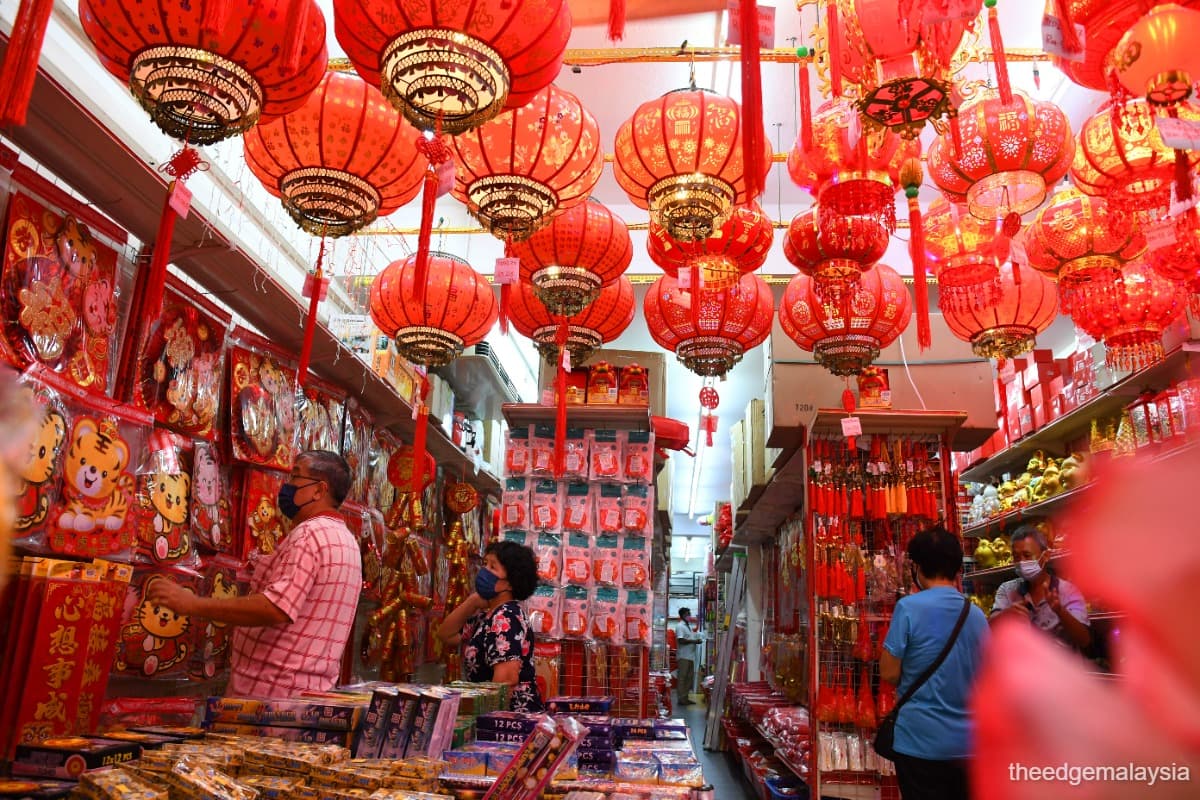
Chinese New Year illustrates how cultural familiarity and digital behaviour can reinforce each other. In Southeast Asia, Chinese New Year spending spans gifting, home refreshes, dining, travel and entertainment — often within compressed timeframes.
Loyalty strategies that perform best during Chinese New Year feel culturally intuitive. Gamification works when it mirrors tradition rather than novelty. Symbolism, luck and ritual matter.
“When loyalty mechanics feel culturally familiar, participation becomes automatic.”
Equally important is structure. Chinese New Year spending is naturally cross-category, which is why coalition and ecosystem-based loyalty models consistently outperform single-brand approaches during the period. Consumers earn in one place and redeem in another, reflecting how festive spending actually occurs.
Perhaps most critically, convenience becomes the dominant emotional driver. When time pressure rises, brands that simplify gifting, sharing, and redemption earn disproportionate goodwill.
Ramadan: When alignment matters more than incentives
Ramadan is perhaps the clearest example of why context matters more than promotion. Across Southeast Asia, South Asia and the Middle East, Ramadan reshapes daily rhythm, spending intent and expectations of brands.
Meal times shift. Impulse declines. Nights become the primary engagement window. Consumers move away from excess and towards meaning.
Mastercard–Crescent Ratings indicate that 90% of consumers prefer brands that align with faith-based values during Ramadan. That statistic alone should give leaders pause. It suggests that cultural alignment, not promotional pressure, is the primary driver of trust during the period.
Brands that succeed during Ramadan tend to behave less like advertisers and more like participants — designing loyalty around generosity, community, and timing that respects the fasting cycle.
During Ramadan, relevance is earned through respect, not reach.
The strongest loyalty programmes during this period are those that build sharing, giving and convenience directly into their mechanics — whether through charity-linked redemptions, family-oriented rewards, or night-time engagement strategies aligned with iftar and sahur.
Deepavali: High-intent demand requires structural precision
Deepavali presents a different dynamic. Across India, Malaysia, Singapore and parts of Indonesia, Deepavali is defined by aspiration, renewal and planned spending. Consumers are not browsing. They are committing.
What changes by market is how that demand manifests. India experiences nationwide digital and logistics pressure. Singapore’s celebrations are more localised and experiential. Malaysia blends large retail campaigns with multicultural participation.
The strategic implication is straightforward: there is no single Deepavali loyalty template that works across markets.
Deepavali loyalty succeeds when programmes respect how each market celebrates, not when they force uniformity.
Across markets, however, one principle holds. Early access consistently outperforms blanket discounts. Tier-based pre-sales and member-first unlocks create perceived privilege while helping organisations manage operational strain. Simplicity also matters. During peak periods, redemption-first design consistently beats complex earn-and-burn mechanics.
From festive activation to strategic advantage
Across Asia’s major festivals, the pattern is consistent. The brands that outperform are not those that shout the loudest, but those that demonstrate the deepest understanding of cultural rhythm, emotional context and behavioural timing.
For leadership teams, the implication is strategic. Festivals should not sit solely with marketing. They should inform decisions across loyalty design, digital infrastructure, partnerships and customer experience.
When loyalty is designed to respect rhythm, remove friction and amplify meaning, it becomes more than a seasonal tactic. It becomes relationship infrastructure, capable of turning moments of emotion into patterns of behaviour that endure long after the decorations come down.
That is why Asia’s cultural calendar is not a marketing moment. It is a strategic asset.
ShubhKant Kalsi is the assistant vice president of customer success for Southeast Asia and Australia and New Zealand at Capillary Technologies