

This article first appeared in The Edge Malaysia Weekly on December 15, 2025 - December 21, 2025
DKSH Holdings (Malaysia) Bhd’s (KL:DKSH) (DKSH Malaysia) largest minority shareholder has urged investors to reject a takeover bid by the market expansion services provider’s Swiss parent, describing the offer as “awfully low”.
Switzerland-based DKSH Holding Ltd, which already controls 74.31% of its Malaysian arm, has proposed a selective capital reduction (SCR) exercise that would pay RM6.15 in cash for every DKSH Malaysia share held by minority shareholders. The price represents a 16.7% premium to the stock’s last close of RM5.27 on Dec 8 before the announcement, but still sits 8.8% below its book value of RM6.74 as at Sept 30, 2025.
James Hay, founder and director of Singapore-based Pangolin Investment Management Pte Ltd and one of the company’s most outspoken shareholders, said his firm did not see much merit in the takeover offer and would vote against the SCR proposal.
Pangolin, through its long-term value fund Pangolin Asia Fund, holds 2.71% of DKSH Malaysia, representing 10.55% of the 40.5 million shares held by minorities.
In all likelihood, DKSH would need almost all key shareholders to agree for the privatisation to proceed. With Pangolin’s pending rejection, the offer presents a quandary for DKSH Malaysia’s shareholders and a challenge for DKSH to meet all the necessary conditions.
It is understood that there’s smart money in the mix — value investors who are likely to follow Pangolin’s cue.

For the deal to go through at the upcoming extraordinary general meeting, it requires: (a) approval by at least a majority in number of minority shareholders and 75% in value of the voting shares; and (b) that no more than 10% of the voting shares held by minority shareholders are against it.
Other noteworthy DKSH Malaysia shareholders include Eastspring Investments Small-cap Fund (1.4%), Neoh Choo Ee & Co Sdn Bhd (1.27%) and Lembaga Tabung Haji (Eastspring) (0.72%).
DKSH Malaysia confirmed that it had received an offer from its parent company on Dec 9, through wholly-owned subsidiary DKSH Resources (Malaysia) Sdn Bhd, to privatise DKSH Malaysia via an SCR. DKSH would have to fork out RM249.09 million for the remaining 25.7% of DKSH Malaysia shares it does not own.
“Of course, we’re going to reject it. At RM6.15 apiece, the offer price is awfully low. We invested in the stock for the long term. We expect to be holding this stock in 10 years’ time and we expect it to be trading at about 15 times its earnings then. Its profits, liquidity and interest will grow,” Hay tells The Edge.
He believes that, at the pre-suspension price of RM5.27, the stock is currently trading at half its value. Bloomberg data shows the stock trading at a forward price-earnings ratio (PER) of 5.87 times, based on financial year ending Dec 31, 2026 (FY2026) consensus earnings.
“DKSH Malaysia has achieved a net profit compound annual growth rate of 11.8% over the past eight years. We believe the company to be worth at least double the current market valuation. I’m sure DKSH concurs. Not a chance that we will sell.”
Asked whether Pangolin would consider selling if the offer price were higher, Hay responds: “DKSH Malaysia will be worth a lot more in five years’ time.
“This is how you make your money in the stock market. You buy undervalued companies. If they’re small, they grow. [DKSH Malaysia] is the country’s No 1 fast-moving consumer goods (FMCG) distributor in Malaysia.
“It is fast-growing, well managed, pays consistent dividends, reinvests in itself and provides high rates of return. It owns good brands like Buttercup and SCS Butter. [It makes little sense] for anybody to sell it.”
Pangolin Asia Fund has been a shareholder of DKSH Malaysia since September 2023.
“It’ll be interesting to see whether the independent directors show any independence and advise rejecting the offer. The offer price is too cheap. This is partly why Pangolin wants independent directors to be remunerated in shares, which they cannot sell while they remain as directors; so, they think like shareholders and don’t just hang around for their annual stipend,” says Hay.
Pangolin has about US$200 million (RM822 million) in funds under management, focusing on companies listed in Indonesia, Malaysia, Singapore and the Philippines.
A liquidity argument and contradiction
DKSH’s case for going private hinges on liquidity. It is proposing a delisting after taking into account that DKSH Malaysia shares have long suffered from extremely low trading liquidity, averaging only 48,492 shares daily over the past three years, equivalent to just 0.12% of free float. But some shareholders say the rationale rings hollow.
Former senior analyst Ooi Beng Hooi, himself a shareholder of DKSH Malaysia, also intends to reject the takeover bid from DKSH.
In a LinkedIn post on Dec 9, Ooi pointed out that when investors asked about the possibility of a bonus issue to improve liquidity at previous annual general meetings, DKSH Malaysia’s board said the stock already had “sufficient liquidity”.
“Yet, now, the same issue is being cited as a justification for taking the company private. The inconsistency raises the question: Is low liquidity genuinely a concern — or simply a convenient rationale to privatise the company at an undemanding valuation?” he said.

While Pangolin and some retail shareholders are pushing back, Hong Leong Investment Bank Research recommends clients accept the offer, as it believes the SCR gives investors a reasonable exit, given the stock’s chronically low trading volume, volatile operating conditions and DKSH’s clear intent to delist its Malaysian subsidiary. The research firm has lowered its fair value to RM6.15, from RM6.95 previously, aligning it with DKSH’s latest offer price, owing to the high likelihood of privatisation and the limited prospects for the stock to re-rate meaningfully in the open market.
The takeover attempt comes as DKSH Malaysia is regaining momentum, following a setback in FY2019, when higher costs from a growth and efficiency initiative and one-off financing costs tied to the acquisition of Auric Pacific (M) Sdn Bhd (owner of brands such as Buttercup and SCS Butter) that year weighed on results.
In an interview with The Edge in September, DKSH Malaysia executive director and vice-president of healthcare Sandeep Tewari said the group is expecting another year of strong earnings in FY2025, supported by ongoing cost efficiencies and new client acquisitions.
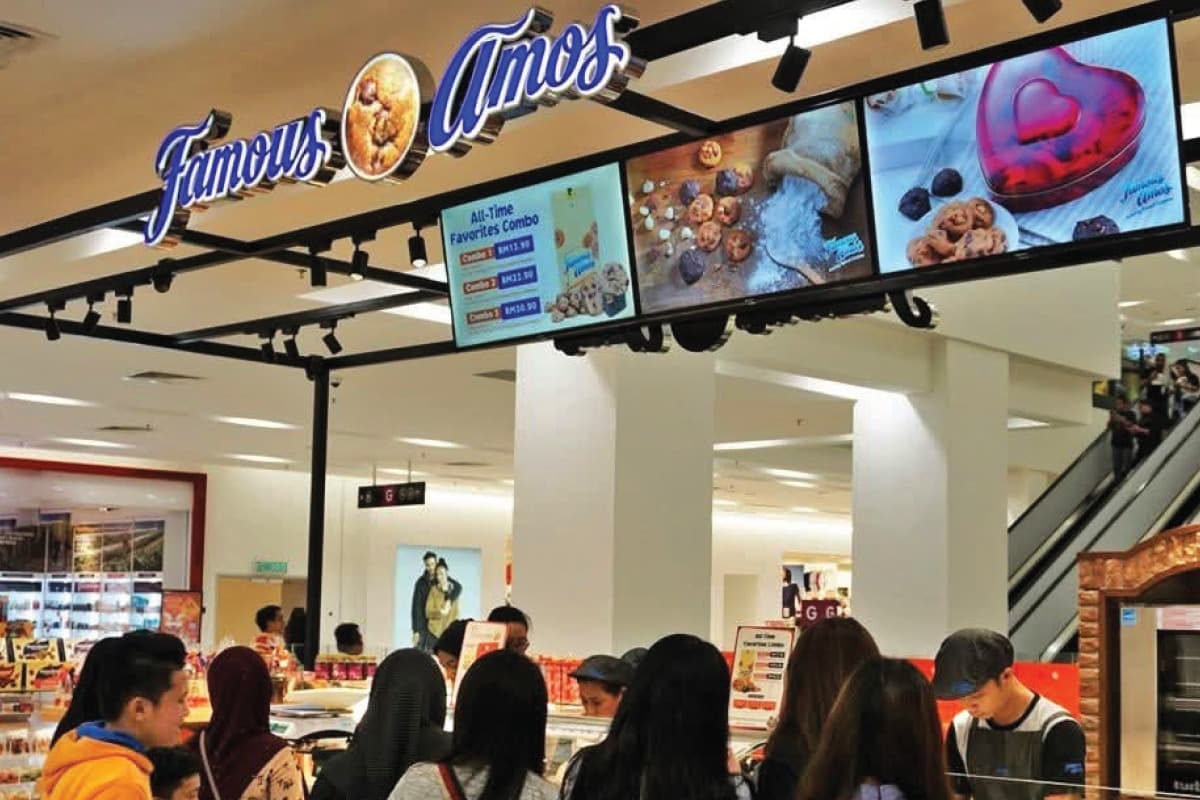
In the cumulative nine-month period (9MFY2025), it saw net profit rise 23.7% year on year to RM104.65 million on higher revenue, operational efficiencies and unrealised foreign-exchange effects. Revenue grew 7.4% y-o-y to RM6.34 billion. DKSH Malaysia generated 54% of its 9MFY2025 revenue from consumer goods and 45% from healthcare, with the remainder coming from its Famous Amos retail business.
Key consumer goods brands under DKSH Malaysia’s management include Nutella, Kinder, Tic Tac, Ferrero Rocher, Beiersdorf, Kraft Heinz and Teazen. In healthcare, the portfolio features Novartis, Pfizer, Roche, Sanofi and Alcon. The company operates 17 distribution centres and warehouses, along with one manufacturing plant, in the country.
According to Sandeep, Malaysia ranks among DKSH Group’s top three markets globally, alongside Thailand and Vietnam.
According to Bloomberg data, analysts are expecting DKSH Malaysia to report a net profit of RM160.5 million in FY2025 and RM168.5 million in FY2026. It posted a net profit of RM123.12 million in FY2024.
It is also projected to pay dividends of 18 sen per share in FY2025 and FY2026. The company paid dividends of 19 sen per share in FY2024 and 17 sen in FY2023.
As at end-September, DKSH Malaysia held RM50.87 million in cash and bank balances against total borrowings of RM536.62 million, resulting in a net debt position of RM485.75 million and a net gearing ratio of 0.46 times.
The company has yet to release its offer document, and the SCR, if endorsed by the board, must also obtain a High Court order. DKSH expects completion in the second or third quarter of 2026.
Following the SCR announcement, DKSH Malaysia shares, which are up 12% year to date, rose as much as 14% to touch an intraday high of RM6 on Wednesday before paring gains to close at RM5.90 as investors digested news of the takeover bid. The company’s market capitalisation stood at RM930.2 million.
Save by subscribing to us for your print and/or digital copy.
P/S: The Edge is also available on Apple's App Store and Android's Google Play.