

This article first appeared in City & Country, The Edge Malaysia Weekly on December 15, 2025 - December 21, 2025
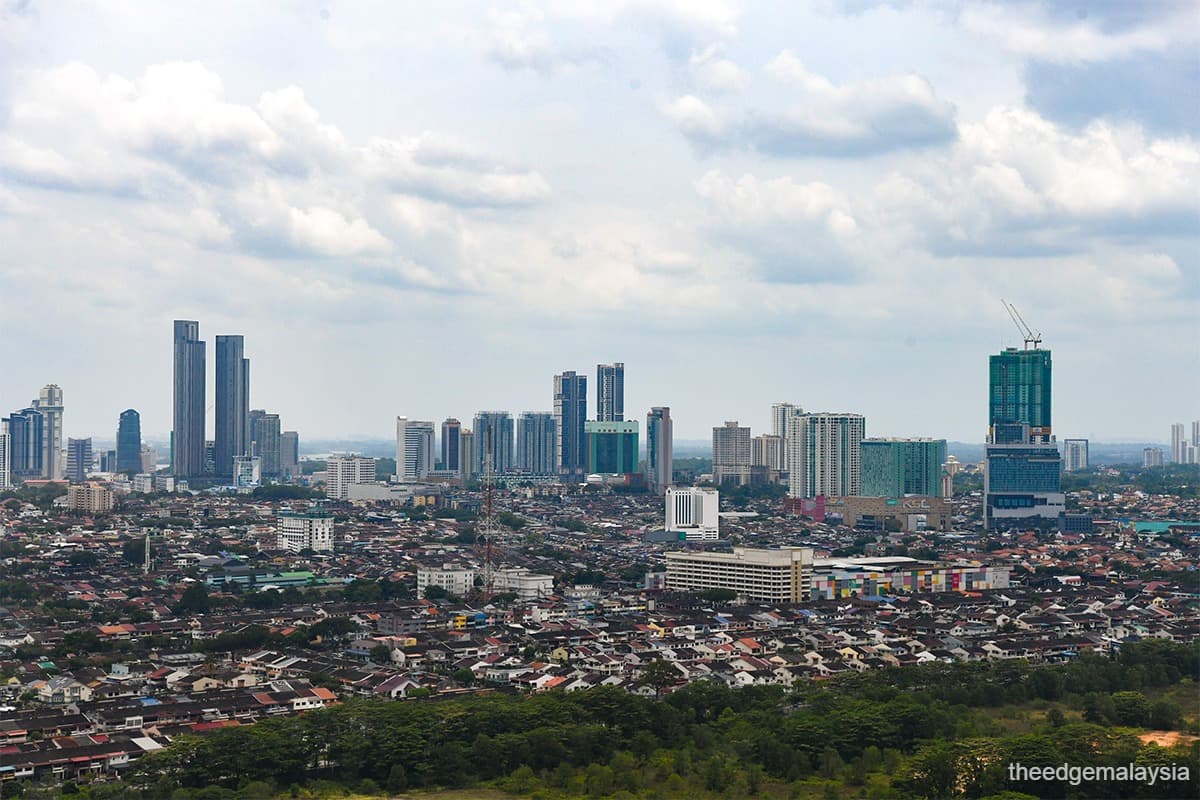
Activity in Johor’s property market was flat in 3Q2025 with 25,243 transactions recorded, which is “essentially unchanged from 25,225 units in 3Q2024”, says Olive Tree Property Consultants (Johor) Sdn Bhd CEO Samuel Tan in presenting The Edge Malaysia | Olive Tree Property Consultants Johor Bahru Housing Property Monitor 3Q2025.
Despite the flat activity, he notes that transaction value rose sharply year on year, by 19.5% from RM20.4 billion to RM24.4 billion. “This shows that higher-value properties were concluded in 3Q2025. At RM24.4 billion, the value already represents 86% of the full-year 2024 total [of RM28.5 billion].”
Future supply continues to be dominated by high-rise products; there are roughly 60,700 high-rise units versus 32,700 landed homes. Tan says this is due to affordability considerations and land scarcity, which has resulted in higher-density projects.
In terms of overhang units, high-rise units continue to represent the bulk of the total. “There were about 10,000 unsold completed high-rise units [during the quarter] compared with landed homes, which were only about 650 units. Still, improving market sentiment has helped reduce the high-rise overhang from nearly 19,000 units at its peak post-pandemic, with steady absorption over the past few years to the current 10,000 units.”
In the first half of 2025, Johor received the highest investment among the states.
“Johor recorded approved investments of RM56 billion in 1H2025. In 1Q2025, the state secured RM30.1 billion in approved investments, of which a very large portion was foreign direct investment (FDI), especially under the Johor-Singapore Special Economic Zone (JS-SEZ) initiative,” says Tan, adding that the investments were from Singapore, China and Japan, with much of it being directed into manufacturing, data centres, logistics and service sectors.

He says Johor had approved a cumulative investment of RM91.1 billion by 3Q2025 and is on track to achieving RM100 billion for the full year.
Tan points out that these investments will have a direct impact on the state’s property market. “The surge in high-value industries such as semiconductors, data centres and advanced manufacturing has significantly strengthened the demand for industrial and logistics real estate, particularly in Pasir Gudang, Kulai, Senai and Iskandar Puteri.”
As a result, he says land prices and rental rates in these areas have risen steadily amid tightening supply.
At the same time, the inflow of FDI has led to growing employment opportunities, which in turn has fuelled demand for residential properties near key industrial hubs.
“Locations such as Kulai, Skudai, Tebrau and Medini have seen higher occupancy levels and improved rental yields, especially within the mid-market apartment and serviced residence segments. This trend underscores a shift towards proximity-based housing demand driven by workforce expansion,” Tan says.
Underpinned by FDI-driven growth, infrastructure has also been upgraded to enhance connectivity and livability, reinforcing Johor’s position as a strategic investment and residential destination.

Budget 2026
Tan notes that the extension of stamp duty exemption on instruments of transfer and loan agreements for first-time homebuyers purchasing residential property valued at up to RM500,000, announced in Budget 2026, will boost the market.
“This supports demand for affordable and mid-residential units in Johor and could boost the first-home segment in Johor Bahru and its suburbs,” he says.
Meanwhile, stamp duty on the transfer of residential properties for non-citizens, non-permanent residents and foreign companies has been increased from 4% to 8%.
”This is likely to moderate foreign-investor demand in Johor, especially for products aimed at non-locals, and may shift focus back to domestic buyers or mid-market segments,” Tan adds.
Additionally, a special tax deduction of 10% for the cost of renovation and conversion of commercial buildings into residential property has been announced. The cost is capped at RM10 million.
“This encourages adaptive reuse in Johor Bahru where older commercial and office stock can be converted and repurposed. It could open up new supply in high-growth nodes near the city centre and transport hubs.”
The allocation to the Ministry of Housing and Local Government has also been increased to RM6.09 billion from RM5.934 billion, supporting the development of low- and medium-cost homes as well as maintenance and urban regeneration of PPR (People’s Housing Programme) schemes.
“This helps improve the quality of existing residential stock, may relieve supply-side bottlenecks and support housing stability in the mid-market segment rather than focusing purely on luxury segments,” Tan says.

Reciprocal US tariff reduction and its impact
The reduction of the US reciprocal tariff on Malaysian exports from 25% to 19%, along with the signing of the broader US-Malaysia Reciprocal Trade Agreement in October this year, has several implications for the Malaysian economy, including the property sector, with Johor being one of the key beneficiaries.
“The lower tariff has bolstered Malaysia’s export competitiveness, particularly in electronics, automotive components and precision manufacturing. These are industries that form the backbone of Malaysia’s FDI inflows.”
He notes that the reduction, coupled with expanded US market access for over 1,700 product lines, signals stronger trade stability and improves investor sentiment.
“This renewed confidence should translate into higher industrial investment and a stronger ringgit outlook, creating a positive spillover effect into real estate demand.”
Tan adds that demand for industrial land, logistic facilities and data infrastructure has accelerated in Johor as manufacturers ramp up production to serve the US market.
“Due to its proximity to Singapore and its growing ecosystem of ports, SEZs and manufacturing parks, Johor has become the preferred expansion base for both export-oriented and regional supply-chain players,” he explains, adding that developers in Senai, Pasir Gudang and Iskandar Puteri are already experiencing stronger land take-up and higher industrial rental yields.

Price and rental trends
Tan notes that prices of landed properties at most housing estates increased in 3Q2025.
“Prices of most 2-storey terraced houses generally increased, clocking a marginal price hike of 1.4% to 4.6% while semi-detached houses remained stable.”
For instance, a 1,400 sq ft unit in Taman Bukit Indah was sold for RM720,000 in 3Q2025 (2Q2025: RM700,000); the selling price for a 1,400 sq ft unit in Horizon Hills rose to RM750,000 (2Q2025: RM740,000); a 1,916 sq ft unit in Taman Ponderosa sold for RM750,000 (2Q2025: RM720,000); a 1,400 sq ft unit in Taman Setia Eco Garden increased to RM680,000 (2Q2025: RM650,000); and a 1,765 sq ft unit in Taman Impian Emas rose to RM830,000 (2Q2025: RM800,000).
Only a 3,400 sq ft unit in Horizon Hills and a 3,200 sq ft unit in Taman Setia Eco Garden showed a price increase. They sold for RM1.4 million (2Q2025: RM1.3 million) and RM1.2 million (2Q2025: RM1.1 million) respectively.
Meanwhile, in the 2-storey cluster home segment, the only increase was for a 2,240 sq ft unit in Austin Heights, which fetched RM1.25 million (2Q2025: RM1.1 million).
Tan says the price increments for serviced apartments ranged between 2.5% and 6.7%. A 750 sq ft unit at Sky Executive saw its price increase to RM420,000 (2Q2025: RM400,000); the price of a 1,600 sq ft unit in Straits View Condominium rose to RM500,000 (2Q2025: RM480,000); a 958 sq ft unit at Tropez Danga Bay increased to RM480,000 (2Q2025: RM450,000); a unit at Twin Tower Residence measuring 872 sq ft rose to RM820,000 (2Q2025: RM800,000); and a 1,700 sq ft unit at Molek Pine saw its price rise to RM790,000 (2Q2025: RM760,000).
In the rental market, Tan says all property types saw improvement. “For landed houses, the rental increase ranged from 2.9% to 16.7%.”
For Olive Tree’s selected schemes, all 2-storey terraced houses showed an increase in rental rates except for Bandar Seri Alam.
In Taman Bukit Indah, a 1,400 sq ft unit saw an increase to RM2,300 (2Q2025: RM2,000), while a similar-sized unit in Taman Mount Austin fetched RM2,200 (2Q2025: RM2,000). Units of the same size in Horizon Hills commanded RM2,800 (2Q2025: RM2,600). Meanwhile, a 1,916 sq ft unit in Taman Ponderosa fetched RM2,800 (2Q2025: RM2,400) and a 1,765 sq ft unit in Taman Impian Emas was priced at RM2,200 (2Q2025: RM2,000).
For semi-detached homes, a 3,400 sq ft unit in Taman Bukit Indah fetched RM3,800 (2Q2025: RM3,500), while a 3,003 sq ft unit in Horizon Hills commanded RM4,000 (2Q2025: RM3,800). In Austin Heights, a 3,595 sq ft unit fetched RM4,300 (2Q2025: RM4,000), whereas a 3,200 sq ft unit in Taman Ponderosa recorded rental of RM4,000 (2Q2025: RM3,800). Meanwhile, a 3,780 sq ft unit in Taman Setia Eco Garden was priced at RM3,500 (2Q2025: RM3,200) and a 3,200 sq ft unit in Taman Impian Emas fetched RM3,500 (2Q2025: RM3,000).
For 2-storey cluster homes, a 2,240 sq ft unit in Taman Bukit Indah was rented out at RM3,600 (2Q2025: RM3,400), while a similar-sized unit in Horizon Hills also fetched RM3,600 (2Q2025: RM3,500). In Austin Heights, a 2,240 sq ft unit was priced at RM3,500 (2Q2025: RM3,000) while a 2,380 sq ft unit in Senibong Cove commanded RM4,000 (2Q2025: RM3,600).
“For serviced apartments, R&F Phase 1 and Molek Pine registered an increase of 8% and 5.9%, respectively,” Tan says. A 797 sq ft unit at R&F was rented out at RM2,700 (2Q2025: RM2,500) while a 1,700 sq ft unit at Molek Pine 4 fetched a higher rental of RM3,600 (2Q2025: RM3,400).
New launches
According to Olive Tree’s data, four serviced apartments and seven landed properties were launched during the quarter under review.
The serviced apartments were Residensi Maxim Pelangi, Skyline One Sentosa, M Grand Minori and Residensi Parkland.
Residensi Maxim Pelangi, located in Plentong, was launched in July by Maxim Pelangi Sdn Bhd. The freehold development, which has a total of 1,716 units, has built-up sizes ranging from 450 to 865 sq ft and a selling price starting at RM426,000. It is expected to be completed in 2030.
Plaza Sentosa Properties Sdn Bhd launched the freehold Skyline One Sentosa in Johor Bahru in July. The serviced apartment project comprises 1,623 units and has built-up sizes ranging from 570 to 968 sq ft. The selling price starts at RM663,000. The project has achieved a take-up rate of 60% and is expected to be completed in August 2028.
In August, Mah Sing Group Bhd (KL:MAHSING) launched M Grand Minori in Plentong. There are 843 units, and the selling price ranges from RM390,000 for the 403 sq ft units to RM769,000 for the 835 sq ft units.
Parkland Southern Sdn Bhd launched the second phase of Residensi Parkland in August. The freehold development comprises 1,078 total units (562 to 1,020 sq ft), with selling prices starting from RM458,120. It has achieved a 40% take-up rate since launch and is slated for completion in May 2028.
“The first three projects are positioned close to Johor Bahru city centre, with pricing between RM920 psf and RM1,300 psf. In contrast, Residensi Parkland in Permas Jaya is priced moderately at RM770 to RM815 psf. The unit sizes across the four developments range from less than 500 sq ft to slightly above RM1,000 sq ft,” Tan says.
“This compact sizing is a deliberate strategy to keep absolute prices below RM500,000, making them more accessible in a market where entry cost is a key decision point.
“These developments mainly target Malaysians working in Singapore who prefer low-cost accommodations in Johor Bahru as well as property investors who seek compact units with potentially higher rental yields due to cross-border demand and the improving connectivity between Johor Bahru and Singapore.”
Landed property launches during the quarter were Fraser Heights, Rosewood Pangsapuri Sutera and Aspira Hills in July and Hi.Jau, Terra Heights, Bandar Layangkasa and Iconia Garden Residence in August.
Tropicana Corp Bhd (KL:TROP) launched the second phase of Fraser Heights, a landed development that consists of 159 units of double-storey terraced houses within the Tropicana Uplands township in Gelang Patah. The units have a land area of 1,170 and 1,260 sq ft, and built-up sizes of 1,500 and 1,698 sq ft. The selling prices are RM730,000 and RM775,000. It has achieved a take-up rate of 80% and its expected to be completed in April 2028.
Tanah Sutera Development Sdn Bhd launched its Rosewood Pangsapuri Sutera freehold townhouse development during the period in review. The 159 units come in Type A (built-up: 1,324 sq ft, selling price: RM880,000) and Type B (built-up: 1,211 sq ft, selling price: RM748,000).
UEM Sunrise Bhd (KL:UEMS) launched Aspira Hills (phase 2A) — 192 units of double-storey terraced homes measuring 1,400 sq ft, with built-up sizes of 1,743 and 1,821 sq ft. The selling price starts at RM1.04 million and RM1.09 million, respectively. Aspira Hills achieved a take-up rate of 70% and will be completed by April 2027.
Meanwhile, Hi.Jau is a double-storey terraced house project in Eco World Development Bhd’s (KL:ECOWLD) Eco Botanic township. It comprises 721 units, with land area ranging from 1,400 to 2,100 sq ft and built-ups of 1,804 to 2,379 sq ft. The selling price starts from RM882,000.
Terra Heights in Amber Hill, Tebrau, is a double-storey terraced house development by Kemajuan Tong Tor Sdn Bhd. To be completed in 2027, Terra Heights will have 251 units with land areas of 1,600 sq ft (built-up: 2,468 sq ft), 2,400 sq ft (built-up: 2,712 sq ft) and 3,200 sq ft (built-up: 2,468 sq ft). The selling price starts at RM798,000.
Parkland Southern Sdn Bhd launched phase eight of Bandar Layangkasa. Upon completion in 2027, the development will have 193 units (land size: 1,400 sq ft, built up: 1,808 sq ft) with a selling price of RM708,000.
Gunung Impian Development Sdn Bhd launched Iconia Garden Residence Zone 10D3 in Taman Impian Emas, Tebrau. The double-storey terraced house development has a total of 113 units. Land area is 1,920 sq ft and built-up area is 2,505 sq ft (RM1.12 million) and 2,460 sq ft (RM950,000). It is slated for completion in July 2027.
Save by subscribing to us for your print and/or digital copy.
P/S: The Edge is also available on Apple's App Store and Android's Google Play.