

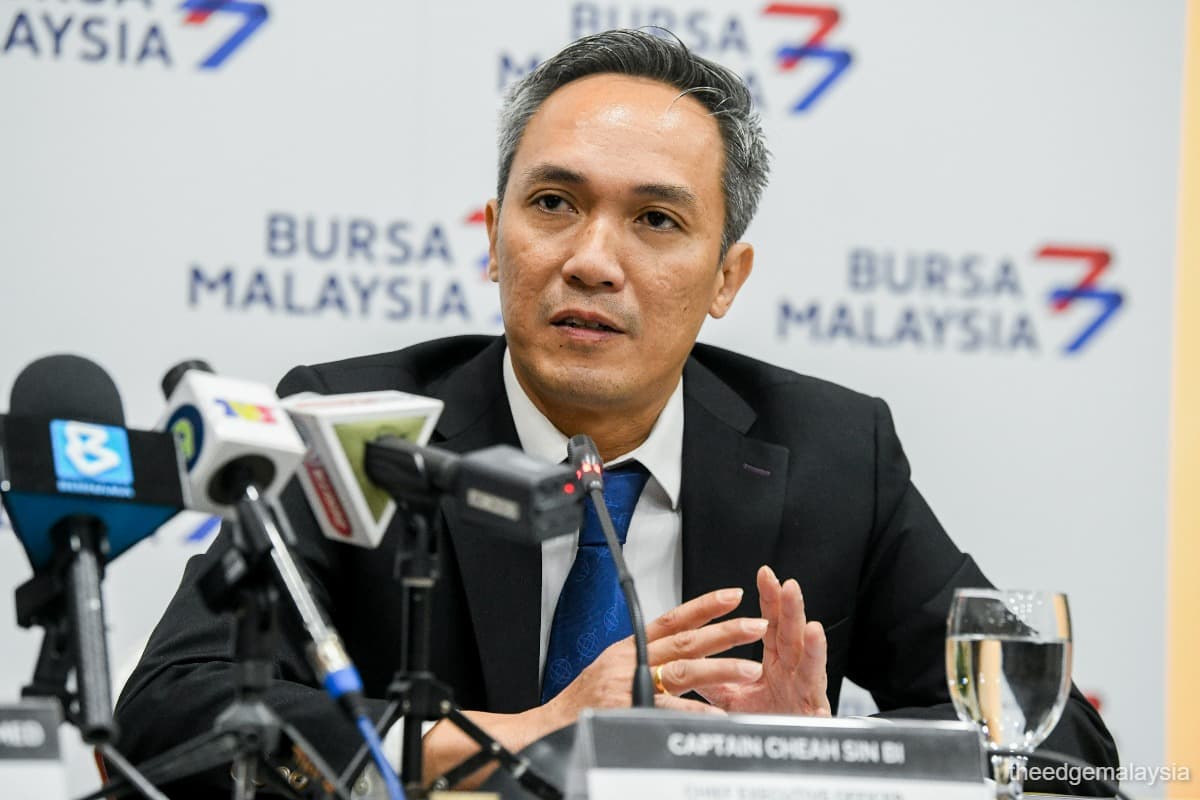
KUALA LUMPUR (Dec 9): Marine transportation company Orkim Bhd (KL:ORKIM) plans to replace its ageing tankers gradually, through new purchases or new builds, to keep its fleet at an average age of 12 years over the next five years.
Nearly half of its 18 vessels are 10-18 years old.
Chief executive officer Captain Cheah Sin Bi told The Edge the company prefers a younger fleet compared to the national average of 18 years, to meet regulations, reduce maintenance costs, improve efficiency, and ensure higher vessel uptime — which refers to the amount of time a ship is fully operational and available for use.
Chairman Datuk Abdul Hamid Sh Mohamed told reporters after the company’s listing ceremony that vessels can operate up to 25 years, but Orkim prefers a younger fleet. Replacement decisions depend on costs, market conditions, and shipyard availability, with newbuilds taking two to three years to deliver.
“For new builds, it will take two to three years from order to delivery, depending on slot availability because most vessels are built outside Malaysia,” he said. “Some clients insist on maintaining the existing vessels even when they are 18 or 19 years old.”

Abdul Hamid said the marine transport industry has long investment cycles because ships are expensive. New vessels take two to three years to build, so the company must balance buying new ships and second-hand ones to grow faster.
"Our average age of a fleet is 12 years old, and we intend to have that average age on fleets until 2030," Cheah said. "In the next few years, vessels will be replaced with new ones, either through acquisitions or newbuilds."
He added that smaller tankers cost about RM100 million, while medium-range newbuilds cost around US$46 million (RM190 million).
The company’s fleet consists of 14 clean petroleum product tankers, two medium-range tankers and two liquefied petroleum gas carriers.
They currently serve 18 long-term contracts, with Cheah saying the company prefers a mix of contract types for stable earnings.
“Time-charter contracts give us earnings visibility, but they are a flat rate for a number of years. The best model is a mixture of contract structures and tenures, and that is what we plan to maintain moving forward,” he added.
Abdul Hamid said that while Orkim currently can be considered the country's biggest marine transportation player, with a 56% market share of domestic-flagged vessels, this represents only about 12% of the overall Malaysian market, which is still dominated by foreign-flagged vessels.
“There is still a lot of growth opportunity for domestic players. But this is a high-capex industry — a vessel can cost you a minimum of US$100 million. Even second-hand vessels can cost US$20 million to US$80 million depending on condition,” he added.