

This article first appeared in City & Country, The Edge Malaysia Weekly on December 8, 2025 - December 14, 2025
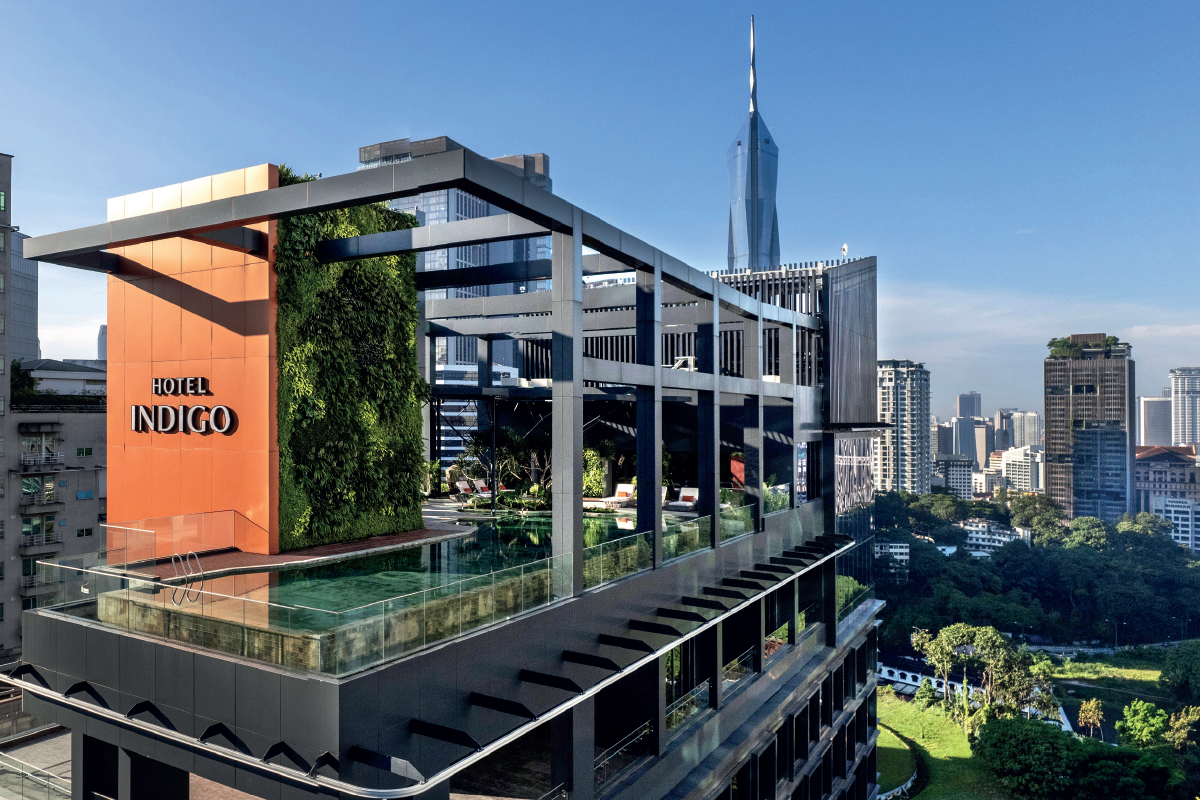
From the 24th floor of Hotel Indigo Kuala Lumpur on the Park in Jalan Puncak, just a stone’s throw from KL Tower, one can enjoy an expansive view of the city. It is perhaps apt that this is where City & Country meets Vivek Bhalla, managing director for Southeast Asia and Korea at IHG Hotels & Resorts (IHG), to hear about the group’s expansion plans in Malaysia.
Apart from Hotel Indigo, the global hospitality company has a number of hotel brands in its portfolio, including Six Senses, Regent Hotels, InterContinental Hotels and Resorts, Vignette Collection, Kimpton, voco, Ruby, Hualuxe Hotels & Resorts, Crowne Plaza, Iberostar Beachfront Resorts, EVEN, Holiday Inn, Holiday Inn Express, Holiday Inn Club Vacations, Garner, avid hotels, Atwell Suites, Staybridge Suites and Candlewood Suites. Its portfolio comprises more than a million rooms across 6,800 hotels in over 100 countries, with a development pipeline of more than 2,300 properties.
According to Vivek, Malaysia is an important market for the group. “We currently have a pipeline of seven hotels set to open over the next few years, with more to come, including three exciting brand debuts for the country.
“This year, we will welcome the arrival of Kimpton Naluria Kuala Lumpur [at TRX mid-December], marking the debut of the Kimpton brand in Malaysia. In 2026, Regent Kuala Lumpur [also at TRX] will open its doors, introducing the new Regent Spa & Wellness concept. We will also debut voco in Malaysia with voco Kuching, which marks IHG’s return to the capital city and to Sarawak after more than a decade.”
voco Kuching is a redevelopment of Century Hotel, which closed down a few years ago, he says. Similarly, the former Mutiara Penang Resort is being converted into InterContinental Penang Resort, which is set to open in 2026, he continues.

“According to STR, a hospitality industry data intelligence provider, travel demand continues to grow. Year to October, Malaysia recorded an [average] occupancy rate of 62.1%, a slight increase from the year before, with RevPAR (revenue per available room) up 7.7% to US$58.30 — an indication of ADR (average daily rate) led growth,” says Vivek.
RevPAR is a key metric in the hotel industry that measures a property’s ability to fill its rooms at an average rate, while ADR looks at the average revenue earned from each occupied room over a specific period.

“In Kuala Lumpur, demand has remained resilient across all segments, from midscale to luxury. The city saw a 9.8% increase in RevPAR year to date, supported by an average occupancy rate of 68.2%,” says Vivek.
“Beyond the capital, markets such as Kota Kinabalu, Johor Bahru and Melaka continue to perform steadily, buoyed not only by tourism but also by ongoing expansion in the technology and manufacturing sectors, contributing to a 6.9% RevPAR growth across the rest of Malaysia.”
IHG has 12 operating hotels in Malaysia. They are Hotel Indigo Kuala Lumpur on the Park (180 rooms); InterContinental Kuala Lumpur in Jalan Ampang (473 rooms); Crowne Plaza Penang Straits City (343 rooms); Crowne Plaza Kuala Lumpur City Centre in Jalan Yap Kwan Seng (320 rooms);
Holiday Inn Sepang - Airport in Selangor (242 rooms); Holiday Inn Melaka in Jalan Syed Ab Aziz (275 rooms); Holiday Inn Johor Bahru City Centre in Jalan Tun Abdul Razak (335 rooms); Holiday Inn Kuala Lumpur Bangsar in Jalan Maarof (220 rooms); Holiday Inn & Suites Penang Prai in Jalan Juru Sentral, Bukit Mertajam (315 rooms); Holiday Inn Express & Suites Johor Bahru (203 rooms); Holiday Inn Express Kuala Lumpur City Centre in Jalan Raja Chulan (383 rooms); and Holiday Inn Express Kota Kinabalu City Centre in Sabah (250 rooms).

Strong tourism numbers, opportunities await
Vivek notes that tourism contributes about 15% to Malaysia’s gross domestic product. The government plans to attract 47 million international tourists in 2026 and has allocated RM700 million to promote the country.
“Malaysia truly stands out as a wonderful place to visit. It’s a vibrant cultural melting pot with stunning natural landscapes, from its beaches to rainforests, and some of the most remarkable cuisines in the region,” he says.
“It is already the second most-visited country in Southeast Asia with 25 million visitors recorded in 2024, and Kuala Lumpur was recognised as the 10th most-visited city globally with 16.5 million arrivals.
“This year, tourism continues to gain momentum. From January to August alone, Malaysia welcomed more than 28 million international visitors, a 14.5% increase year on year and already close to the national target of 31 million. Key feeder markets such as Singapore, Indonesia, China, Thailand and India continue to fuel this growth, alongside an impressive rise in domestic travel, which grew nearly 8% in the second quarter to reach 73.8 million domestic visitors.”
These strong numbers make competition very tough but they also provide opportunities to IHG, such as growing its luxury and lifestyle (L&L) hotels and resorts. This is supported by the increase in affluent people in Asia-Pacific, leading to more intra-regional travel and growing appetite for experience-rich stays.
“Based on STR’s findings, the current market segment breakdown is luxury 8%, upper upscale & upscale 46% and upper midscale & midscale 40%. With that in mind, over 50% of the openings in our pipeline is in the L&L segment,” says Vivek.
“Another thing we’ve noticed is that there is an over-reliance on a few key markets. In Malaysia, visitors are mainly concentrated in Kuala Lumpur. In 2024, the capital hosted 20% of all hotel guests, followed by Pahang, Johor, Selangor and Penang. There is an opportunity to grow tourism in other parts of the country and we are expanding to other destinations, such as Kuching with the voco brand, and increasing our presence in Penang and Kota Kinabalu.”

Creating authentic experiences together
IHG operates on an asset-light global model and looks at managing hotels on behalf of third-party owners, says Vivek. He reveals that all of the group’s properties in Malaysia are operated under management agreements.
“We work closely with our partners to ensure we bring the right brands to the right locations, supported by the strength and scale of our global systems and expertise,” he says.
“In Malaysia, we actively pursue both new-build developments and high-quality conversions. Conversions have become an increasingly important part of our growth strategy as they allow owners to quickly enhance the value of their assets by tapping into IHG’s enterprise systems, global distribution and award-winning loyalty programme, IHG One Rewards.
“Today, a quarter of our existing estate in Malaysia consists of conversions, and around 30% of our pipeline follows the same model. Globally, demand for conversions remains strong with 49% of room signings and 47% of openings in 3Q being conversions. This trend is equally reflected in Southeast Asia, where conversions accounted for more than a third of signings and roughly a quarter of openings in the first half of 2025.”
Vivek says that regionally, travellers are looking for that authentic, one-of-a-kind experience, which is provided by IHG’s L&L brands. Furthermore, the growth in multigenerational travel means flexible room types and experiences for groups of all sizes are now a must, he points out.

Technology adoption for efficiency
Playing an important role in the hospitality sector is artificial intelligence (AI), which increases efficiency by dealing with process-oriented tasks, thereby allowing for more person-to-person interaction, says Vivek.
“AI and automation are about streamlining [process-oriented tasks], freeing up the time of our associates so they can engage with our customers in a truly meaningful manner, which is what the essence of hospitality is about,” he explains.
With the help of AI, 12 million personalised hotel-to-guest messages were sorted and, in the first half of this year, IHG’s chatbot had just under two million conversations with guests, says Vivek. He adds that there are 18,000 daily customer interactions via its intelligent virtual agent.

Even on the business side, AI is being used in things like the revenue management software, which helps with pricing, among others. This technology and others like it can only enhance the sector and will not take away the “human touch”, he asserts.
Vivek relates a story about how technology was used in a high-end restaurant where he was a customer and the menu was on a tablet. It allowed him to view the food selection in pictures and videos. There was no physical menu.
“So, we started looking through the [tablet] and then within a few minutes, the waitstaff came back and he started talking to us, general conversation, ‘Where did you come from?’, ‘What are you looking to do here?’, ‘Would you like to eat this?’, and he didn’t have to stress himself out by answering basic questions [like what is a particular dish and its ingredients] because we had already gone through that and he engaged with us in a very meaningful manner and made some recommendations,” he says.

When asked how the experience might be for customers who prefer a physical menu and find technology a hassle, Vivek makes an interesting observation. “I think it’s very generational. Was I that comfortable with [using a tablet]? Maybe not. But I assure you that when I go with my two daughters, who are nine and 12, they really don’t like the physical menu. They’re not even used to a tablet. They are used to everything on their phone. So it’s very generational.”
Besides the InterContinental Penang Resort, there are plans afoot to open the InterContinental Sabah Kota Kinabalu Resort, says Vivek.
“Looking ahead, we see strong potential to introduce new brands such as Vignette Collection, our L&L collection brand created for travellers seeking distinctive, one-of-a-kind experiences,” he adds. It was recently announced that in 2027, the Vignette Collection brand will be introduced in Kuantan called Mangala Estate Kuantan, Vignette Collection by IHG. The property, Mangala Estate Kuantan by Franky Group of Companies, will join the IHG system in mid-2026 and will be refurbished ahead of the rebranding.
“Overall, we are excited about the future of Malaysia’s travel and tourism landscape. Together with our valued ownership partners, we look forward to bringing new brands, new experiences and exceptional stays to guests across the country.”
Save by subscribing to us for your print and/or digital copy.
P/S: The Edge is also available on Apple's App Store and Android's Google Play.