

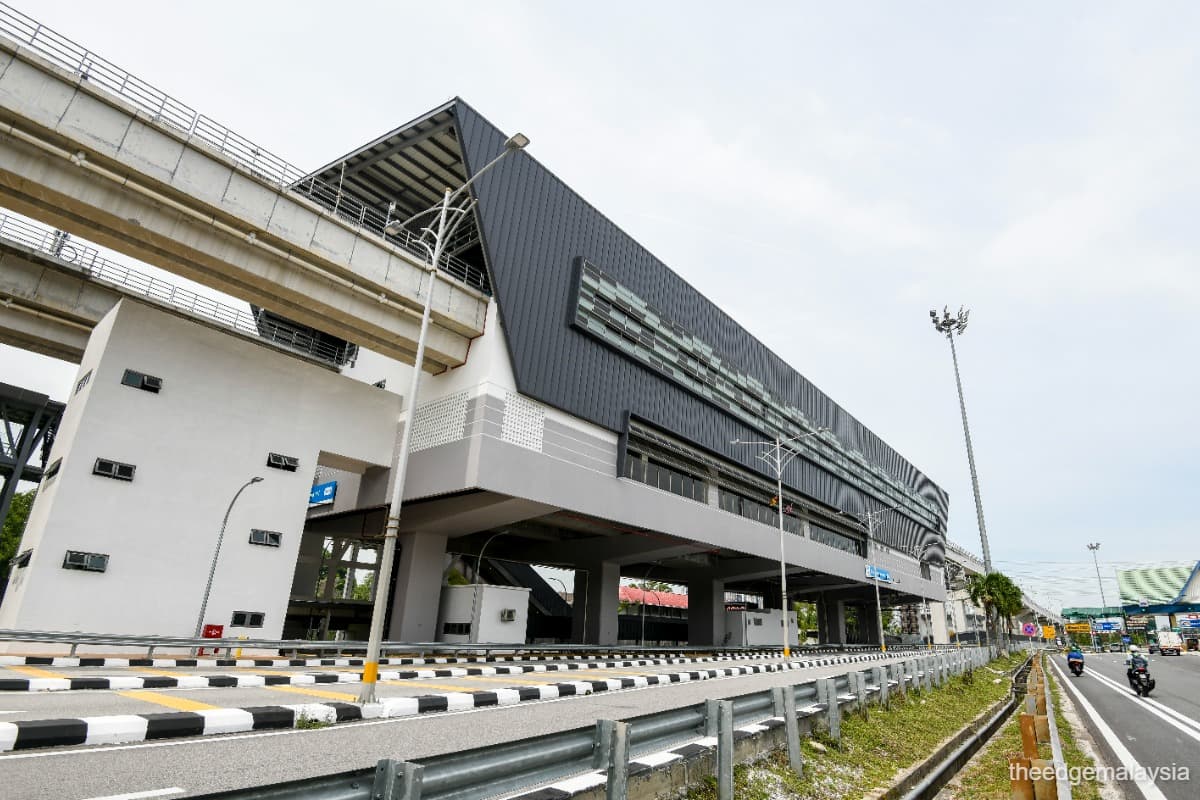
KUALA LUMPUR (Dec 5): The Light Rail Transit Line 3 (LRT3), initially set to be operational by early next year, is expected to be delayed, according to sources.
Several issues uncovered during testing, including software glitches in the signalling system and the line’s inability to complete the required fault-free run, have held back approval from the Land Public Transport Agency, people familiar with the matter told The Edge.
It remains uncertain when the LRT3 will be ready for passenger service, the people said.
Prasarana Malaysia Bhd, the asset owner of the LRT3, told The Edge that it will be holding a media briefing on the progress of the project “in the near future”.
The 37.8km alignment, also known as the Shah Alam Line, was originally slated to open on Sept 30 this year before being postponed to Dec 31 and later to early next year.
Transport Minister Anthony Loke Siew Fook had said in mid-November that the operational date would depend on the outcome of ongoing testing and commissioning to ensure system reliability and safety.
The LRT3, which stretches from Bandar Utama in Petaling Jaya to Johan Setia in Klang, was launched in 2016 under the Barisan Nasional administration with an announced budget of RM9 billion.
When Pakatan Harapan took office in 2018, the government disclosed that the budget excluded several major expenditures, including a 6% project delivery partner fee, consultancy fees, operational expenses, overheads and interest during construction, which raised total costs to RM31.7 billion.
To save costs, the government later revised the project scope by shelving five stations and cancelling one, reducing the overall cost to RM16.63 billion.
In his Budget 2024 presentation, Prime Minister Datuk Seri Anwar Ibrahim announced the reinstatement of five previously shelved stations — Tropicana, Raja Muda, Temasya, Bukit Raja and Bandar Botanik — adding RM5.3 billion to the project cost.
The latest revision brought the total cost to RM21.93 billion with the line projected to serve about 67,000 commuters daily.