

This article first appeared in The Edge Malaysia Weekly on December 1, 2025 - December 7, 2025
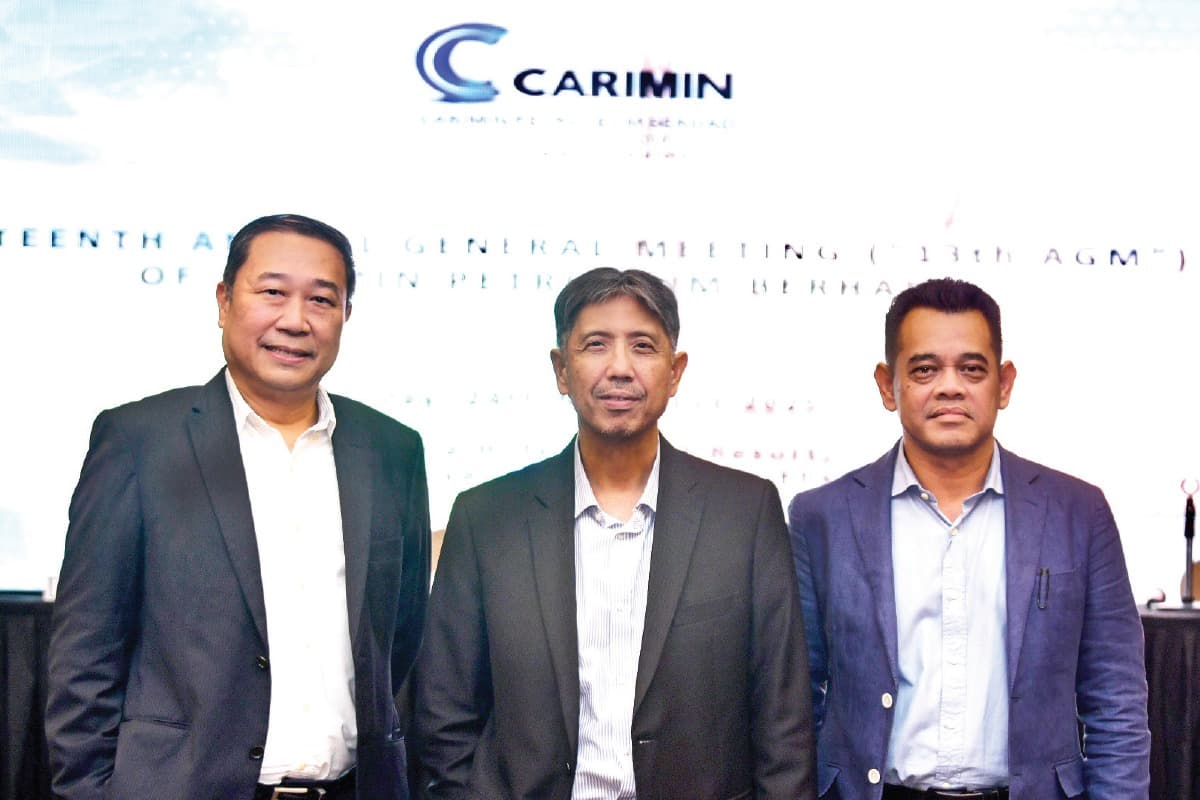
OIL and gas services and equipment (OGSE) firm Carimin Petroleum Bhd (KL:CARIMIN) is “very actively” looking for diversification opportunities as part of its efforts to cushion volatility in the oil and gas (O&G) industry, says managing director Mokhtar Hashim.
The group, which will see a jump in its cash pile following a RM76 million vessel sale, is assessing nearly half a dozen investment opportunities in adjacent sectors, including in brownfield upstream assets, green energy and other businesses outside the O&G sector.
While Carimin will continue to focus on its core business the commissioning, maintenance and fabrication services, it “needs to pivot” into businesses that can provide a sustainable revenue stream, Mokhtar says in the group’s first media interview in six years.
“We cannot sit around and hope that O&G industry will go back to the better days,” he tells The Edge.
Since the pandemic in 2020, crude oil prices have been on a roller-coaster ride, swinging between sub-US$20 per barrel at its lows and over US$100 at its highs in just a two-year period. Price of the commodity is hovering near four-year lows, and analysts anticipate it to trade around US$63 per barrel in 2026 and US$67 in 2027.
“That cash [from the vessel sale] puts us at an advantage to look out for opportunities,” says Mokhtar, who is the single largest shareholder in the Carimin. “[But] we don’t want to get caught investing and suddenly the project does not come [to fruition] … So, we are going to be very careful.”

Executive director Lim Yew Hoe explains that a committee is looking into the options, and that any venture will “leverage on our experience, our capability and our capacity”.
“We won’t go into healthcare, for example,” adds Lim, citing instead an example of the group’s diversification into onshore pipeline construction three years ago.
Carimin’s recent sale of its 11-year-old accommodation work boat Carimin Acacia to Keyfield International Bhd (KL:KEYFIELD) would lift its net cash to over RM95 million based on its latest quarterly numbers.
This compares with its market capitalisation of RM130.73 million as at Nov 26. On a per-share basis, the cash pile works out to 40.75 sen per share, against the group’s share price of 56 sen.
As Carimin shares its diversification strategy, however, some shareholders question the group’s decision to hold on to so much cash.
Of the RM76 million vessel sale proceeds, Carimin is giving out just RM6 million or 2.56 sen per share as special dividends. Its dividends have been averaging 2.5 sen per share in the last three years, with an average payout ratio of 26%.
One of the few net-cash, dividend-paying OGSE firms on Bursa Malaysia, Carimin will “continue to pay out dividends to shareholders”, says Mokhtar. But he stops short of committing to additional payouts.
Mokhtar owns 23.09% in the firm after deducting treasury shares, followed by executive director Wong Kong Foo with an indirectly held 23.02%.
Company filings show that the group has begun buying back shares this year at between 56.5 sen and 73 sen, and held 0.19% of its issued shares as treasury as at Nov 26.
Mokhtar says Carimin does not intend to “wait too long” to decide on its new venture. At the same time, it wants to retain a buffer to support its two long-term Pan Malaysia upstream services contracts in Sabah and Sarawak — one from Shell and another from a unit of ConocoPhillips — estimated at over RM1.05 billion combined. This is on top of a smaller Pan Malaysia contract worth an estimated RM98 million.
Sabah and Sarawak works picking up
The two international oil companies are new clients for Carimin, who previously mainly served Petroliam Nasional Bhd (PETRONAS) in Peninsular Malaysia.
The group is “definitely” most excited with the Sabah and Sarawak contracts won at the end of last year, says Carimin Engineering Services Sdn Bhd CEO Mohd Zamzuri Yusof, as it continues to bid for new jobs.
After a slow start, Mohd Zamzuri says activity levels have picked up and could potentially stabilise next year. Until then, Carimin is renting yard spaces in Sabah and Sarawak and utilising some capacity in Kemaman, Terengganu, as it continues to monitor the job flows before firming up any capacity expansion.
The group is seeing signs of recovery after its weakest showing in seven years in the 12 months ended June (FY2025), when contract onboarding costs and delays, lower activities and unplanned vessel maintenance dragged net profit to just RM1.68 million.
In the first quarter ended September (1QFY2026), net profit rebounded to RM5 million on revenue of RM56.5 million.
“The last one year has been soft, but we are in a transition period,” says Mokhtar. Going into Sabah and Sarawak comes with a different cost structure. The weak performance also relates to start-up costs from temporarily bringing in talent from Peninsular Malaysia to firm up the project management team, he adds.
Sabah and Sarawak works started only in April, adds Mohd Zamzuri. “We’re already receiving quite sizeable orders and we recognise revenue based on billing.”
The group has allocated RM20 million for fabrication capacity expansion, if needed. It is also setting aside another RM42.24 million to fund existing and future projects in construction, offshore hook-up and commissioning (HUC), and topside major maintenance segment.
The recent vessel sale, Mokhtar explains, is part of Carimin’s asset-light strategy, taking advantage of new contracting rules. Rather than holding on to an idle asset, it can dispose of the vessel since it is no longer required to provide in-house accommodation as part of its service package.
In Peninsular Malaysia, new opportunities include onshore pipeline commissioning, taking a cue from industry requirements for sectional replacements and refurbishment of mature infrastructure. This year, it conducted pipeline replacement in Plentong, Johor, and is also bidding for pipeline repair works in Putra Heights, Selangor.
Shares of Carimin are now at their three-year low, having retreated by more than 42% from last year’s peak, compared with a 25% decline in the Bursa Malaysia Energy Index.
Overall, Carimin has put clear targets in place, from firm execution in Sabah and Sarawak to securing a quality diversification deal, while sustaining dividends along the way.
That said, it took years for Carimin to firm up its last fabrication yard expansion exercise and its present venture into onshore services. Investors will need convincing that its capital reallocation will not come at the expense of returns, and will translate into growth.
Save by subscribing to us for your print and/or digital copy.
P/S: The Edge is also available on Apple's App Store and Android's Google Play.