

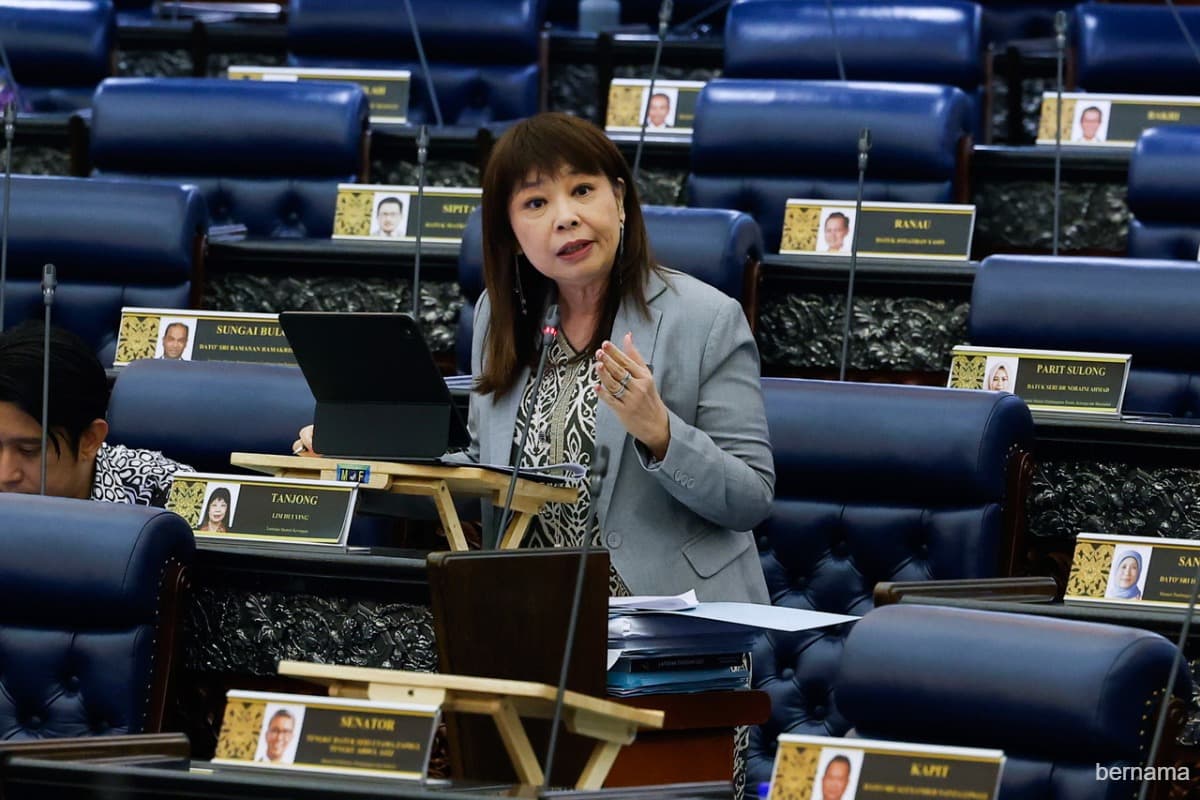
KUALA LUMPUR (Nov 24): Businesses with transactions over RM10,000, along with electricity and telecommunications service providers, must issue individual e-invoices instead of consolidated ones starting Jan 1, 2026, Deputy Finance Minister Lim Hui Ying said on Monday.
The first category is the sale of goods and services, where any transaction above RM10,000 must have its own e-invoice instead of being consolidated.
The second category is major electricity providers supplying power to end users.
The third covers telecommunications services, including postpaid plans, internet packages, and bundles that include electronic devices.
“Detailed transaction-level data from these sectors is required to support behavioural analytics, detection, and compliance monitoring under the national e-invoicing framework,” Lim told the Dewan Rakyat during an oral question-and-answer session on Monday.
She said seven industries are currently required to issue e-invoices for every transaction, with no option for consolidation. These include the automotive sector, aviation industry covering the sale of flight tickets and private charter services, luxury goods and jewellery, the construction sector, wholesalers and retailers of construction materials, licensed betting and gaming operators, and payments to agents, dealers, and distributors.
Other businesses can still consolidate certain sales transactions using receipt details, but must submit them to the Inland Revenue Board within seven days of the following month.
Since the system was implemented in 2024, Lim said taxpayer acceptance and compliance with e-invoicing had been strong, with 108,000 taxpayers adopting the system as of Nov 21, 2025. To date, a total of 735 million e-invoices have been successfully issued.
To help businesses, especially small and medium enterprises, the government will roll out the e-invoicing gradually. From Jan 1, 2026, businesses with annual sales of RM1 million to RM5 million must comply, and from July 1, 2026, it will apply to those with sales of RM500,000 to RM1 million.
Lim added that small businesses with annual sales below RM500,000 are exempted from mandatory e-invoicing to avoid additional costs associated with technical implementation.
“However, the government strongly encourages participation by these small traders to support the broader goal of digitalising business operations,” she noted.
For more Parliament stories, click here.