

This article first appeared in City & Country, The Edge Malaysia Weekly on November 24, 2025 - November 30, 2025
S P Setia Bhd (KL:SPSETIA) has recently seen changes at the top, with Datuk Zaini Yusoff promoted to president and CEO effective Oct 1. As part of a broader leadership realignment at the company, Tan Hwa Min assumed the role of deputy CEO on Nov 17 while Datuk Yuslina Mohd Yunus was appointed chief operating officer on Oct 1.
For the financial year ended Dec 31, 2024 (FY2024), S P Setia achieved RM5.02 billion in sales, surpassing its target of RM4.4 billion.

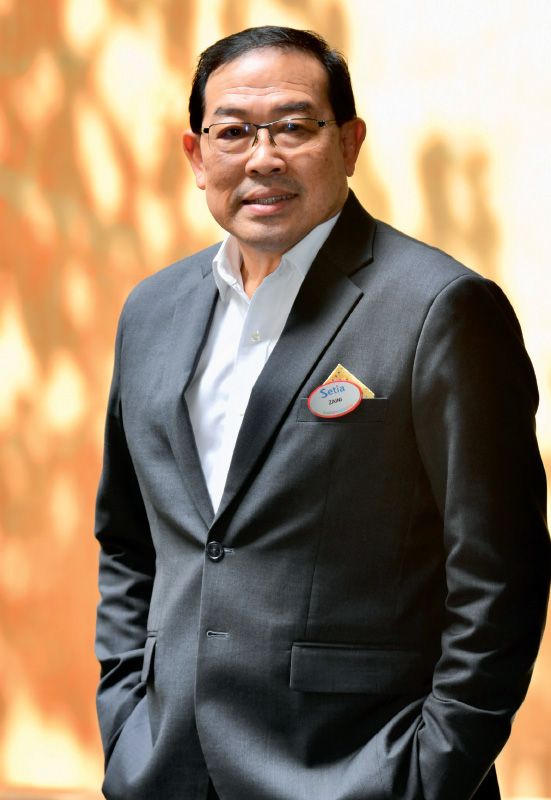
“We achieved profit before tax exceeding RM1 billion and net profit after tax of RM631 million for FY2024, our highest profit in the past five years,” Zaini tells City & Country.
For the first half of FY2025, S P Setia recorded sales of RM1.9 billion, which were mainly contributed by its domestic projects at RM1.42 billion, representing 75% of total sales. Its international projects contributed the rest, at RM480 million.
“This year, we are confident and will remain steadfast as we commit to achieving our RM4.8 billion sales target,” he adds.
S P Setia has been cutting its debt and selling unimportant assets to maintain an optimal balance between debt levels and capital allocation for growth. Zaini reckons that it has been a successful process so far, as the company has pared down its debt by RM5 billion since 2019 and reduced its net gearing to 0.35 as at 2024.
“We will continue to de-gear, monetise non-core land and enter into more joint ventures (JVs) to reduce capital outlay while boosting development,” he says.
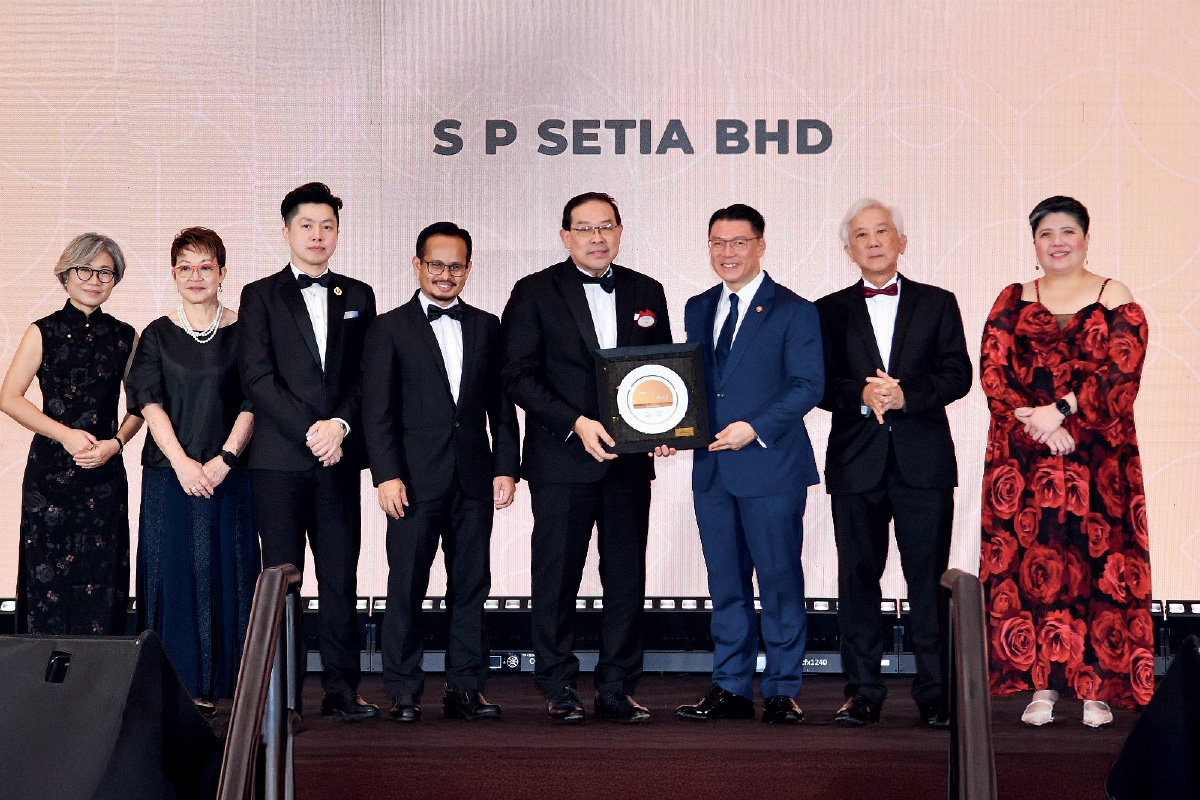
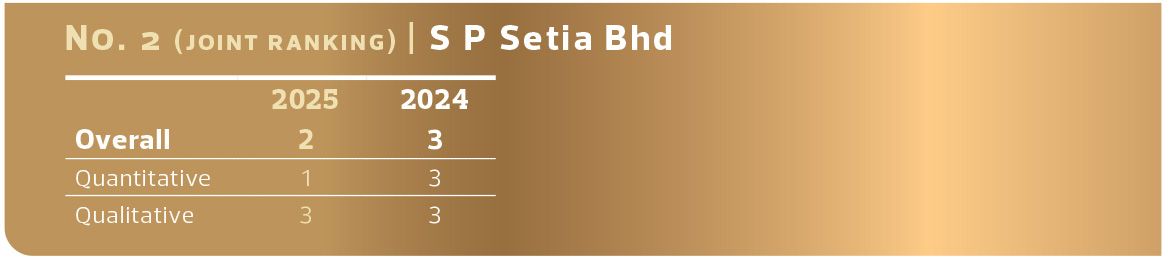
This strategy has borne fruit with S P Setia winning the Best in Quantitative Attributes sub-award of The Edge Malaysia Top Property Developers Awards 2025.
In the following excerpt from an interview with City & Country, Zaini elaborates on plans to take S P Setia to the next phase of growth through four key pillars, which are supported by four enablers.
City & Country: How is the establishment of a real estate investment trust (REIT) coming along?
Datuk Zaini Yusoff: We are laying the foundation for our foray into REITs. In FY2024, we started our pre-IPO (initial public offering) preparatory works to explore the establishment of a REIT that will have a diverse asset portfolio.
Our REIT may potentially include retail complexes, office buildings and a convention centre. We would like to establish a new pathway for investments and company growth via the REIT.

Some of the proposed properties include our key retail assets and office towers within our townships. Our pipeline of products will also be derived from our industrial developments.
Our plan to venture into REITs is part of Setia’s long-term strategy in moving towards an asset-light model and deriving sustainable recurring income.
S P Setia has had a few industrial projects in recent years. Are there plans to grow this segment of business?
We did very well in Setia Alaman in Selangor. We have about 400 acres there and currently around 90% has been sold. About 100 acres are commercial, which we may consider converting to industrial. We have also carved out phases for logistics that will be injected into the REIT.
We just received rezoning approval for about 480 acres in Setia Fontaines in Bertam, Penang. Originally, it was 330 acres, but we managed to increase the land area. The total land there is 1,700 acres, so converting 480 acres to industrial use is a good move due to price sensitivity [for residential projects] in that area. Residential pricing is quite constrained in Bertam compared to Setia Alam or Bandar Kinrara in Selangor.
There is a very good industrial market there, especially with developments like Batu Kawan already doing well and fully sold. Our industrial approach is different — we are creating green industrial parks, focusing on environmental, social and governance (ESG) initiatives. This includes installing solar panels atop buildings.
As for Tanjung Kupang in Johor, we have sold the entire land parcel, in line with our land monetisation and de-gearing strategy.
We are going for more JVs now. There is strong interest from other companies in partnering with us, particularly in using our brand. We are currently in discussions with landowners in Johor and Selangor to explore more industrial JVs.
We are also exploring industrial opportunities in Vietnam. We have spoken to our JV partner there, Becamex IDC Corp, which is one of Vietnam’s leading industrial players. It is currently our partner for residential projects as well.
It is our first industrial venture in Vietnam and we hope to begin early next year. The 500-acre industrial site is in the Bau Bang district, near our EcoLakes development in Ho Chi Minh City.
The industrial sector in Vietnam is strong, with significant investor interest from the US. Vietnam’s young and growing population makes it a promising Southeast Asian market. We believe now is the right time to invest in the country, and we are moving ahead strongly with our operations there.
We see the industrial segment as one of our key pillars. Even though we are taking baby steps, we are mindful of market cycles. We know when to enter and pull back.
Can you share your plans for S P Setia’s other international markets?
We remain optimistic in Setia’s trajectory this financial year, especially in strengthening our international presence.
We have been in Australia since 2012 and have developed about seven projects there. The latest is Atlas Melbourne, launched at the end of 2024. It is located on La Trobe Street with 839 apartment units and a gross development value (GDV) of A$980 million, which is about RM2.8 billion. We have already sold over 55%, or nearly 500 units. Construction has started and tenders have been called. It will take around four years to complete.
We also recently purchased two parcels of land — one each in Melbourne and Sydney. The one in Melbourne is in Carlton, located opposite Melbourne University, which is excellent for student accommodation.

For Carlton, we are planning three towers with one or two for student accommodation, depending on demand. We are also considering injecting one tower into our REIT, although nothing is confirmed yet.
Then, we have a small piece of land in St Leonards, Sydney, that will be turned into a high-rise project. We have submitted our development application and hope to receive approval early next year.
One of our key milestones recently is Setia’s commencement of our flagship development in Vietnam. In July, we broke ground on Setia Edenia at EcoXuan, Bình Duong Province, Ho Chi Minh City.
With a GDV of US$81 million (RM381.1 million), this development will feature three towers of 27 to 28 storeys, offering 865 apartments and shophouses. It reflects the group’s ability to create modern, eco-friendly homes that meet the needs of a growing international market.
We also have a presence in China and, of course, the famous Battersea Power Station (BPS) in London.
We have about 42 acres of land and have completed around 50% of BPS. Major infrastructure like the Tube station and water ferry are now operational, and the retail mall received more than 13 million visitors last year. We are constructing Phase 3C soon, which will include senior living and residential units. It is a forward sale where we build for an operator who has bought the whole block.
After this, we still have three or four phases left in BPS, which could take another 10 years to develop.
What about your projects in Malaysia?
Our focus remains on our bread-and-butter residential products and our core remains our townships. We have 42 developments across Malaysia.
In FY2024, we launched new phases at our ongoing developments with our strategy of accelerating our township developments in the central and southern regions such as Setia Alam, Setia Alam Impian, Setia Eco Park and Setia Tropika.
The latest phases that we launched in FY2024 include Pines Avenue at Setia EcoHill 2, Baris Place 2 at Setia Mayuri, Nadi 2 at Setia Commerce Square in Semenyih and Irama Villa III at Bandar Kinrara, most of which have performed well — that is, mostly 100% taken up.
As at June 30, our unbilled sales pipeline is RM3.9 billion. We have a land bank of 5,191 acres with a projected GDV of RM113 billion.
Our Eco townships and residential developments continue to be our mainstay, contributing consistently to our overall performance.
We signed a JV with Mitsui Fudosan (Asia) Malaysia Sdn Bhd in October, forming Setia MF EcoHill Sdn Bhd. Together, we will develop a 113-acre residential project at Setia EcoHill, Semenyih, featuring 683 units of bungalows, semi-detached and cluster homes. With an estimated GDV of RM1.3 billion, the project is set for its maiden launch in 2026.
Our much-anticipated new projects in the coming financial year will be Parkside Residence at Setia Federal Hill in Bangsar, Phase 22A at Setia Eco Park [in Selangor and] Setia SkyVille in Penang. We have plans to launch Precinct 7 in Setia Fontaines, Penang as well.
To what extent has the company successfully executed its monetisation and de-gearing strategy so far?
In 2019, our debt was RM13 billion — imagine giving out a bungalow a day to the bank — and we have pared it down to RM8.2 billion so far. That is RM5 billion reduced. Last year alone, we paid RM1.6 billion. Our net gearing dropped from 0.49 in 2023 to 0.35 in FY2024.
We will continue with our debt reduction strategies in FY2025, as we target to achieve a significantly lower net gearing ratio this financial year.
We have also brought back funds from Australia after project completions.
We are confident we can steer the company to a stronger position. The financials are improving, the team is energised and we are actively balancing development, debt reduction and future growth. As for the REIT, once we inject the assets, we expect to realise about RM700 million. These assets are fully paid for, so selling them to the REIT will allow us to cash out and further reduce borrowings.

What are your strategies to navigate both opportunity and uncertainty?
Our strategy revolves around four key pillars:
- Expediting township development: With over 42 active townships, this remains our bread and butter. We will accelerate launches and JVs to maintain high sales and revenue.
- Expanding our industrial segment: We are developing industrial parks such as Setia Alaman and Setia Fontaines. We are looking at new JVs in Selangor and Johor, as well as Vietnam — as mentioned earlier.
- REIT formation: We are formalising a mixed-use REIT with assets including malls, offices and convention centres. It’s a new revenue stream that offers recurring income and aids de-gearing.
- Growing our international market: With a strong presence in Australia and expansion in Vietnam, our international arm is contributing significantly to GDV and future growth.
- Supporting these are four enablers:
- Empowering Team Setia: Building trust, encouraging open communication and creating a strong internal culture. Staff engagement and retention are key.
- Amplifying the Setia brand: Increasing brand health through marketing and positioning Setia as the top-of-mind developer known for quality and sustainability. Currently, our brand health score is around 70%; we aim to achieve 75% next year.
- Driving innovation and digitalisation: Through initiatives like the Bengkel Inovasi GLC (BIG) Programme (backed by the government), we are working with start-ups to improve sales and reduce defects. These solutions may benefit the wider industry.
- Leading ESG and sustainability: Though we have always included ESG in our DNA, now we are being more vocal. From green industrial parks to sustainable townships, we are aligning with global best practices.
In line with our values, we have also implemented a minimum living wage of RM3,100 per month, effective Nov 1 this year, including basic pay, fixed allowances, overtime payments, EPF (Employees Provident Fund) contributions and benefits in kind. This initiative positions Setia as a progressive leader in property development, setting a new benchmark for fair and responsible employment practices.
Lastly, while our current projects are mostly large-scale townships, we are not ruling out smaller, standalone developments in the future. Especially for business units that are running out of land, buying smaller parcels and turning them around quickly could be a good strategy. JVs will also play a bigger role, helping us develop without holding costly land.
We are firmly focused on executing our four growth pillars and supported by the four enablers. The next five years are about transforming Setia into a stronger, more future-ready organisation.
Save by subscribing to us for your print and/or digital copy.
P/S: The Edge is also available on Apple's App Store and Android's Google Play.