

This article first appeared in City & Country, The Edge Malaysia Weekly on November 24, 2025 - November 30, 2025
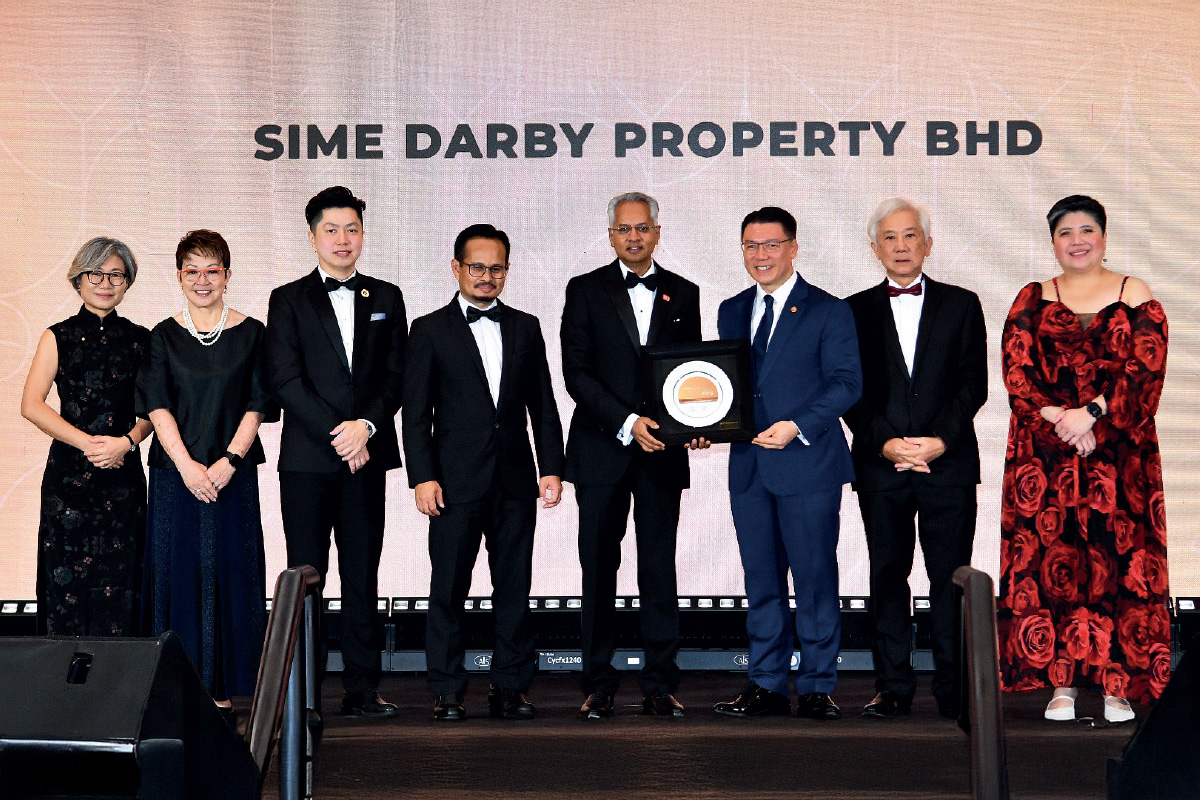
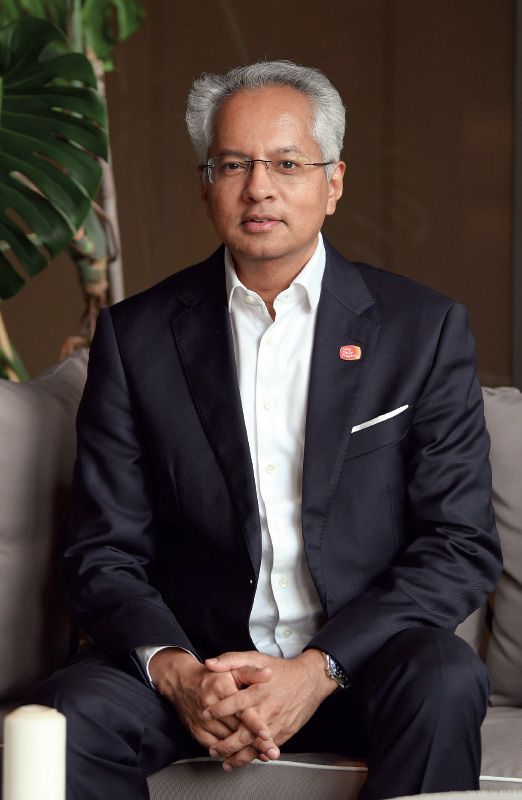
Sitting across from Sime Darby Property Bhd (KL:SIMEPROP) group managing director and CEO Datuk Seri Azmir Merican at The International Gallery in KLGCC Resort, Bukit Kiara, Kuala Lumpur, it is easy to see why he is in good spirits. He is clearly pleased with how the company performed in its financial year ended Dec 31, 2024 (FY2024). He proudly calls it the company’s best results yet, crediting the team’s hard work and strong market demand for the achievement.
For FY2024, Sime Darby Property reported a record-high net profit of RM502.2 million, a 23.1% increase from RM407.91 million in FY2023, driven by the property development segment.
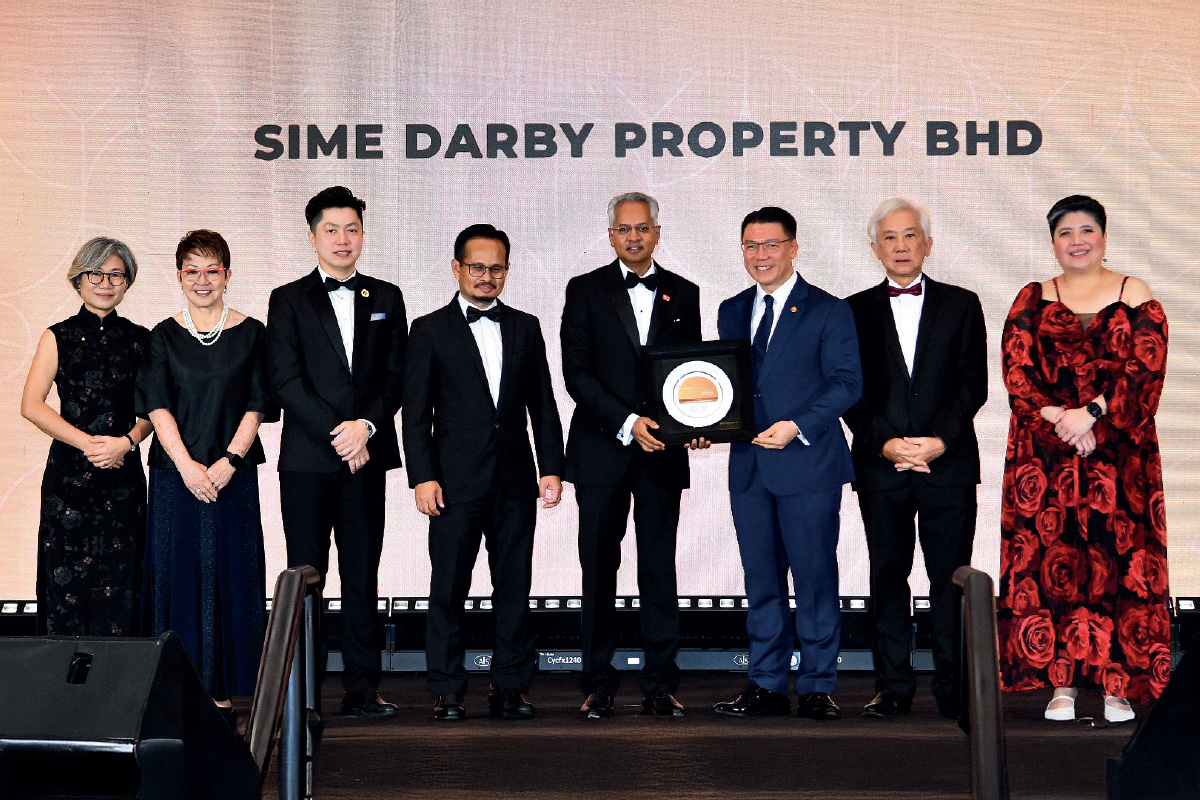
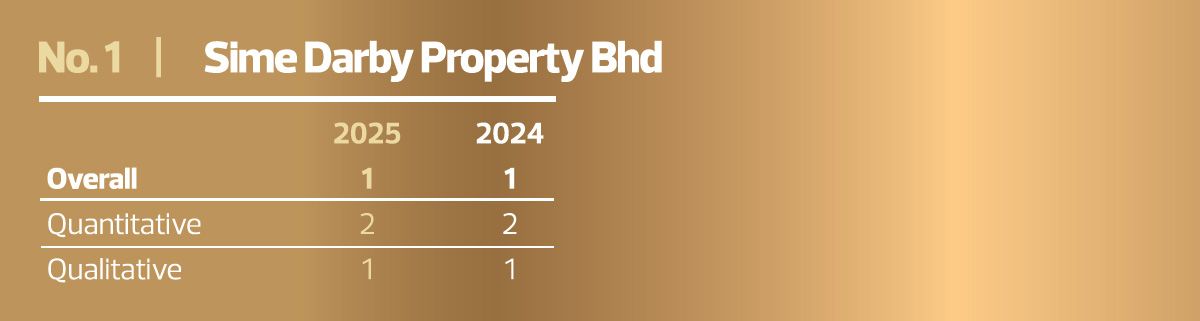
Annual revenue also hit a new high of RM4.3 billion, up 24% from RM3.44 billion the year before, as all business segments reported revenue growth.
The robust financial performance was underpinned by sustained sales momentum and improved site progress within the property development segment, and growing revenue contribution from its investment and asset management (IAM) and leisure segments.
During the same period, its property sales exceeded the RM4 billion mark for the first time, hitting RM4.1 billion to surpass its target of RM3.5 billion. The group also launched products worth RM4.2 billion in gross development value (GDV), exceeding its target of RM3.9 billion. Its unbilled sales stands at RM3.7 billion, ensuring strong earnings visibility for the next three years.
These achievements were driven by the strong performance of its property development and investment divisions, underscoring the success of the group’s ongoing transformation under its SHIFT25 strategic plan.
In an interview with City & Country, Azmir reflects on what made FY2024 a standout year, the execution behind SHIFT25 and the next phase of Sime Darby Property’s growth journey. The discussion also delves into the group’s industrial and township developments, the rise of integrated and high-rise projects and its long-term sustainability focus.
The following is an excerpt from the interview.


City & Country: Let’s start with an overview of Sime Darby Property’s performance in FY2024. What were the key highlights?
Datuk Seri Azmir Merican: FY2024 was a fantastic year for us. In fact, it was our best performance to date. We achieved several milestones, with revenue, operating profit, PBT (profit before tax) and Patami (profit after tax and minority interests) all reaching all-time highs. Revenue stood at RM4.25 billion, operating profit at RM900 million, PBT at RM780 million and Patami at RM500 million — all record-breaking figures.
We are particularly pleased with the performance of our property development division, which remains our largest contributor. It delivered RM4 billion in revenue and about RM820 million in PBT, marking a 24% and 38% increase respectively from FY2023 — the highest in the group’s performance to date.
The IAM division also performed very well, recording a 29% improvement in revenue to RM139 million. We successfully closed our IDF (Industrial Development Fund) at RM1 billion. We also secured our first Google data centre in May 2024, followed by the second one in December 2024. Altogether, this represented RM7.6 billion worth of transactions and long-term recurring income secured. It was a momentous year and, in our view, the best so far in our company’s history.
I would say FY2024 was a truly remarkable year, and we believe our SHIFT25 strategy played a major role in driving these achievements.
You mentioned the SHIFT25 strategy, which is coming to a close this year. How would you assess its success, and what comes next?
SHIFT25 has proved to be a very successful strategy. However, a strategy is only as good as its execution. Many organisations have strong plans, but the real challenge is in translating them into action. What makes us proud is that our team not only understood the strategy but executed it exceptionally well, aligning across the organisation to deliver tangible results.
As SHIFT25 concludes, we have developed a new long-term strategic plan, which we recently discussed during our board strategy retreat. It will be presented to the board soon. While I can’t reveal too much yet, I can share that we intend to retain the elements of SHIFT25 that worked well, enhance areas that can be improved and place greater emphasis on our people, culture and values. At the end of the day, it is our people who drive the company forward.
There has been talk about a potential real estate investment trust (REIT) listing for the company’s assets. Is that something in the pipeline?
We are always exploring options to strengthen our portfolio. Growing both our AUM (assets under management) and FUM (funds under management) is important to us, and establishing a REIT is one potential avenue.
That said, timing is crucial. There are several REITs in the market and we want to ensure that when we launch ours, the assets are strong enough to deliver sustainable returns. We are preparing for it, but we will only proceed when market conditions are right.
We are looking to build and acquire more assets in preparation for this. We have our own development pipeline and we are also open to acquisitions. Earlier this year, for instance, we acquired two warehouse assets, in which we hold a 50% stake. We will continue to evaluate similar opportunities that align with our long-term strategy.

What about new property launches? What are your upcoming plans?
We have had an excellent year for launches and sales, and the momentum continues. For 1H2025, we achieved RM2 billion in sales and RM2.2 billion total GDV in new launches, and we expect to surpass our full-year FY2025 sales target of RM3.6 billion. In total, we plan to launch around RM4 billion worth of new projects this year.
Our current product mix is well balanced, which is about 40% to 50% residential, 40% industrial and the remainder commercial. It is a healthy ratio that allows us to diversify and manage risk effectively. In the past, Sime Darby Property was known mainly for landed homes, but now our portfolio includes more high-rise and integrated developments, roughly a 50:50 or 60:40 split. This is part of our strategy to maximise land use and optimise returns.
Having said that, landed homes remain a core product, but the mix is evolving. By the end of this year (FY2025), we expect landed properties to make up around 25% to 30% of our launches, industrial around 40% and high-rise developments about 25% to 30%. We have placed a stronger emphasis on industrial projects this year, given the strong market demand and favourable conditions.
Industrial developments seem to be a major growth area for Sime Darby Property. What is driving that focus, and where do you see the biggest opportunities?
The industrial segment offers significant potential, and our strength lies in understanding market demand. As a township developer, we have the advantage of well master-planned developments, which allows us to anticipate and respond to what investors and occupiers want.
Our industrial customers are increasingly seeking higher-quality, sustainable products — Grade A managed industrial parks with proper waste systems, green certification such as LEED and good infrastructure. We focus on delivering these premium offerings rather than competing at the lower end of the market.
In terms of locations, Bandar Bukit Raja remains a key hub with 940 acres of industrial land. We also see strong prospects in Malaysia Vision Valley 2.0 in Negeri Sembilan — where our Vision Business Park in Labu spans 760 acres — and Hamilton Industrial Park in Nilai. These areas continue to attract high demand from quality tenants and investors.
We are mainly focused on the central region for now, but we are exploring opportunities in the south for both industrial and residential developments. We are open to working with landowners or pursuing outright acquisitions if the land is of the right size and in a strategic location.

You mentioned plan to develop more high-rise integrated projects. Are you exploring smaller urban sites? How different is it developing a smaller integrated project compared to a large township?
Yes, that is part of our next phase of the business development plan. We are looking at several pocket land opportunities in the Klang Valley for integrated or TODs (transit-oriented developments). For now, we are not venturing into Johor or Penang [for high-rise integrated projects] as our focus remains where our teams and expertise are strongest. Property development is still a local business — understanding local markets, demographics and affordability is critical to success.
Fundamentally, the principles of developing landed and high-rise developments are similar. You are just building vertically instead of horizontally. The complexity, of course, increases significantly in terms of planning, design and coordination. But we have built strong capabilities in this area. Over the past few years, we have consistently launched more than RM1 billion worth of high-rise projects annually, demonstrating that we now have the right skill set to build both landed and vertical developments successfully.
We see high-rise developments as more sustainable, as they make better use of land. What is important is having the right product in the right location, complemented by nature and lifestyle elements that enhance liveability.
What trends do you foresee will shape the property market over the next five years?
The property market is cyclical, so timing and market cycles will always play a role. Cost management will continue to be a key focus, especially with rising input costs such as SST (sales and service tax), EPF (Employees Provident Fund) contribution [for foreign workers] and raw materials.
On a broader level, we are also watching how technology can help us build faster, smarter and more sustainably. That is something we are quite excited about.
We are investing in technology to improve delivery and customer experience. For example, we have developed internal dashboards to monitor project progress and a homeowner’s app that allows buyers to track construction [progress], report defects and communicate with contractors directly. It is still new, but it has great potential to enhance efficiency and transparency.
What is your overall outlook for the property market?
We see the outlook as stable. While costs are rising, demand for quality properties remains strong. Buyers are becoming more discerning and prefer homes that offer good design, liveability and access to nature. Greenery is the new luxury — people want homes surrounded by parks and open spaces, not just concrete.
Save by subscribing to us for your print and/or digital copy.
P/S: The Edge is also available on Apple's App Store and Android's Google Play.