

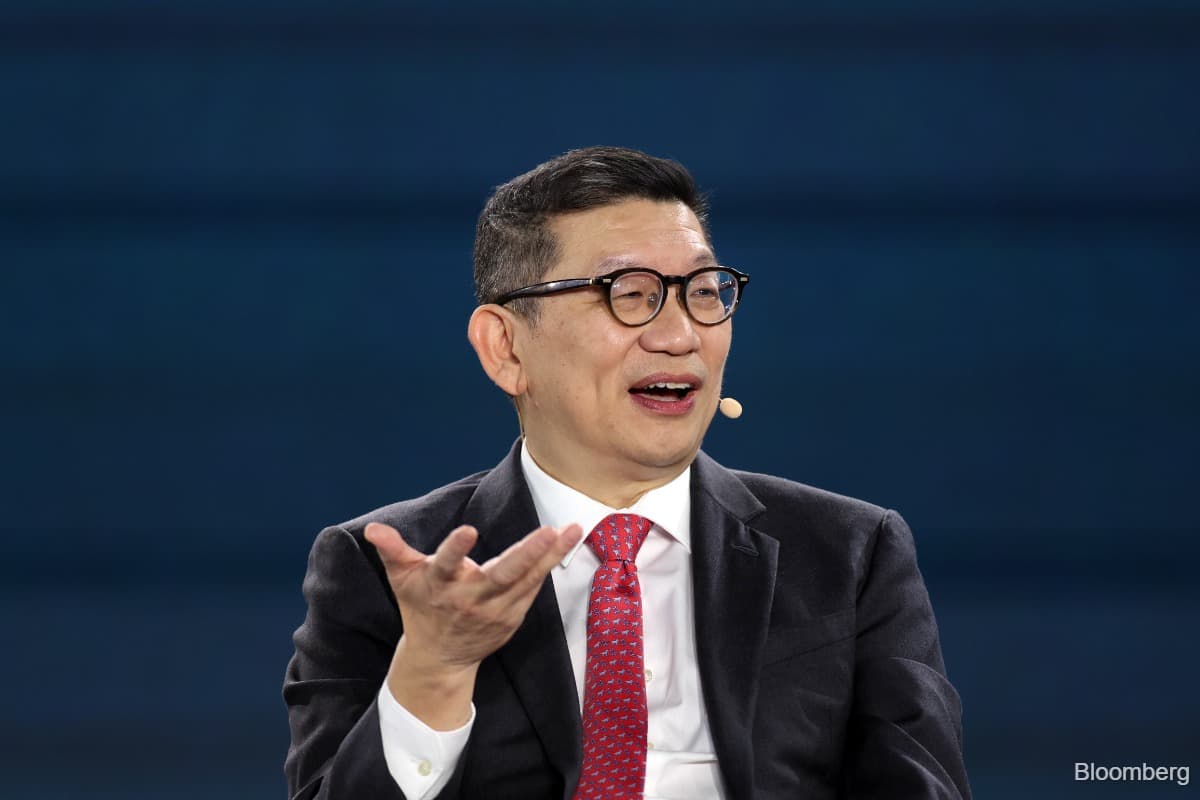
(Nov 19): Doubts surrounding the US dollar’s position as the pre-eminent currency of global finance are overblown, according to GIC Pte Ltd’s Lim Chow Kiat and Franklin Templeton’s Jenny Johnson.
“I don’t think there’s a question about the dollar’s dominance — I think there’s a question about how much it gets chipped away,” Johnson said at the Bloomberg New Economy Forum in Singapore on Wednesday.
Her comments chimed with GIC chief executive officer Lim who doubts the US would lose its reserve currency status anytime soon.
“That seems like a remote possibility unless the foundation of the US system cracks,” he said on an earlier panel at the event. “We don’t really see that.”
A debate is once again raging as the greenback faces hefty challenges on a number of fronts. It’s a back-and-forth that goes back decades, though has seen a renewed discussion recently as the US budget deficit swells and countries seek ways to wear down the dollar’s hegemony. The trend gained momentum in 2022 after then-US president Joe Biden used the currency to help enforce sanctions on Russia.

Johnson, the CEO of one of the world’s biggest asset managers with investments from Hong Kong to New York, added that “a lot of it depends on your seat”, pointing to where investors are located and the types of assets — and currencies — they wish to invest in.
Johnson also quipped, “Where else are you going to go?”
But Davide Serra, the founder and CEO of Algebris Investments, struck a note of caution. He said it makes sense for investors to put more of their money in gold, a traditional safe haven which has also offered huge gains this year.
Investors are now in world where the reserve currency comes from a country with a deficit of around 7%, he said, adding that the only time that happened before was through wars or pandemics. To protect themselves from the risk of currency debasement, investors need to own gold, he said.
Moving away
The world’s reserve currency remains the dominant asset in the US$9.6 trillion (RM39.8 trillion)-a-day foreign-exchange market given the deep liquidity and unparalleled capital markets in the US. The greenback is also backed by the world’s biggest economy, and investors can trade the nation’s assets freely, unencumbered by capital controls.
Meantime, Euroclear CEO Valerie Urbain told the audience in Singapore she’s seen a steady diversification of asset allocation recently among investors, including those based in Asia.
It’s not as if the US currency is “completely losing”, she said, adding that there is however a gradual erosion of dollar holdings. Instead, Europe and its capital markets are back on the agenda for financial institutions in Asia, she said, adding that there are also more and more investment flows within Asian countries.
Dymon’s Danny Yong said that since the “Liberation Day” tariff announcements, global investors, especially outside of the US, want to invest every incremental dollar they save outside of the US.
“It’s not about the end of US exceptionalism, it’s not about turning bearish on the US,” he said. The way to hedge increased policy complexity is diversification, he added.
Uploaded by Tham Yek Lee