

(Nov 14): When I attended the International Forum of Cooperation in Moscow on October 26 — marking a century of Russian public diplomacy — I witnessed more than a commemoration. It was a manifesto for a world in transition. President Vladimir Putin and Foreign Minister Sergey Lavrov outlined a blueprint for a polycentric world, one that rejects the monopoly of any single civilization to define order.
For Malaysia, guided by the Madani vision of inclusive development and ethical governance, this shift toward multipolarity is not a spectacle to observe from afar — it is a moment to help design. In this new grammar of global power, justice, balance and partnership must replace hierarchy and coercion.
From rhetoric to architecture
At the Moscow forum, President Putin declared that the post-Cold War order had failed to deliver “a genuinely equitable system,” arguing instead for a more democratic and dynamic multipolarity where “no one plays by rules imposed by others.” This rhetoric, long central to Russian foreign policy, is now being codified through concrete mechanisms.
Foreign Minister Lavrov’s remarks on developing a “new Eurasian security architecture” and the endorsement of a proposed Eurasian Charter of Diversity and Multipolarity in the 21st Century mark an effort to institutionalise this new world order. As Reuters and Al Jazeera have reported, Moscow’s diplomacy increasingly seeks to link Asia, Africa, and Latin America through economic corridors, currency de-dollarisation, and regional security forums that bypass Western frameworks. Russia’s outreach to Asean, the OIC, and BRICS partners — including Malaysia — is part of this effort to “rebalance” the global system.
For Malaysia, this context underscores both opportunity and responsibility. A fractured world needs convenors of trust; a turbulent one needs moral anchors. Our diplomatic capital — honed through decades of principled non-alignment, South–South cooperation and Asean consensus—positions us uniquely to bridge these tectonic shifts.
Malaysia as bridge, not buffer
Malaysia’s foreign policy has long prized equilibrium over alignment. During our chairmanship of the 47th Asean Summit and related meetings, Kuala Lumpur reaffirmed Asean’s commitment to a free, open, inclusive and rules-based Indo-Pacific. The Asean Outlook on the Indo-Pacific (AOIP) explicitly rejects bloc politics, offering a cooperative platform grounded in dialogue and development.
Russia, in turn, has welcomed Asean’s centrality. Lavrov’s dialogue with Southeast Asian ministers in Vientiane earlier this year affirmed Moscow’s support for Asean mechanisms and its readiness to expand cooperation in energy, education, and digital governance. This alignment of intent creates fertile ground for Malaysia to act as a neutral interface — neither confrontational nor compliant, but constructive.
But diplomacy cannot stop at the conference table. To sustain relations beyond official statements, we must cultivate civilizational connectivity — human and intellectual linkages that anchor foreign relations in people-to-people trust.
Expanding academic partnerships, cultural exchanges, and technology collaborations — especially in Islamic finance, renewable energy and artificial intelligence — would embody the Madani ideal that progress must serve both ethical and human ends. When young Malaysians and Russians study, innovate, and problem-solve together, they humanise the architecture of multipolarity itself.
Synergising Madani and multipolarity
To seize this geopolitical inflection point, Malaysia should pursue a three-tier strategy that aligns the Madani framework with the principles of multipolarity:
1. Embed Madani values into multipolar discourse
Malaysia should welcome the concept of a polycentric order, but insist that it be governed by justice, accountability and shared prosperity — values embedded in the Madani framework and consistent with international law. By rooting multipolarity in ethics rather than expediency, Malaysia can help re-moralise the language of global power, transforming it from mere balance to genuine equity.
2. Shape the Eurasian Charter of Diversity.
Malaysia, through Asean, should offer its input in the drafting of the Eurasian Charter, ensuring that its principles reflect Asean’s norms: non-interference, peaceful coexistence and respect for sovereignty. This would prevent the Charter from becoming another geopolitical manifesto, instead turning it into a genuine instrument of inclusive regionalism. Participation in such initiatives would reinforce Malaysia’s reputation as a bridge between the Islamic world, Asia and the Global South.
3. Launch a 'Madani-Tech Diplomacy' initiative with Russia.
Technology is now the front line of international influence. A flagship initiative linking Malaysia and Russia in ethical technology governance — covering artificial intelligence, cyber security and human-centred education — would create a distinctive diplomatic niche. It could draw upon existing cooperation through the Malaysia–Russia Joint Commission on Economic, Scientific and Technical Cooperation (JCM), established in 2019 and expand into new areas such as sustainable development and space technology.
Strategic autonomy, not strategic drift
Engagement with Russia must complement — not compromise — Malaysia’s strategic balance. Our strength in the multipolar era derives precisely from strategic autonomy: the ability to engage all major centres of power — China, the United States, the EU and now Russia — without becoming beholden to any.
As Foreign Minister Datuk Seri Mohamad Hasan reiterated at the UN General Assembly 2025, Malaysia’s diplomacy must “uphold peace through inclusivity and fairness, not through coercion or isolation.” This is not neutrality born of passivity; it is active, value-based independence. It is also the only way Malaysia can continue to act as an honest broker in conflicts that divide the Global South — from Gaza to Myanmar, from Ukraine to Sudan.
In a world where power is decentralising but ethics are not yet codified, Malaysia can offer the moral language needed to guide cooperation. The Madani vision—rooted in the Islamic principles of justice (‘adl), balance (wasatiyyah) and trust (amanah) — can serve as both compass and counterweight in multipolarity’s uncharted terrain.
A moral compass for a multipolar era
Russia is actively forging a new international system; the question is not if it will emerge, but what moral character it will bear. By engaging with foresight and integrity, Malaysia can ensure that this new order is not merely a redistribution of power, but a restoration of fairness.
As a bridge nation between East and West, and as a moral voice within Asean and the OIC, Malaysia can help ensure that the next chapter of global governance is defined not by rivalry, but by reciprocity. Madani diplomacy, if pursued with conviction, offers precisely this — an alternative grounded in ethics, partnership and sustainability.
In an age of shifting poles and uncertain allegiances, Malaysia’s greatest strength remains its ability to listen, mediate and inspire. The multipolar world will need not only new institutions, but new imaginations. Let that imagination begin in Kuala Lumpur.
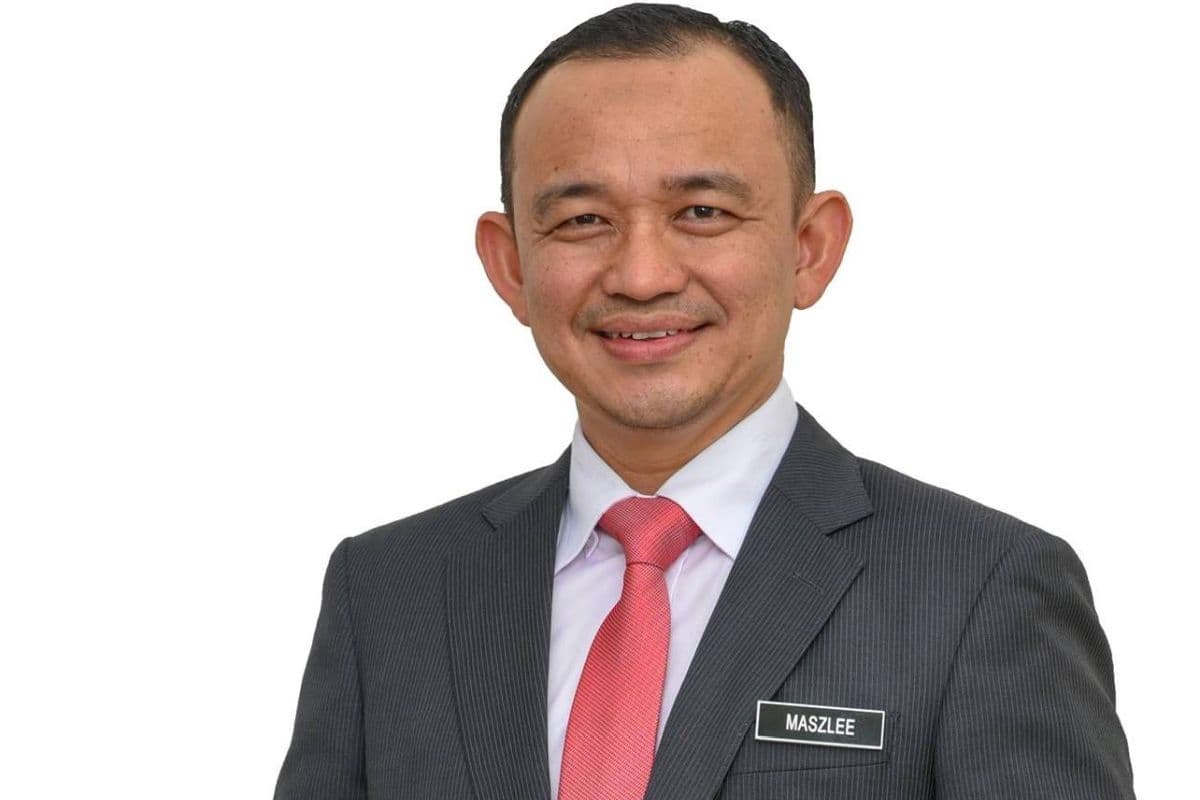
Dr Maszlee Malik is chairman of the International Institute of Advanced Islamic Studies Malaysia (IAIS Malaysia).