

This article first appeared in The Edge Malaysia Weekly on November 17, 2025 - November 23, 2025
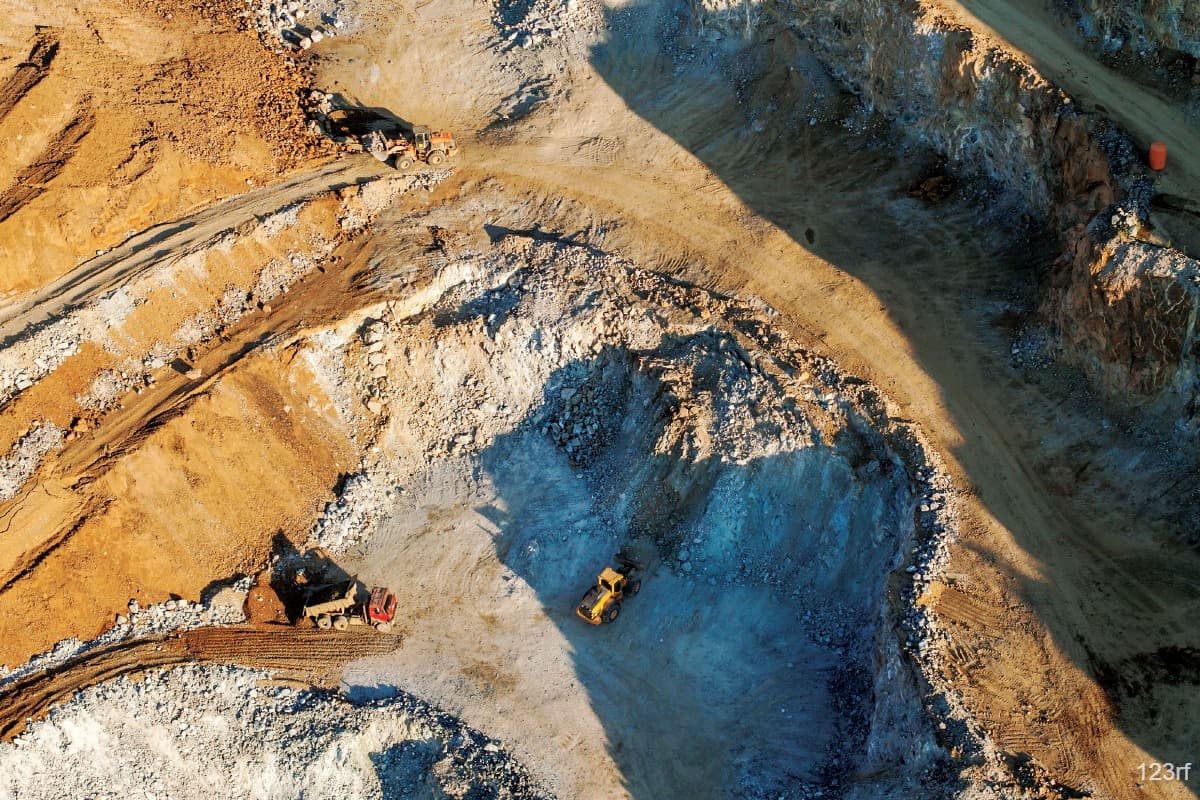
Malaysia’s vast rare earth element (REE) deposits in forests present a huge economic opportunity for the country, but the environmental impact of mining cannot be ignored.
Peninsular Malaysia holds about 16.2 million tonnes of REE worth around RM747 billion, according to the government.
These rare-earth riches have put state and federal governments, industry players and non-governmental organisations (NGOs) at loggerheads over how to balance the development of this economic opportunity with environmental protection.
REEs — a group of 17 metallic elements that are crucial components in electronics, electric vehicles, renewable energy technologies and semiconductors — saw global demand double between 2015 and 2023, according to the International Energy Agency. The agency forecasts that demand for critical minerals will need to triple by 2030 and quadruple by 2040 to achieve net zero emissions.
But decisions involving REE mining in or near forested areas carry significant ecological and social implications such as deforestation, groundwater pollution and various health issues, say environmental advocates.
The top five states with high potential for the discovery of enormous REE deposits are Terengganu, Kelantan, Perak, Kedah and Pahang. Up to 80% of such deposits found in these states are within permanent forest reserves (PFR), where mining is prohibited.

Terengganu has the largest REE deposits in the peninsula, with 7.19 million tonnes or 44.4% of the national total — 70% of which is located in forest reserves, according to Mohd Hanif Yaacob, head of secretariat for State Government 4, an initiative to develop the economies of Kedah, Perlis, Kelantan and Terengganu. Meanwhile, Kelantan reported that most of its 2.56 million tonnes of REE — 15.8% of the national total — were in forest reserves.
Perak Mentri Besar Datuk Seri Saarani Mohamad has also said the total estimated reserves of non-radioactive rare earth elements (NR-REE) in the state are around 1.7 million tonnes, with up to 80% located within forest reserves.
The federal government is proceeding with caution. Acting Minister of Natural Resources and Environmental Sustainability (NRES) Datuk Seri Johari Abdul Ghani said in August that no rare earth mining would be allowed in PFRs until ongoing federal studies on environmental and safety impact are completed.
The study is planned in phases over a five-year period, covering pre-mining (2024-2025), mining (2026-2027) and post-mining (2028-2029).
Malaysia has also banned the export of raw rare earths to prevent the loss of resources as it develops its downstream sector since 2024. Minister of Investment, Trade and Industry Datuk Seri Tengku Zafrul Abdul Aziz said the country will maintain this ban to protect domestic resources, despite signing a critical minerals agreement with the US during President Donald Trump’s visit to Kuala Lumpur for the Asean summit.
Malaysia has committed to refrain from banning or imposing quotas on exports of critical minerals or REE to the US, according to a joint statement by the US and Malaysia. The country also pledged to ensure no restrictions are imposed on the sale of rare earth magnets to US companies.

Currently, mining is not permitted within PFRs, which are designated for conservation and sustainable forestry under the National Forestry Act 1984. However, the Act also allows for an excision, meaning a section of forest reserve can be degazetted where its protected status is temporarily removed if it contains mineral deposits deemed to be of significant national value.
In such cases, the same land size must be replaced elsewhere to maintain Malaysia’s 50% forest cover commitment, explains Teoh Lay Hock, a professional geologist and expert in mineral resource development. He is also a technical adviser at the Malaysian Chamber of Mines (MCOM).
“Current policy requires that if any PFR land is degazetted for mining, an equivalent area of new forest reserve must be created in compensation,” he says.
However, this is not the view held by everyone.
There should not be any degazettement of forest reserve land in the pursuit of REE, and forest products should not be redefined to include REE, says Meenakshi Raman, president of non-governmental organisation Sahabat Alam Malaysia (SAM). She adds that environmentally sensitive areas (ESAs) and ecosystems cannot simply be replaced, stressing that efforts should focus on expanding protected zones, not reducing them.
Meenakshi calls for a federally mandated and legally enforceable protection mechanism for no-go zones that explicitly prohibit all mining of REEs must be enforced now within PFRs, ESAs, water catchments and watersheds, alongside core biodiversity zones and customary indigenous territories.
“The prohibition on mining in ESAs and PFRs is consistent with the National Forestry Act, the National Physical Plan, as well as with commitments Malaysia has under the Convention of Biological Diversity, which states must help implement. The issue of constitutionality does not arise here, and states must respect these laws and policies which have been in place following consultation with states by the federal government.”
M S Anuar Mahmod, secretary-general of the Rural Consumers and Ecology of Malaysia, a rural consumer group, believes that Malaysia’s environmental laws must be strengthened, with explicit amendments to ban REE mining in protected zones and remove loopholes that allow exceptions.
This means amendments to the Environmental Quality Act 1974, National Forestry Act and Town and Country Planning Act 1976 to formally codify a nationwide prohibition on REE mining and prospecting in these areas.
Other measures include establishing a national “no-go zone” registry, coordinated at the federal level with an integrated, publicly accessible digital map, and institutionalising the right of communities and civil society to file legal objections or seek judicial review through environmental tribunals or public interest litigation.

Anuar says all this will require mandatory federal oversight and intervention powers to suspend or invalidate mining-related approvals that conflict with national environmental priorities, alongside transparent and inclusive public consultation, with full disclosure of proposed activities and land-use changes.
Additionally, there must be criminal penalties and personal liability for government officials or companies found violating protected area provisions, even when it is sanctioned by the state, he says.
“Waiting until large-scale REE extraction begins would be a grave mistake. By then, the damage to forests, watersheds and indigenous livelihoods would be irreversible. Drawing red lines now is not premature, it is precautionary governance. Once exploration licences are issued and physical access is created, stopping harmful projects becomes significantly harder, both legally and politically,” warns Anuar.
Additionally, negative incidences in the past have left some doubtful of these projects, indicating the need for more transparency and accountability. For instance, there have been reports involving illegal mining of NR-REE in Bintang Hijau Forest Reserve in Hulu Perak, which was raided by the authorities. In 2022, SAM protested a rare earth mining project that had been approved by the Department of Environment in Mukim Kenering, Hulu Perak.
In Pahang, Orang Asli families from Pos Lanai have been fighting against a REE mining project since 2019, due to concerns that it will pollute their main source of water.
Back in 1994, mining of REE in Bukit Merah, Perak, was shut down due to illegal disposal of radioactive waste containing thorium, which has a half-life of about 14 billion years, and uranium.

Understanding the pressure state governments face to generate revenue, Meenakshi says the federal government needs to help diversify their revenue streams.
“Dependence on land and forests as the main source of revenue means state governments would be less inclined to gazette land and forests for conservation purposes as totally protected areas.”
She says ecological fiscal transfer (EFT) is one of the finance mechanisms that can encourage the gazetting of protected areas by state governments.
Under Budget 2026, RM250 million has been allocated under the EFT to support states in conserving the environment, including RM50 million that will be channelled as revenue to state governments. The total amount remains the same as last year.
SAM had hoped for increased allocation this year and is disappointed that the allocation remained the same as last year, said Meenakshi in a statement after the budget was tabled. She also said the RM50 million provided to the states is too small.
Meanwhile, the government should progressively increase the EFT allocation each year to reach at least 1% of the annual national budget by 2030, said WWF-Malaysia in an opinion article published in The Edge Malaysia.
Mining can be done sustainably, insist industry players
Industry players argue that mining within forest reserves can be done safely and sustainably, and that prolonged indecision will stall progress and lead to significant economic losses.
For instance, Perak’s NR-REE mining pilot project in Kenering utilises the in-situ leaching (ISL) method, which minimises surface disturbance and eliminates the need for environmentally destructive open-pit excavation methods.
The Perak menteri besar has said all mining activities involving NR-REE will not harm the environment because they will utilise modern mining technologies to improve efficiency and safety while safeguarding the environment.
ISL is used to extract REE from ion-adsorption clay deposits, typically found along granite formations, such as those in Malaysia. In this process, solutions containing ammonium sulphate or dilute sulphuric acid, a common fertiliser, are injected about six metres below the surface to dissolve the REE.
The dissolved solution is then collected and processed. This type of deposit contains “heavier” REE, is less concentrated and has a lower concentration of thorium compared to mineral-based REE mining.
Research conducted by Universiti Kebangsaan Malaysia and Universiti Sains Malaysia at Kenering showed that there were no radiation risks under the Atomic Energy Licensing Act 1984, which governs activity involving radioactive materials. Also, groundwater quality was within national standards and there was no evidence of chemical leakage.
The study at Kenering also indicated that the leaching process had a clear and progressive impact on the geotechnical properties of the soil. However, the soil maintained adequate strength and moderate plasticity, which indicates its continued suitability for supporting standard structures and earthwork.
In this regard, researchers at Universiti Malaysia Kelantan (UMK) are also developing monitoring tests to track whether injected chemicals leach beyond their intended zone, says Abdul Hafidz Yusoff, an associate professor at UMK who specialises in mineralogy, radiochemistry and environmental studies.
This is to address concerns on groundwater contamination where chemicals injected into the soil could potentially seep into underground water sources, posing ecological and public health risks, he says.
The pilot project in Kenering also demonstrated that only 4% of the designated project area required clearing for the construction of the hydrometallurgical plant, according to the state.
The mining footprint is minimal compared to other forms of land development, says MCOM’s Teoh. According to him, a typical ISL mine producing 7,000 tonnes of rare earth carbonates (REC) a year occupies 2,000ha of land.

ISL leaves minimal physical disturbance on landscapes with only small patches of land cleared for settling tanks and related infrastructure, says Teoh.
This means that Malaysia’s target of producing 70,000 tonnes of REC annually by 2030 — according to the New Industrial Master Plan (NIMP) 2030 — would require about 10 such mines nationwide, he claims.
“If all the mines are located within the 13,240,000ha of the permanent forest reserves that are in Malaysia, only 0.00015% of the PFR would be affected. This is not taking into consideration that at any one time, only a portion would be affected and all the land can be rehabilitated for other forms of economic land use after mining,” he adds.
“Even after mining at this rate of 70,000 tonnes of REC per year for 20 years, only 0.003% of the PFRs would be affected.”
No sweeping bans, on case-by-case basis
Not all forested areas are of equal ecological sensitivity, which means responsible, well-regulated mining using ISL and strict standard operating procedures (SOPs) could coexist with conservation if proper safeguards, monitoring and rehabilitation are enforced, says MCOM’s Teoh.
He explains that ESAs and forest reserves have different levels of vulnerability, with each requiring a tailored, site-specific assessment. He agrees that some zones should be permanently protected, but controlled and low-impact extraction under tight regulatory oversight could be permitted in areas with lower ecological sensitivity and minimal biodiversity value.
Therefore, each site should be evaluated on a case-by-case basis, and sweeping bans on mining within PFRs should be avoided, he adds.
There are also already sufficient legal safeguards to ensure that if an area is unsuitable for mining, it would not pass the approval process, says Teoh. This would include obtaining approval of environmental impact assessments (EIA) and operational mining scheme (OMS).
“Even after the OMS has been issued, there will be regular audits to ensure compliance of the requirements. What we are trying to say here is that there should not be a blanket [ban] and also we have to study [the feasibility of the areas]. Certain areas, you can keep it aside. But you cannot have a blanket ban where no mining [can happen] without even listening to us,” says Teoh.
That being said, mining activities should never compromise vital areas such as water catchment forests. Any decision to mine within forest or sensitive zones must be underpinned by rigorous mitigation safeguards, adds Teoh.
Teoh says a study by MCOM and the Tin Industry Research and Development Board, which evaluated the feasibility of mining in ecologically sensitive zones, proposes mitigation measures to balance Malaysia’s economic development goals with environmental and social stewardship.
The study, which has been completed and will be presented to NRES, emphasises that mitigation must begin at the planning stage. Projects should avoid the most sensitive ecosystems wherever possible and operators must minimise disturbance where mining is deemed necessary, says Teoh.
This can be done by siting infrastructures on already degraded land and timing operations to avoid critical wildlife breeding seasons.
The study also recommends an enhanced EIA framework that goes beyond standard requirements.
“This would expand the scope of impact assessments to include critical analyses often missing in conventional EIAs — such as a biodiversity offset plan and a detailed climate impact analysis — and generally subject the project to deeper, transparent scrutiny before approval,” says Teoh.
On top of that, disturbed areas must be progressively rehabilitated, restoring vegetation and ecological function, with any residual impacts offset through conservation projects elsewhere.
“Rehabilitation of the mine site is a cornerstone mitigation measure. The plan is to restore the mined area to a functional ecosystem after or even during operations. This involves steps like re-contouring the landform, replacing topsoil and replanting native plant species to jump-start ecological recovery,” says Teoh.
Continuous monitoring is also critical. This is with a monitoring, reporting and verification system to track water quality, soil condition and biodiversity in real time. If data reveal emerging issues, such as ineffective water-treatment systems, operators must adjust immediately, including pausing operations if needed, to prevent harm, says Teoh.
Datuk Sia Hok Kiang, executive chairman of Malaco Mining Sdn Bhd, adds that environmental factors that must be rigorously assessed before any activity proceeds include disturbance to local commodities and economic uses of land; slope stability; soil quality; groundwater quality as well as flora and fauna.
Malaco is currently working with the Perak government to pilot a sustainable mining technology designed to minimise disturbance to forest ecosystems by avoiding tree removal, limiting surface clearing and using more environmentally friendly leaching agents other than ammonium sulphate.
If proven sustainable, the approach will be submitted as an addendum to the national REE mining SOP for possible use in forest reserves.
With this, Malaysia must first establish clear and strict SOP for mining within the forest reserves, says UMK’s Hafidz. The current SOP was designed for operations outside forest areas and does not provide detailed operational procedures, thresholds or monitoring standards specific to REE activities within forest areas.
For instance, the SOP allows for the creation of large, permanent ponds, a practice that would be environmentally unacceptable in forest ecosystems.
A dedicated SOP for forest reserves can address concerns such as groundwater contamination, which is the primary environmental concern for REE mining using ISL. The document can outline management, monitoring and mitigation protocol, which includes clear actions to take if contamination is detected.
With such a framework in place, Malaysia could potentially allow controlled REE mining within forest zones without needing to degazette protected land, which will maintain forest status while still enabling regulated economic activity, says Hafidz.
Midstream processing must also be done right
Malaysia plans to develop its ion-adsorption clay rare earth (IAC-REE) industry through a fully integrated “mine-to-magnet” value chain by 2030 under NIMP 2030.
But there are concerns about improper waste management in midstream processing. Activities such as chemical leaching, acid baths and waste handling can be even more hazardous than mining and extraction themselves, says experts.

This means local processing facilities must adhere to strict waste management and treatment standards, ensure proper disposal and monitor radioactive by-products, says Ahmad Afandi, independent environment and climate consultant and researcher at Greenglaive Consulting. The facilities must also be situated away from populated areas and ESAs.
In this regard, Malaco, which has established a proof-of-concept separation plant in Perak, is using an earth separation technology through a different chemical route, says Sia. This means there will be no solid residue, unlike the cracking and separation of a mineral type of rare earth.
The only waste from the Malaco separation plant is a fertiliser solution, which is a valuable by-product, he says.
The plant is set to become commercial with an annual capacity of 3,000 tonnes and plans to scale this up to 30,000 tonnes per year, targeting 30% of the global heavy rare earth market.
On this note, a key step in handling the waste from mid-stream processing is creating an enabling policy environment for a circular economy approach, notes Qarrem Kassim, analyst at the Institute of Strategic & International Studies Malaysia.
“Many by-products from rare earth and mineral processing can be converted for reuse in agriculture and construction materials, reducing waste and improving resource efficiency,” he says.
Malaysia should also shift towards ensuring traceability of REE materials from the mine site to the final product, verifying that extraction and processing meet legal, ethical and environmental standards, adds Ahmad Afandi.
“Malaysia has to internalise its own environmental and social risks with processing and refining, which I think should be the way for countries that want to develop their own REE industry, especially when we always call out Global North when they ‘export’ their waste and shift their unsustainable products elsewhere to developing countries. It should be seen as a commitment to sustainability,” he says.
Save by subscribing to us for your print and/or digital copy.
P/S: The Edge is also available on Apple's App Store and Android's Google Play.