

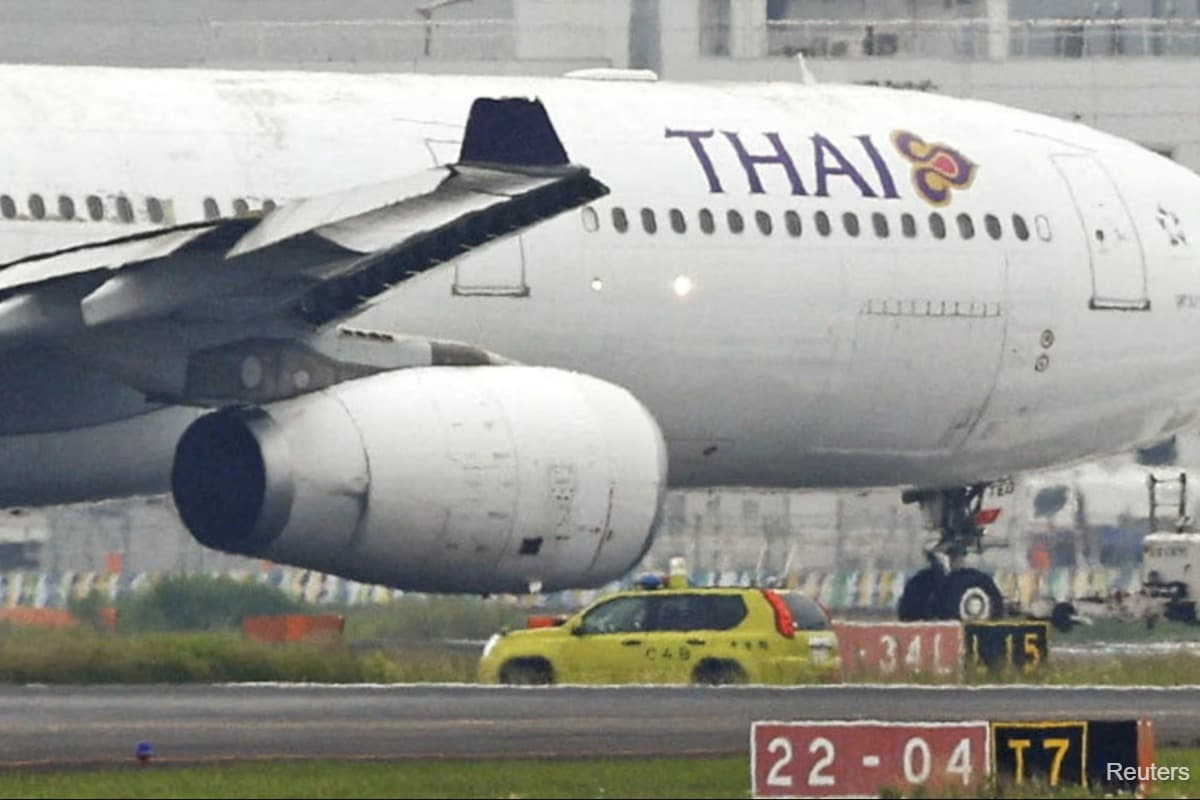
KUALA LUMPUR (Nov 13): Thailand’s national carrier Thai Airways International PCL has made a remarkable recovery four years after filing for bankruptcy, a success that chief executive officer Chai Eamsiri attributes to the airline’s newfound independence from government control.
In a recent interview with CNN, Chai said the past four years had been free from government interference. “That’s why we can bring it back today,” he said.
Thai Airways filed for business rehabilitation under the supervision of the Central Bankruptcy Court in May 2020, following heavy losses and liquidity issues worsened by the Covid-19 pandemic. At that time, the airline reportedly carried debts of around 400 billion baht (RM51.1 billion).
As part of its rehabilitation plan, the Thai Ministry of Finance reduced its shareholding to below 50%, allowing Thai Airways to shed its status as a state enterprise. The shares were subsequently purchased by a fund managed by the state-owned Krung Thai Bank.
The restructuring has paid off. The airline is now leaner and profitable, reporting a net profit of 12.13 billion baht for the second quarter of 2025. On Aug 4, 2025, Thai Airways was officially re-listed on the stock exchange.
“This is my chance. This is our chance to do it. We have gone through those difficult times,” Chai told CNN.
Unlike many Middle Eastern carriers, Thai Airways has maintained stronger cost control while leveraging a substantial domestic market. With Thailand’s 77 million population as its core customer base, Chai said the airline aims to supplement this with connecting passengers through its hub operations.
“Connecting passengers or the hub will be the additional revenue that we can produce. That means we can fill up aircraft with both target passengers — direct point-to-point and connecting,” he explained.
Chai described Thai Airways as striving to combine the advantages of both business models: “We will be the low-cost carrier, but we will be the full-service airline.”
As of June 30, 2025, Thai Airways operated 78 aircraft. Fourteen new narrow-body aircraft are expected to join the fleet by mid-2027, with Chai emphasising the importance of swift execution: “The key is to get it done as fast as possible.”
Chai, who previously served as the airline’s chief financial officer, was appointed CEO in February 2023.