

This article first appeared in The Edge Malaysia Weekly on November 10, 2025 - November 16, 2025
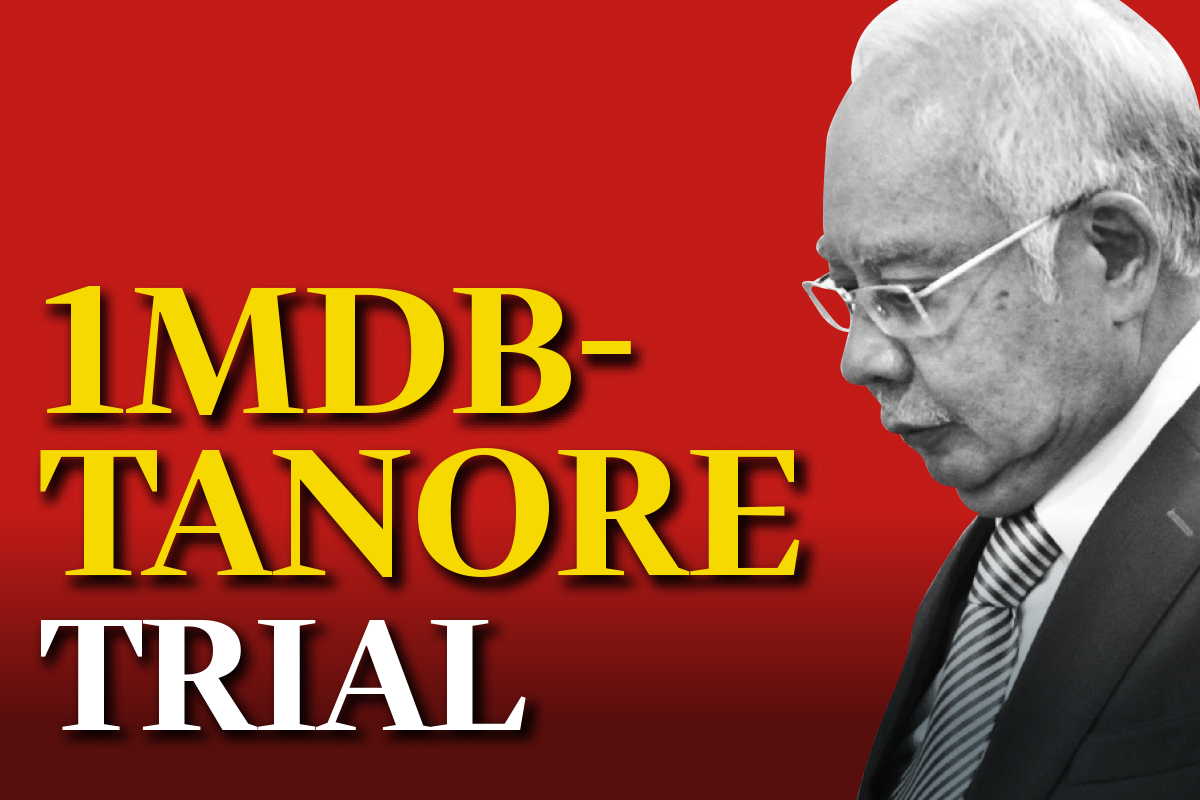
FORMER prime minister Datuk Seri Najib Razak’s last ongoing criminal trial involving the misappropriation of billions of ringgit at 1Malaysia Development Bhd (1MDB) concluded last Tuesday, following the submissions of the prosecution and defence.
The 303-day proceedings had dragged on for seven long years, but the verdict is now in sight with the High Court setting Dec 26 as the date to hand down its decision, on whether it will convict or acquit Najib of four charges of abuse of power and 21 counts of money laundering amounting to about RM 2.2 billion, which had been misappropriated from the state strategic development company.
After presiding judge Datuk Collin Lawrence Sequerah on Oct 30, 2024, called on Najib to enter his defence, his lawyers began the case in early December last year, calling a total of 26 witnesses.
The main defence was that the money transferred to Najib’s personal bank accounts was donations from Saudi royalty, that 1MDB was not the former prime minister’s brainchild and that the company managements had worked hand in glove with fugitive Low Taek Jho (Jho Low) to siphon money from 1MDB for personal gain, unbeknown to Najib.
Despite ruling that the prosecution had established a prima facie case last October, the court is not bound by its findings.
The 10-day oral submissions, during which the prosecution and defence teams summarised and outlined their most cogent arguments, which also saw Najib deliver an impassioned address directly to the court, began late last month.
Already serving a prison sentence after he was found guilty in the case involving SRC International, a wholly-owned subsidiary of 1MDB, Najib insisted that he was not seeking immunity but equality, maintaining that the former 1MDB officials were the ones directly involved in the questionable decisions and multimillion-dollar transfers but who did not face any criminal sanctions. Among those he named were former general counsel Jasmine Loo Ai Swan, former CEOs Datuk Shahrol Azral Ibrahim Halmi and Mohd Hazem Abdul Rahman, former chief financial officer Azmi Tahir and Najib’s former officer Datuk Amhari Efendi Nazaruddin.
The prosecution derided Najib’s address as an exercise of “political theatre” and a “calculated distortion of facts and law”.
“The accused [Najib] paints himself as a victim of rogue subordinates, when in truth he was the single most powerful decision-maker in Malaysia as well as in 1MDB during the material time … The accused was not the victim. He was the orchestrator,” lead deputy public prosecutor (DPP) Datuk Ahmad Akram Gharib told the court.
Najib’s unusual address aside, his lawyers adopted much of the same arguments that were made during his SRC International case.

Donation defence
For instance, Najib claimed that the money in his accounts was donations promised to him personally by the late Saudi Arabia’s King Abdullah, the result of a private meeting with the monarch in that country in 2010, during which he was specifically told he would be given financial assistance in the upcoming 2013 general election to ensure his return to power as the king was impressed by Najib’s brand of modern and moderate Islamic leadership.
To back the claim, the defence said the meeting was also attended by a couple of Malaysian ministers and officials, two of whom had corroborated Najib’s testimony. It also raised the four donation letters, dated between 2011 and 2014, allegedly from Saud Abdulaziz Majid Al Saud, former governor of Madinah province, that supported the claim that the funds were donations.
In his defence, Najib said King Abdullah was widely known for his philanthropy and had made similar donations to other world leaders, such as the former King of Spain Juan Carlos. However, when judge Sequerah queried these other instances of donations and mode of disbursement, the defence could not provide documentary evidence.
The defence also argued that Najib had used money from the US$680 million received for corporate social responsibility (CSR) and the unused RM620 million was returned to the sender. The team claimed that Najib was open about these donations, even asking why he would open the local bank accounts if his intention was suspect.
The prosecution responded that the funds were returned as just another part of the standard layering and integration in money laundering, noting the tainted money cannot be “cleansed” by “good intent”. DPP Datuk Kamal Baharin Omar argued that Najib cannot hide behind his “ignorance”.
“The doctrine of wilful blindness applies here. [Najib] repeatedly claims he believed the funds were ‘Saudi donations’. Yet, he made no effort to verify the authenticity of the letters, the intermediaries or the unusual routes of transfer. Instead, he chose to rely on Jho Low — a private businessman — and AmBank officers. This is not innocence. This is conscious avoidance,” he said.
Kamal added that the significant sums that flowed into Najib’s accounts demanded scrutiny. As a person in position of power, the former prime minister had the duty to verify the information but chose not to, he argued.
“The scale, offshore layering and lack of credible donation evidence prove conscious avoidance, which in law amounts to knowledge. By deliberately shutting his eyes, the accused satisfied the test of ‘reason to believe’ under [the Anti-Money Laundering Act]. The law is clear: wilful blindness is equivalent to knowledge. The evidence shows that [Najib] was not an unwitting victim, but a deliberate beneficiary who avoided asking questions because the answers would implicate him,” he asserted.
Discrepancies in donation letters
Unlike in the SRC International case, the defence argued that the four donation letters in this case contained AmBank’s compliance rubber stamp. They argued that despite the rejection of these letters in the SRC International case, Sequerah could make his own independent findings on this even though in his decision calling Najib to enter his defence, the judge had ruled that the origins of these letters were dubious. The prosecution, however, asserted that the issue of the letters had already been litigated and could not be relitigated.
DPP Deepa Nair Thevaharan cited several bankers’ testimonies to counter the defence’s submissions that AmBank was aware of all four letters and had seen them prior to the funds coming into Najib’s accounts. She argued that much of the witnesses’ evidence was limited to “transactional, operational and procedural matters”, not to the receipt or authenticity of any donation letters.
“The real question, My Lord, is not when the letter was received. But more importantly are these so-called ‘donation letters’, which the defence clings to as their sole lifeline, genuine or authentic? To borrow a line from A Few Good Men: ‘You want the truth? You can’t handle the truth.’ Because to date, the defence has offered no proof, no original letters, no authenticity. Just stories,” she intoned, borrowing from the Hollywood blockbuster.
Multiple layers of hearsay evidence?
Senior lawyer Tan Sri Muhammad Shafee Abdullah argued that the prosecution’s case depended on multiple layers of hearsay which was not admissible by law, and that there were no direct instructions from Najib when it came to the pivotal wrongdoings in the different stages of the 1MDB scandal.
Among the examples he cited, he pointed out that Najib never instructed that US$700 million — out of the US$1 billion paid in 2009 by 1MDB for a joint venture with PetroSaudi International (PSI) — be transferred to Good Star Ltd’s account, later revealed to be linked to Jho Low.
However, the prosecution countered that the evidence was indeed admissible by law as exceptions were made for missing persons, Jho Low and the dead — Najib’s former principal private secretary Datuk Azlin Alias. The two were major go-betweens between Najib and 1MDB management.
DPP Akram pointed out that witnesses such as Shahrol had testified that they did confirm with Najib if these instructions were indeed from him, and that he had “consistently affirmed” what Jho Low or Datuk Azlin had conveyed to the management.
“Witnesses testified that no major decision was possible without the accused’s express approval. Even dissenting directors felt compelled to comply after the accused’s intervention. The clear example is the ‘phone call’ to Tan Sri Mohd Bakke Salleh that caused the board to hastily approve the PetroSaudi joint venture despite serious reservations,” he said.
The DPP was referring to the oft-repeated instance of a phone call being made to the former 1MDB chairman of the board before a particular board meeting wherein Najib asked Bakke to expedite the PSI JV. The board gave its conditional approval but this was subsequently not adhered to by the management, prompting Bakke’s eventual resignation. “Each witness therefore operated within a structure created and dominated by the accused. Their actions cannot be divorced from his authority,” Akram argued.
The defence also asserted that the 1MDB personnel who had testified in the trial were unreliable witnesses, who were part of a “hierarchy of criminals” who have enjoyed the riches of their loot and would agree to provide testimonies to fit the prosecution’s narrative to escape blame.
The prosecution, however, asserted that despite numerous warnings and red flags raised to Najib about Jho Low, no action had been taken against the now fugitive.
1MDB not my baby
Another salient point made by the defence concerned the federal government’s takeover of 1MDB’s predecessor, the Terengganu Investment Authority (TIA). In ordering Najib to enter his defence, Sequerah found that Najib was instrumental in changing TIA’s name to 1MDB and for the amendments to the company’s memorandum and articles of association (M&A) which consolidated considerable power to himself.
The defence, however, asserted that the federalisation was the beginning of the “criminal scheme” by Jho Low and his lackey Shahrol. The team argued that Najib had no vested personal interest in the federalisation of the investment fund.
Save by subscribing to us for your print and/or digital copy.
P/S: The Edge is also available on Apple's App Store and Android's Google Play.