

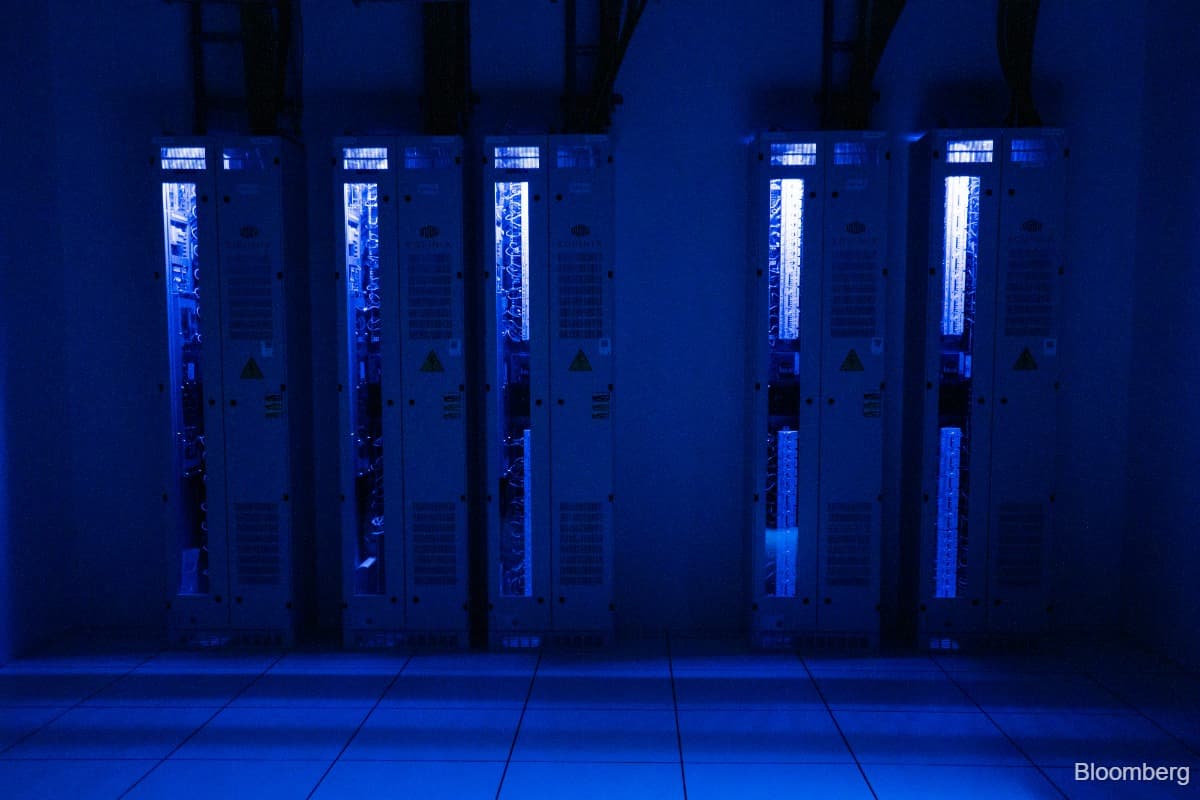
KUALA LUMPUR (Nov 7): Malaysia’s bond market could soon play a larger role in financing data-centre projects, as investor appetite grows for digital-infrastructure assets that offer long-term and predictable cash flows, said MARC Ratings Bhd portfolio head Yazmin Abd Azis.
But for now, the bond market for data-centre financing remains in its early stages of development, as it is currently constrained by a lack of transparency and publicly available information on project transactions and fundamentals, she said.
“There are a lot of conversations going on, and the bond market is getting increasingly ready. Everyone is setting the building blocks for entry into the public markets for data-centre issuances.
“We are seeing how best to get the capital markets to facilitate these investments. No doubt, investor appetite is there,” Yazmin said at the Malaysian Bond and Sukuk Conference 2025, held virtually on Friday.
She said that investors are looking at how data centre financing would fit into their portfolio and how best to strategically allocate funds for it.
“We hear about land transactions and major global investments coming in, but the data is still not synchronised. As the sector matures and more rated transactions emerge, public disclosures will improve, which will give investors more confidence to participate,” she added.
According to Yazmin, evaluating the creditworthiness of data-centre projects as a credit rating agency requires a different approach from traditional infrastructure assets, given the sector’s commercial nature and rapid technological evolution.
“We look at who is developing and operating the project — the sponsor’s experience, track record and financial strength are key. For operators, we assess whether they are hyperscalers or corporate tenants, the stability of their leases, and the reliability of the facility’s design to ensure continuous 24/7 operation,” she said.
Meanwhile, Moody’s Ratings vice president Nidhi Dhruv said data centres are highly capital-intensive assets that typically take two to three years to construct, requiring a diverse mix of funding sources.
She noted that the Asia-Pacific region currently has more than 15GW of operational capacity, which is expected to more than double within five years, demanding up to US$900 billion (RM4.3 trillion) in investment.
This total includes about US$250 billion for core and shell construction — covering land, buildings and supporting infrastructure such as fibre networks — roughly US$550 billion for internal computing equipment like servers and chips, largely financed by tenants or hyperscalers, and another US$100 billion for additional power generation capacity required to keep facilities running around the clock, mostly borne by utilities and excluding grid-upgrade costs.